
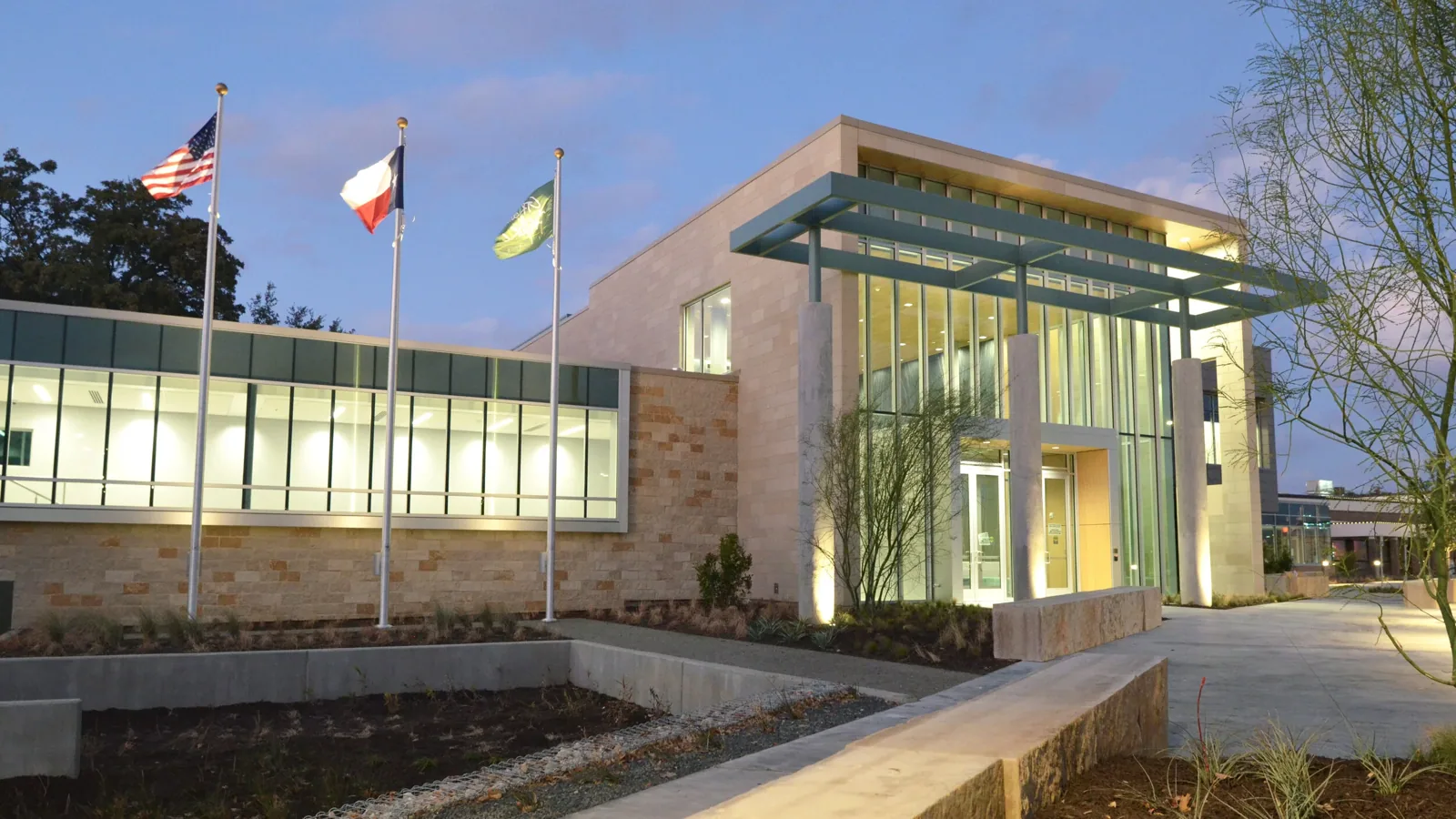
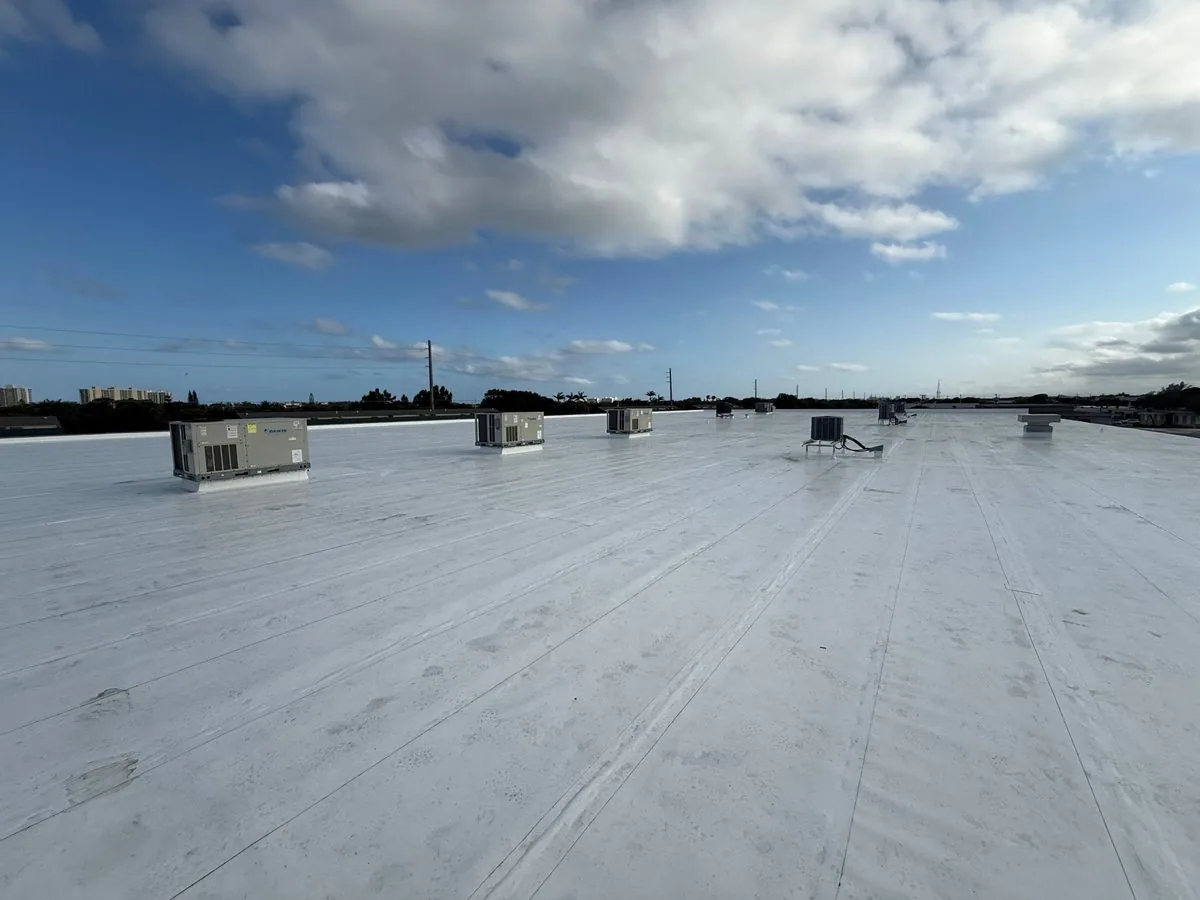
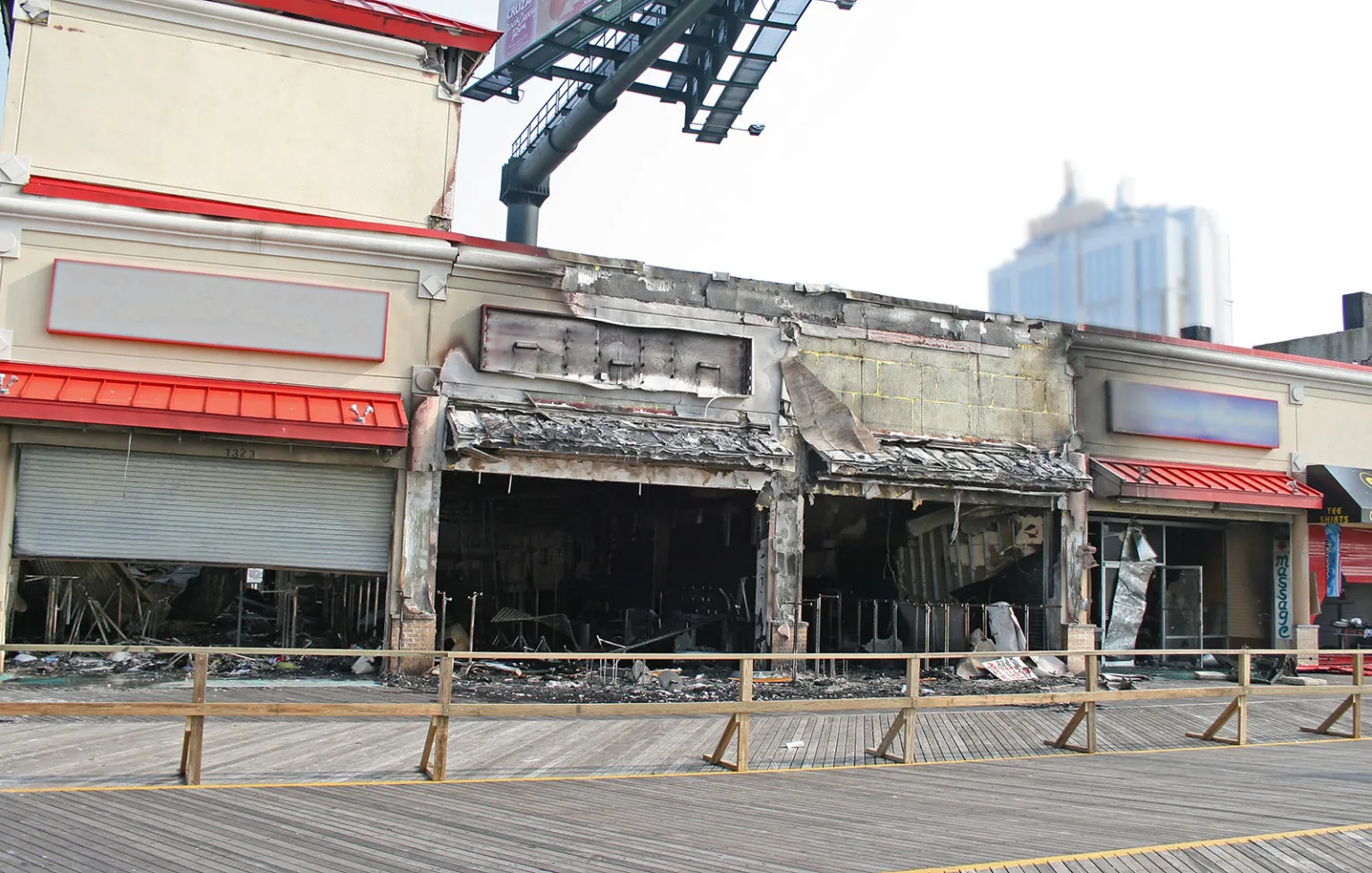
A storm report starts the review, but the roof condition sets the repair. We identify the affected section, photograph visible damage, and trace water or wind paths through seams, edges, drains, and penetrations. Spring brings the region’s peak thunderstorm activity, so a Grand Prairie roof may need a prompt check after a reported event. Regional weather alone does not identify which property was affected.
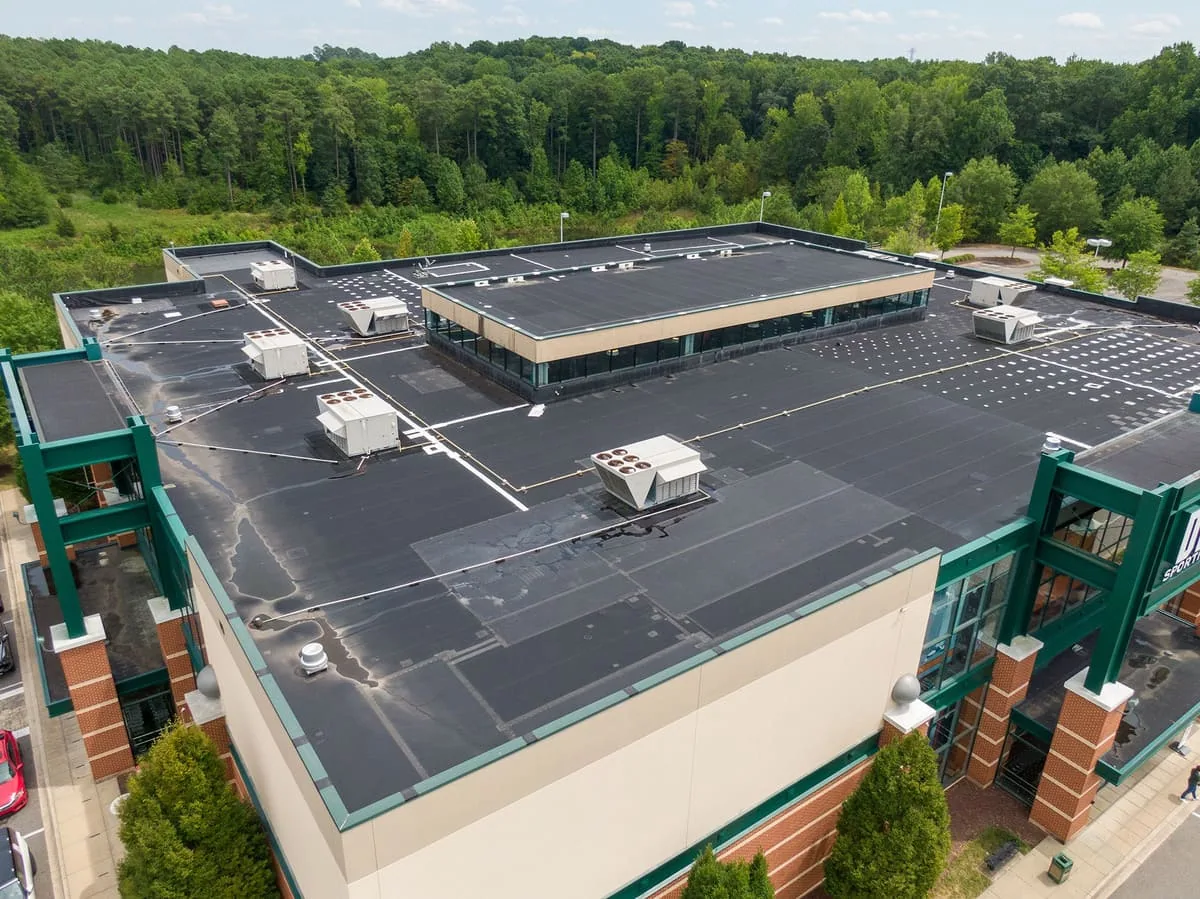
Separate event from condition:
DFW severe weather can include hail, damaging wind, flooding, and tornadoes somewhere in the Metroplex nearly every year. The useful next step is to compare the reported time and area with current roof observations. A wind damage inspection checks edge metal, fasteners, seams, and lifted details; a hail review documents visible impact and the limits of a surface-only assessment.
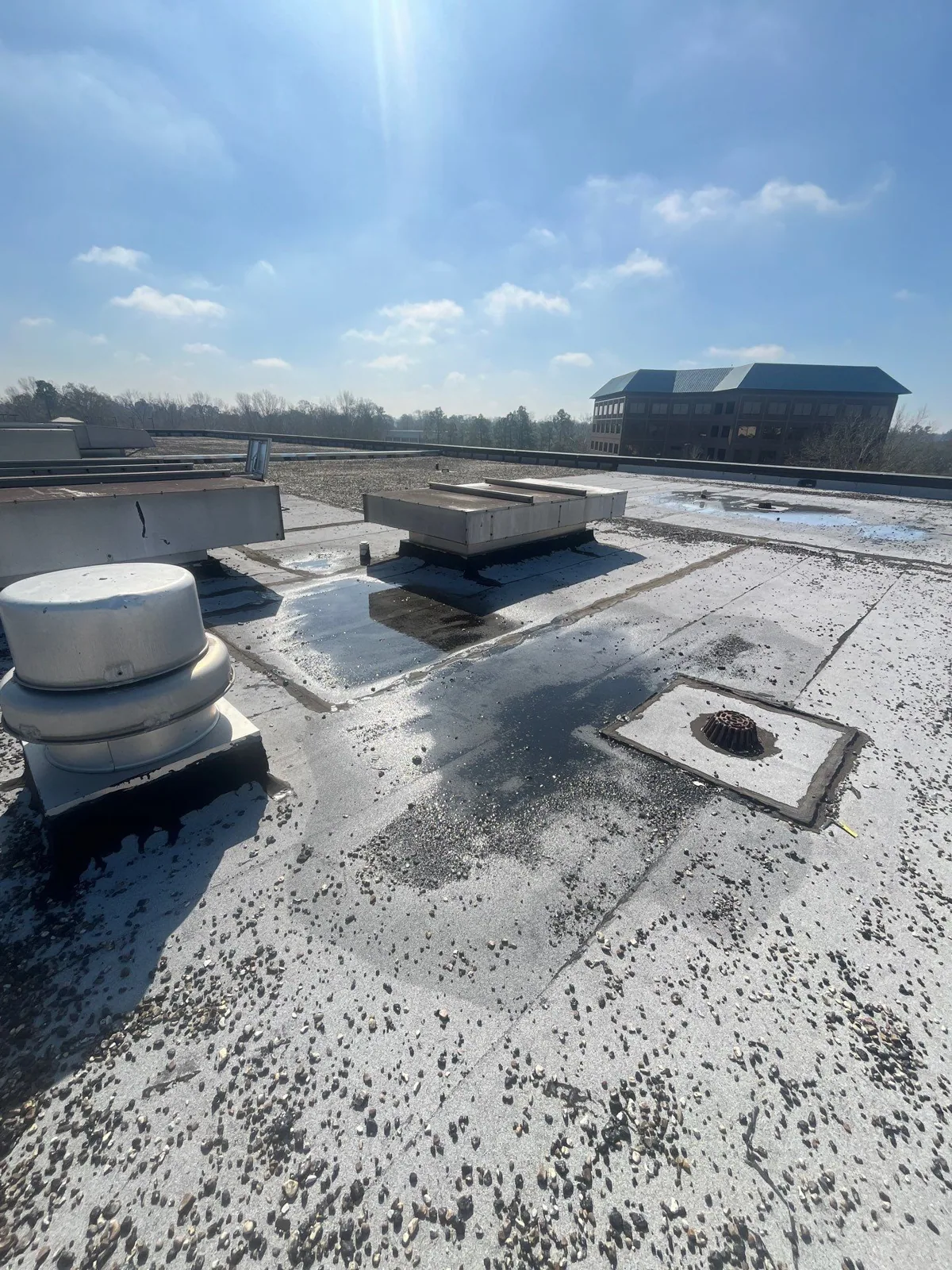
Trace the water path:
The region's rainfall pattern makes drainage part of a repair review, especially as spring and fall bring wetter conditions. We follow the reported interior location back toward roof transitions, low points, drains, scuppers, and penetrations. A ponding-water assessment records drainage conditions, while a flashing repair can address a failed interface once its boundary is established.
Water may travel before it appears inside. We separate the visible stain from the suspected entry point and list any area that could not be reached. That prevents a patch from being priced as a confirmed fix when the path remains uncertain.
Define temporary protection:
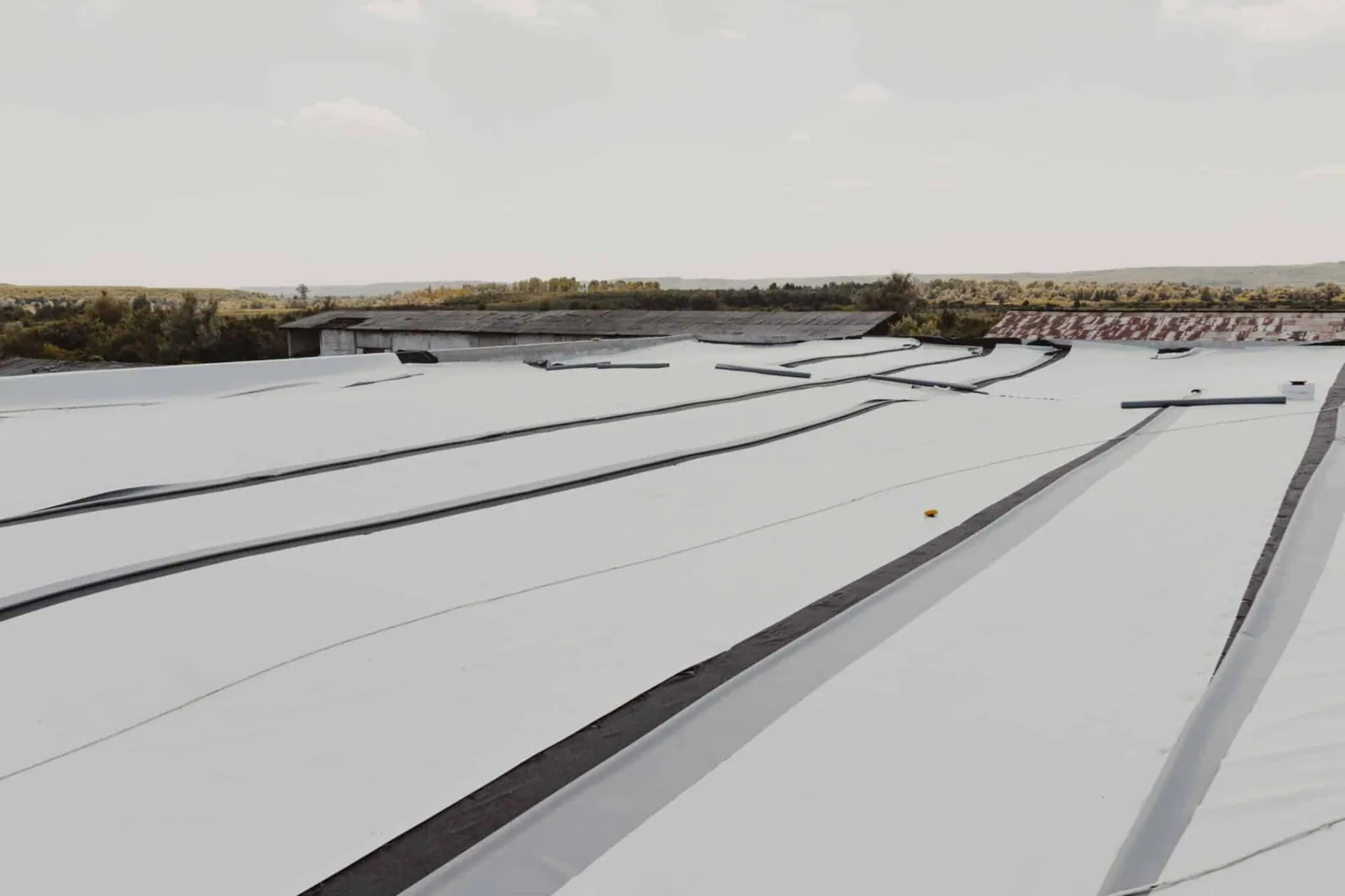
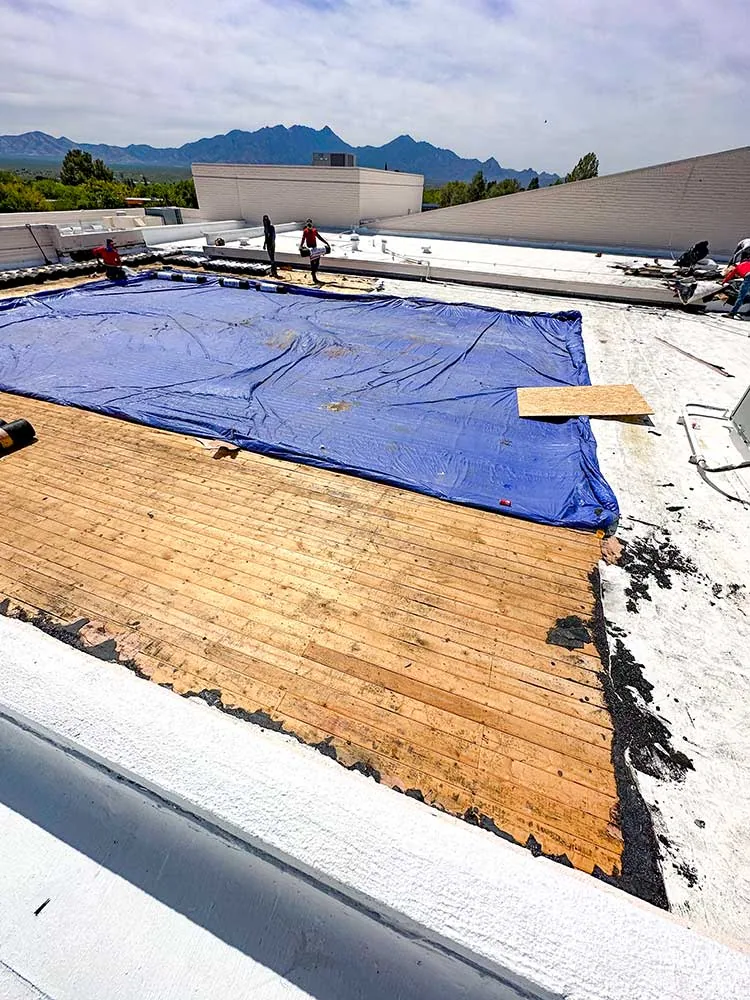
When water is entering, protect the interior and roof only within the owner’s authorization and safe access limits. A temporary measure should state its location, materials, expected duration, and next inspection. It should not be confused with a permanent repair or a replacement decision. For a puncture or open seam, the repair should match the roof material and existing system details.
Keep the repair boundary clear:
Our closeout records the observed condition, tested detail, repair area, materials, photographs, and any follow-up. A commercial roof repair should stop at the verified defect and the detail needed to correct it. When testing or repeat conditions point beyond that limit, a separate replacement review can compare broader options. We coordinate in Grand Prairie and nearby I-20 areas, with each recommendation based on the inspected roof.
Commercial Roofing Questions
What should I do after a roof leak appears during a storm?
Protect affected contents where authorized, document the time and interior location, and contact us about safe roof access. We will inspect the reported section and define the next step.
Can hail history confirm damage to my roof?
No. Regional storm activity can prompt an inspection, but we document property-specific conditions before attributing a cause or proposing repairs.
When is a temporary patch enough?
A temporary measure buys time when conditions are unsafe or access is limited. We identify its boundary and schedule the permanent repair review.
How do you distinguish flashing failure from membrane damage?
We inspect the interface, surrounding membrane, fastening, and water path. The repair description names the detail that was observed and corrected.