A KEE roof should be identified from its records and field details before a repair material is selected. In Grand Prairie, TX, we check the membrane label, welded seams, curbs and perimeter transitions, then compare those observations with the reported leak area. KEE membranes use a PVC alloy formulation, so the actual product and repair method still need confirmation. The Great Southwest Industrial District's distribution and manufacturing role differs from retail and corporate activity along the I-20 Corridor; each building still needs its own confirmed roof and access plan. Operations affect access; the roof assembly determines compatibility.
System identification: verify the membrane record
KEE is commonly described as a ketone ethylene ester and PVC alloy membrane. We use the product label, project documents and visible system details to confirm what is installed instead of relying on a color or an old note. The membrane may be mechanically attached or adhered, and perimeter securement can differ by project. We record sheet direction, seam locations, flashing details and any repairs that affect how the next patch will bond.
That first check prevents a compatible-looking material from being applied to an unknown surface. We compare the proposed repair with the system's technical requirements and prepare a small test area when needed. If the roof records are incomplete, the Diligence Notes states what was confirmed and which detail still needs verification. A commercial roof inspection can document the assembly and the surrounding details before the repair boundary is set.
Weld review: check the lap and its edges
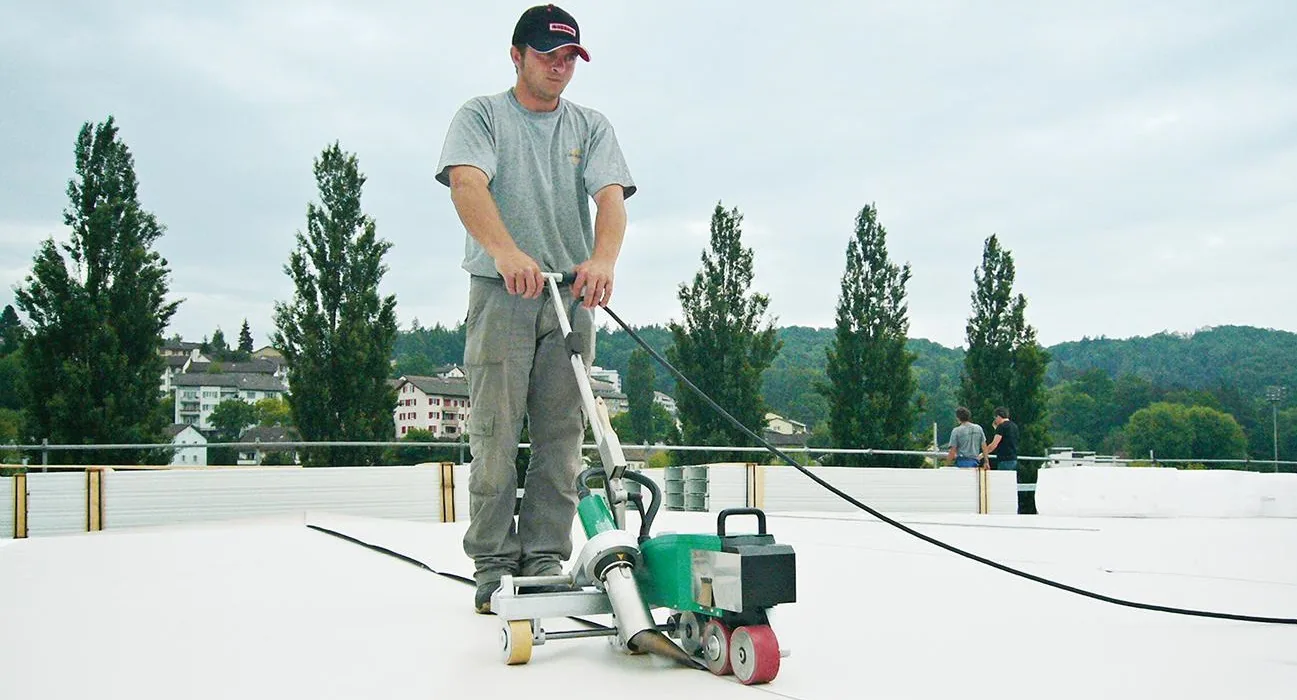
Thermoplastic membrane seams are heat welded. We inspect the lap for gaps, contamination, wrinkles, poor edge fusion and patches that interrupt the original seam. A probe helps identify a section that did not bond continuously. At a corner or curb, the field seam must connect with the flashing detail rather than stop at an open transition. We photograph the tested area and note whether adjacent material is stable enough to support repair.
A leak may travel along the assembly before reaching a ceiling or wall. We trace the reported water path across seams, drains and penetrations, then compare it with any visible opening. A localized weld repair can be appropriate when the substrate is dry and the separation is contained. If several laps are failing or insulation may be wet, the recommendation may require broader testing. A repair scope should identify the seam length, preparation and completed check rather than describe an unspecified patch.
We also check how the membrane terminates where the roof meets a wall, parapet or equipment curb. A secure field seam does not compensate for a loose termination bar, open corner or failed sealant at an adjoining detail. The inspection records each condition separately so the repair plan can follow the full water path. Where a repair crosses an existing patch, we verify that the old material is bonded and compatible before covering it. This sequence limits the chance of closing a visible opening while leaving an adjacent transition unresolved. The closeout record identifies each tested seam and shows where the next visit should begin.
Grand Prairie work window: account for heat
DFW summer conditions affect how roof work is staged. Regional July and August normals show average highs in the mid-nineties, with an average of about twenty days a year reaching 100 degrees. We plan material storage, roof access and welding windows with those conditions in mind, then follow the membrane manufacturer's requirements at the work area. The climate pattern informs scheduling; it does not show that a KEE roof has a failed seam.
The Great Southwest Industrial District is part of Grand Prairie's distribution and manufacturing base. Loading activity and rooftop equipment can narrow an access window, while a business or retail property along I-20 may need tenant coordination. We confirm roof entry, staging location, equipment restrictions and the section that can remain out of service. Work is divided so a completed seam and its termination can be checked before the crew moves to another roof area.
Repair choice: compare a local fix with system work
A repair begins with compatible membrane, surface preparation and a continuous weld. We remove loose material only as needed, expose sound edges, and install a patch or flashing detail that suits the existing assembly. If the curb or substrate has deteriorated, replacing the field membrane alone will not close the water path. We include the transition that failed and identify any condition hidden until material is opened.
When the roof is broadly worn, we compare a repair with recovery or replacement. Other systems, such as PVC membrane and TPO construction, have their own seam and detail requirements. A coating may be considered only if the underlying assembly is sound and the coating is compatible. Before that decision, restoration work begins with testing and repair of failed details. The written proposal separates confirmed repair from broader options so the owner can approve a clear roof section.
Maintenance record: return to the same details
After repair, we record seam locations, curb transitions, preparation, membrane used and photographs of the finished work. The closeout notes any section that was inaccessible or not tested. A later maintenance visit can return to the same lap, verify that the repair remains intact and check nearby drainage. That is useful on roofs where equipment service routes or loading schedules make access planning part of each visit.
Grand Prairie's spring and fall are the DFW region's wetter transition seasons. A post-rain check can show whether the water path reaches the repaired detail or whether another outlet condition needs attention. We document the observation without assigning damage from a regional weather pattern. For ongoing review, a scheduled maintenance program can keep findings by roof section, while a photo condition record gives the property team a reference for future decisions.
Commercial Roofing Questions
How do you confirm that a roof is KEE rather than another PVC membrane?
We review product documents or labels and compare them with the installed assembly. Color and appearance do not confirm membrane formulation. If records are unavailable, we identify what can be verified and check repair compatibility before applying material. The report records the system identification and any unresolved question.
Can a KEE seam be repaired with a standard PVC patch?
Compatibility has to be verified for the specific membrane and patch product. We review the system requirements, prepare the surface and confirm a weld on the actual material before completing the detail. If the test does not support the proposed repair, we select another compatible method or define additional investigation.
What does a probe test show at a welded lap?
A probe can locate a separation or incomplete fusion at the seam edge. It does not determine moisture below the membrane. We document the tested run, check nearby corners and flashing, and identify whether the defect remains local or points to a broader assembly concern.
Will Grand Prairie heat change the KEE repair schedule?
It can change the practical window for staging and welding. We follow the product's temperature and surface requirements, check conditions on the roof and coordinate access with the building. Regional climate normals inform the work plan, while the actual membrane and weather govern whether a weld proceeds.
When should a KEE roof move beyond seam repairs?
Repeated separation, moisture across several sections, unstable attachment or deteriorated flashing can justify broader testing. We map the findings and explain whether repair remains contained. If replacement or recovery is considered, the proposal compares system details and the work sequence instead of extending patches without a defined endpoint.
Confirm the KEE assembly and seam condition
Share the roof section, active leak status, known membrane documentation and access window. We will inspect the welded seams and transitions, then document compatibility and the repair boundary for the next decision.
Call 555-555-5555 or request a roof assessment.