
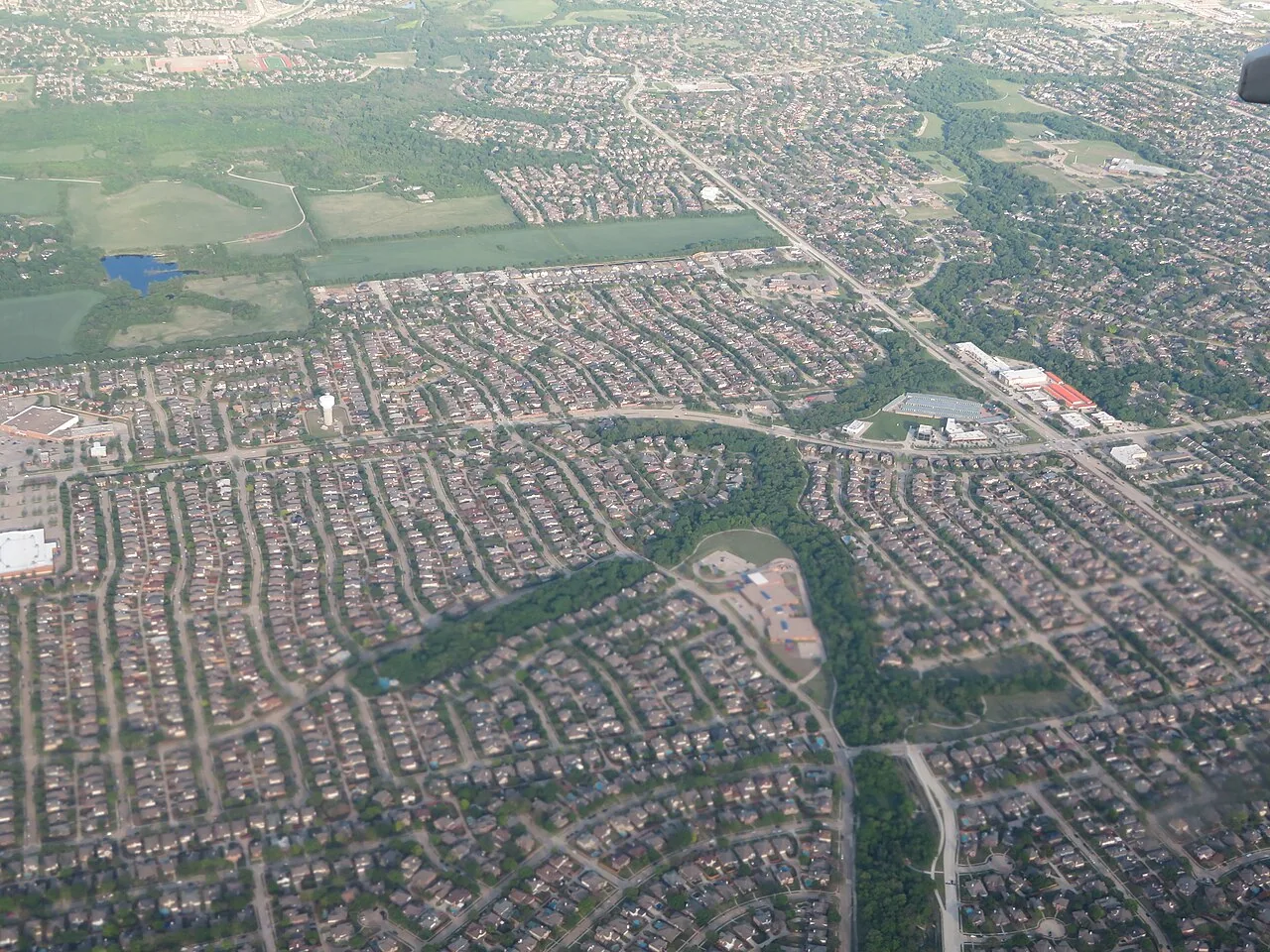
A commercial roof in Grand Prairie, TX can sit over a distribution bay, a retail suite, a clinic or a downtown office, and each one asks for a different first check. We start with the roof section itself: membrane, seams, drains, curbs and edges. Then we trace the water path from the interior stain back to the detail that let it in, and we define a repair boundary before any larger scope is priced. The building's use shapes the access plan. Dock traffic, tenant hours and rooftop equipment decide where a crew stages, when noisy steps happen and how each opened area is closed. We write down what we found so the owner has a record to act.
First observation: the building mix across one city
Grand Prairie recorded about $1.5 billion in transportation and warehousing receipts and about $3.7 billion in retail sales in 2022. Those numbers point to distribution and retail activity, and the City adds that its air, highway and rail access continues to attract warehouse, distribution and manufacturing construction. Health care and food-service sectors add clinics, restaurants and hospitality properties to the mix.
Counts of dollars are not counts of roofs, so we never assume a building's system from its category. A warehouse roof may be single-ply or metal. A retail roof may be a modified bitumen field with a parapet. We sample the membrane, read the seams and label each roof section on a sketch before choosing a repair.
Under every category sit the same questions. Where does water enter, where does it travel, and what is wet below the surface? Probes, moisture scans and photographs answer them, and each roof section is rated repair, recover or tear-off. That rating is what an owner needs for a budget, an insurer or a lender.
Districts: where the city draws its own lines
The Great Southwest Industrial District, several highway corridors and the Central Business District are separate parts of the city, so building use varies across industrial, retail, corporate and downtown areas. We plan roof work with that variation in mind, without presuming any single property.
The Great Southwest Industrial District brings warehouse, distribution and manufacturing roofs. The I-20 corridor brings retail, office and distribution questions, and the I-30 corridor brings hospitality, retail and employment buildings. The SH 161 corridor includes warehouse-distribution centers among other uses. Downtown has its own access pattern, and the first check changes with each of these settings.
A single owner may hold a warehouse near the industrial district and a retail center near a corridor. We keep one report format across both so condition, cost and priority can be compared in one place.
Heat and storm exposure across the year
Dallas-Fort Worth is humid subtropical with hot summers; July and August highs average near 96°F, and about twenty days a year reach 100°F or more. That heat cycles every membrane, sealant line and flashing, and it affects adhesive timing and crew hours.
Spring is the peak season for regional thunderstorms, and large hail, damaging wind, flooding and tornadoes show up somewhere in the Metroplex nearly every year. A particular building is unlikely to see all of them. So a storm is a reason for a documented walk, and the walk decides. Our commercial roof inspection records confirmed damage and leaves unaffected sections out of any claim.
Spring and fall are also the wettest transitions, so drains, scuppers and ponding areas get their own check in those seasons. Standing water that remains a day after rain is measured and mapped, and the cause is sorted into slope, drain or deck.
Public and institutional roofs: access rules differ
Federal, state and military sites in the area bring their own access procedures. Military and Guard sites also dot the city: the Army Reserve counts its Grand Prairie complex as an active training location, the Texas Military Department includes the Lakecrest Armory in its facility list, and Air Guard materials place a combat communications unit at Hensley Field. Escort, badging, scheduling around operations and roofing to Unified Facilities Criteria are normal parts of work on such sites.
Our military installation roofing approach follows those rules when a project calls for them. For civilian public buildings, the same discipline applies: written access arrangements, protected occupants and a record for the facility manager.
Permits and codes: confirm the governing edition
For non-residential work the City's permit guidance lists the 2021 IBC family and the 2023 NEC, and each project is expected to confirm edition, amendments and permit scope with the city. It also calls for a roof-framing plan and engineer seals on buildings larger than 5,000 square feet in the new-building process.
For a re-roof, we raise these questions at the first meeting. Does the scope need a permit? Does a structural change trigger review? Do rooftop electrical connections need inspection? Getting those answers early keeps the dry-in schedule from waiting on paperwork, and it keeps the owner from paying for a crew that cannot start.
Where a project involves rooftop solar or heavy equipment, structural questions go to the owner's engineer before material is ordered.
Work sequence: from first walk to closeout
The order stays the same on every roof. We walk the section, probe seams and flashings, trace the water path and map moisture when the stain is unclear. We define the repair boundary, agree on access with the owner and the general contractor and write a scope that separates repair, recover and replacement by section. Work then proceeds in zones, with each opened area closed before the crew leaves.
At closeout we deliver photos, moisture readings, product details and a roof map. Emergency response runs around the clock, and the temporary seal and the permanent repair are recorded as separate steps so the owner sees what was done and what remains.
Cost follows tear-off depth, insulation, penetration count, crane access and the hours the building allows. Because a large property can have several roof sections, we price them separately so the owner can phase the work across budget periods and keep the most urgent sections first.
Commercial Roofing Questions
Which part of Grand Prairie should I look at for my property's roof plan?
Start with the district your building sits in, because industrial, corridor and downtown areas are separate parts of the city. Each setting changes access and operating hours. The roof itself still decides the repair, so we inspect before recommending a scope.
Does hail anywhere in the Metroplex mean my roof is damaged?
No. Hail strikes somewhere in the region most years, yet a given building may be untouched. We inspect for confirmed impacts, punctures and displaced metal and document only what we find.
What permit questions come up on a commercial re-roof?
The governing code edition, amendments and permit scope. Grand Prairie's permit guidance names the 2021 IBC family for commercial work and wants each project to confirm the details. We raise them at the first meeting so the schedule includes inspections.
How are roofs on public or controlled sites handled differently?
Access comes first: escort, badging and operating schedules set the work hours. We plan the sequence around those rules and keep records in the form the facility requires. The roofing itself still follows the observed condition.
What do I need to send for a first roof inspection?
Roof area, leak locations, known roof system, the building's use and available access hours are the useful details. Photos of interior stains help. With those, we can schedule a walk and plan the access route.
Send the roof section for a first check
Share the roof area, active leak status, known assembly, and the access window. We will inspect the section and document the next scope decision.
Call 555-555-5555 or request a roof assessment.