
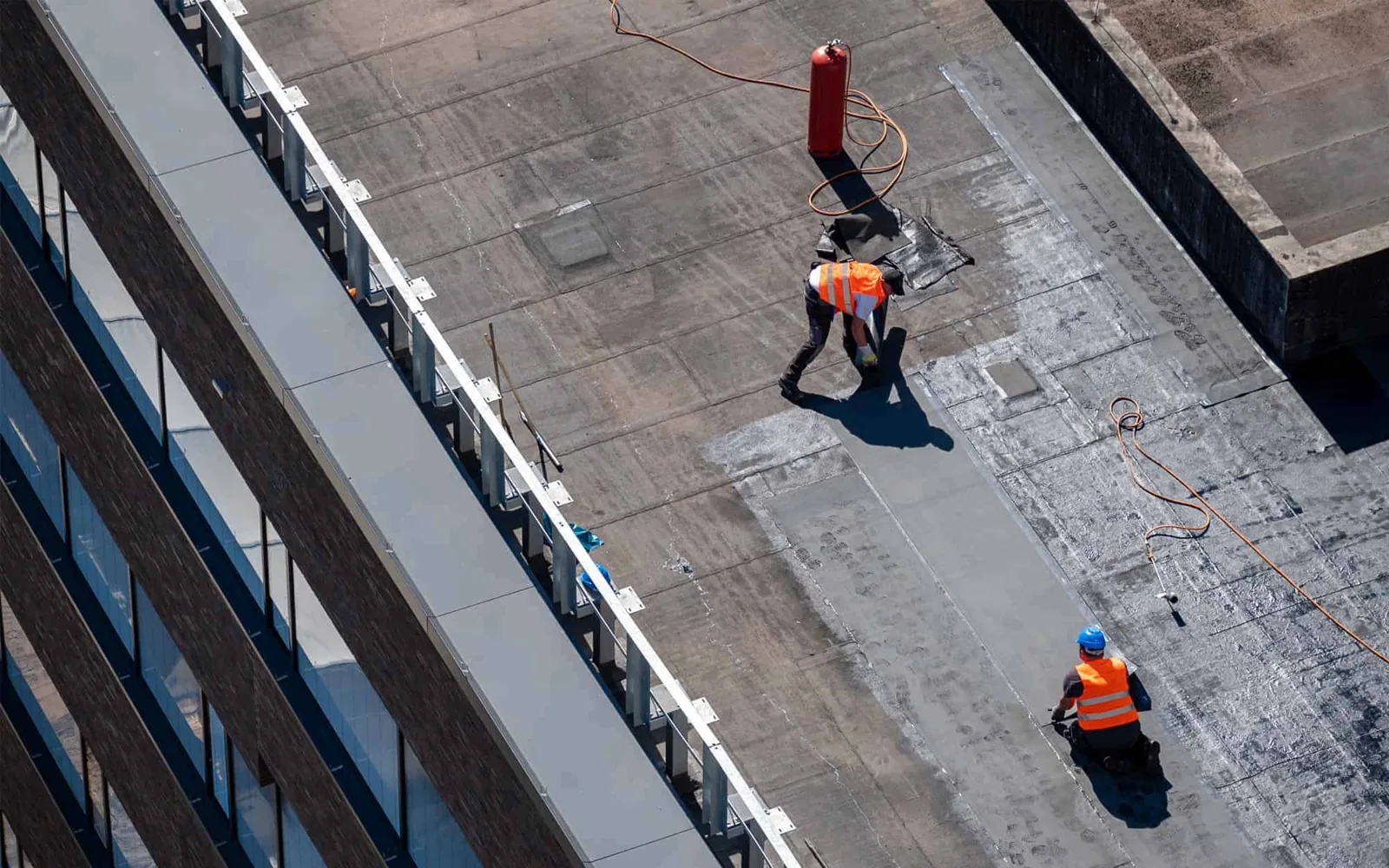
A repair starts by locating the roof section that is failing, then tracing what connects it to the leak. We compare the reported interior area with seams, drains, curbs, and perimeter details before selecting a patch. Grand Prairie has broad warehouse and distribution uses in the Great Southwest Industrial District, along with retail and business areas mapped near I-20. Building operations affect access, but the roof condition sets the repair boundary. We record the defect, test adjacent details, and explain whether a contained repair will hold or a broader assembly issue needs review.
Locate the defect before choosing a patch
Water can travel across a roof assembly before it appears inside. We map the leak report, inspect the roof section above it, and follow seams, penetrations, drains, and wall transitions that could carry water. The repair plan records the actual opening or failed detail rather than assuming that the ceiling mark is directly below it. If a second test is needed, we explain what the result would change. This keeps a minor puncture from becoming an undefined replacement discussion and keeps a broader failure from being hidden by a surface patch.
In the Great Southwest Industrial District, access can involve rooftop equipment, material movement, and active loading areas. The Central Business District is a separate setting, where roof access and tenant circulation may call for another work window. Those are planning contexts, not assumptions about a specific building. We confirm access with the site contact and mark the affected roof section so the repair can be inspected and documented. Active leak tracing can be paired with a repair when the entry point is still unclear.
Match the repair to the membrane
Repair material must be compatible with the existing roof. We identify the membrane type where it can be confirmed, check its surface and seam condition, and select details that work with the system. A patch can fail if the substrate is wet, the surface is contaminated, or the repair stops before a moving transition. We remove loose or damaged material as needed, prepare the area, and extend the repair to sound edges. If the existing material cannot be confirmed, we describe the limitation and verify compatibility before applying a product.
For a thermoplastic roof, seam integrity and flashing transitions deserve close attention. TPO seam and flashing work uses methods suited to the membrane rather than a generic sealant over the defect. For other systems, the repair approach changes with the material. We can inspect adjacent penetrations through curb and equipment details where movement or prior work may have opened the water path. The Diligence Notes explains what was repaired and what remains to monitor.
Check the route to the drain
A roof repair should not stop at the first visible crack if water is also trapped nearby. We inspect the route toward drains, scuppers, and overflow points, then note any obstruction or low area affecting drainage. After a spring or fall leak report, trace the outlet path first; those transition periods tend to bring more rain across DFW. That regional pattern supports attention to drainage after a repair, but it does not establish that any individual property flooded. The roof map must show the building’s own outlets and the detail that was corrected.
City planning treats I-20 as a growing retail and corporate corridor, so a repair plan there should start with the roof's access and tenant hours. A roof serving retail space may need a clear pedestrian access path during repair, while a warehouse has different staging limits. For either roof, the same first check applies: verify how water moves from the repair area toward an outlet. Drain and scupper correction may be part of the scope when an outlet detail is contributing to recurring water entry.
Define what the repair does and does not cover
The repair proposal should name the roof section, failed detail, access needs, and limits of the work. We distinguish the membrane repair from related work such as insulation removal, deck repair, equipment relocation, or drainage changes. If moisture testing identifies wet material beyond the patch area, the owner receives a separate scope decision rather than an unexplained expansion. A contained repair can address a single defect. Repeated failure across seams or multiple roof sections can justify a condition survey or a replacement plan.
Cost depends on access, material compatibility, testing, substrate condition, protection requirements, and the number of transitions involved. DFW July and August average highs are near 96 degrees, so installation conditions and product handling matter during hot periods. That climate information helps with scheduling; it is not a diagnosis of the membrane. When regional severe weather is in the forecast, we review the site’s current condition and keep the work area protected. Wind-related roof checks stay tied to visible or tested damage, not the storm report alone.
Keep the repair zone workable
Repair work can require a lift, ladders, hot-air tools, adhesives, or temporary protection. We agree on the route, staging area, work hours, and any restricted roof zone before arriving. At a facility with shipping activity, deliveries should not block dock lanes. At an office or retail property, the site contact may need notice before a crew uses a particular entrance or roof hatch. These decisions let the repair proceed without placing materials over occupied rooms or disrupting an unrelated trade.
For an active leak, the first task may be temporary protection while the roof is inspected. We then return to the confirmed entry detail with the right system materials and a documented repair boundary. If an interior area cannot be isolated during work, the schedule should name the constraint and the protection steps. An update goes to the owner or general contractor when a concealed condition changes the scope. This is especially useful when the repair is one item in a larger maintenance or capital program.
Record the repaired detail
Once the repair is complete, photos and notes should show the original condition, preparation, installed material, and nearby transitions. We label the roof section and identify any areas left outside the contract. If a drain, curb, seam, or edge remains under observation, the closeout record can name the next inspection point. That gives a facility team something useful to compare after later weather or maintenance work instead of relying on memory about where a patch was placed.
A repair record also supports a larger roof decision. It can show whether failures are isolated or recurring, which details have been corrected, and where testing may be useful next. A documented roof inspection can expand the view when conditions span several sections. For properties across Grand Prairie commercial districts, we keep the diagnosis specific to the building, including its access and drainage route. Share the leak area, known roof system, and site access window to set the first check.
Commercial Roofing Questions
Why does a roof leak return after a patch?
The original patch may not have reached the failed seam, flashing, or transition, or water may be entering from a nearby detail. We inspect the roof section around the repair and compare the water path with the interior report before repeating the same work.
Can you repair a roof if the membrane type is unknown?
Material identification comes first. We check markings, surface behavior, and available building records, then confirm compatibility before applying a repair product. If the system remains uncertain, the proposal states what must be tested or exposed before permanent work proceeds.
What happens when moisture extends beyond the visible defect?
The scope changes only after the affected area is mapped and tested. We show the additional wet or unstable material, explain what removal would involve, and separate that work from the initial repair so the owner can approve a clear boundary.
What should the repair record include for the next inspection?
A useful closeout identifies the roof section, repaired detail, material installed, photos, and any nearby condition that remains under observation. The next inspector can compare that map with later leak reports and decide whether the repair is holding.
Map the repair boundary
Share the leak location, active status, known roof material, and access window. We can inspect the section, trace the water path, and document the repair or testing needed before work proceeds.
Call 555-555-5555 or request a roof assessment.