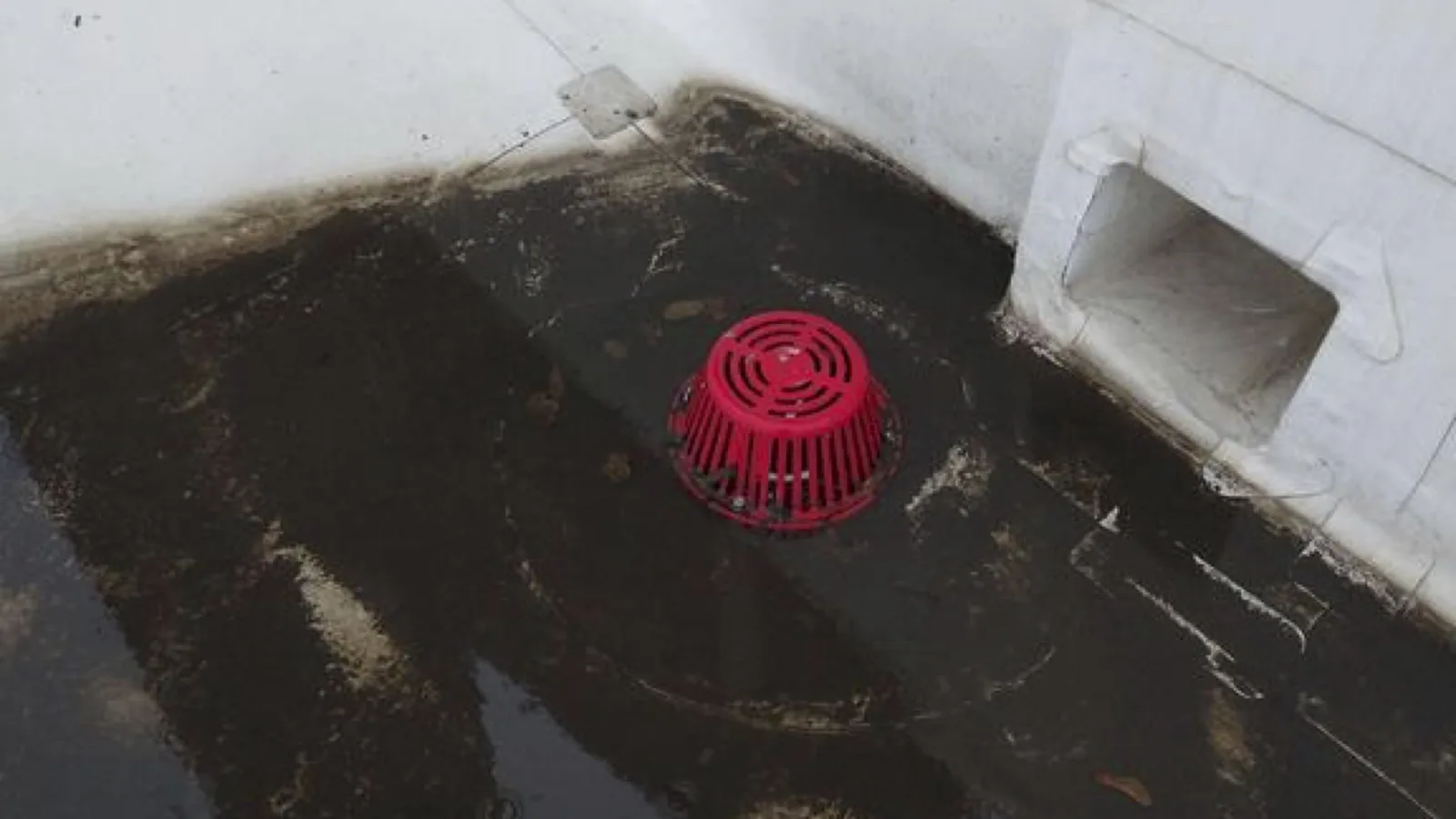
Water remaining in a low area can point to a blocked outlet, a deflected deck, or a slope that no longer directs flow as intended. In Grand Prairie, TX, we begin at the roof drain or scupper and follow the drainage route back across the roof section. We check the bowl, strainer, flashing, cricket and nearby seams before deciding whether cleaning, detail repair or slope work is warranted. The I-20 Corridor includes retail and corporate properties, while the Great Southwest Industrial District includes distribution uses. Roof access and the consequence of ponding differ by building, but the drainage path must be checked at the property.
Outlet check: inspect the opening and its transition
At a drain, we inspect the strainer, bowl, clamping ring or flashing detail, and the membrane around the opening. Debris can restrict flow, but a clean strainer does not rule out a damaged connection below it. A scupper needs a clear opening, secure flashing and an exterior discharge path that does not return water to the wall. We record the condition of the roof-side transition and the outlet itself, then check whether the surrounding surface directs water toward it.
A drain check before DFW's rainier shoulder seasons can expose a blocked path before water stands around a penetration. That seasonal pattern makes an outlet review useful before and after rainfall periods; it does not establish that a particular Grand Prairie building has flooded. We note whether ponding is present, its location and how the water path reaches the outlet. For routine upkeep, scheduled roof maintenance can record debris and outlet conditions across repeated visits. A recurring low area may need the more focused ponding water assessment.
Cricket and low area: trace where water moves
A cricket redirects water around an obstruction or toward a drain. If its shape is damaged, reversed or too low at a seam, water can collect on the wrong side. We compare the surface around rooftop units, curbs, walls and drain bowls, then identify the low points. A controlled water test may help when conditions allow, but we do not add water where it could enter the building or create a safety issue. The Diligence Notes records the observed slope and the limits of any test.
On a large distribution roof in the Great Southwest Industrial District, equipment groups and long travel paths can interrupt drainage routes. A shorter retail roof within the I-20 Corridor may have a different arrangement and access pattern. We map each condition by roof section rather than assume all areas drain alike. If the roof assembly needs a broader review, a commercial roof inspection can record the full surface, while condition photographs show the locations that need repair or follow-up.
Repair boundary: correct the cause before sealing
Repair depends on what the inspection finds. We clear an obstructed outlet when debris is the problem, repair failed flashing where the opening is compromised, and restore the surrounding membrane when seams or laps are involved. A cricket can be rebuilt or adjusted when it no longer guides water. If a deck or insulation has settled, the repair may require a larger investigation before slope work is proposed. Simply adding sealant at a drain rim will not correct a low area or failed connection beneath it.
Any slope change must be coordinated with the existing structure, drains, overflow paths and roof assembly. Tapered insulation can direct water when the roof design and substrate support that scope. We verify dimensions and terminations before installation, then check that the outlet remains open. A compatible membrane detail matters around the drain, whether the roof is TPO or another assembly. Where coating is proposed, drainage must be corrected first; a restoration scope does not replace drain or cricket repairs.
Access and sequence: keep outlets serviceable
Drain work can affect a building even when the roof area is small. We identify interior protection needs, active leak locations, occupied spaces below the outlet and any equipment that must remain available. On warehouse roofs, we coordinate roof access and material staging so loading areas stay clear. On retail or office properties, the work zone may need a tenant notice or a separate route from public entrances. The owner confirms drain access and any overflow location before work begins.
We also check that new materials do not obstruct strainers, overflow openings or inspection points. If the work is performed in stages, each completed outlet is photographed before the crew moves to another section. Grand Prairie's wet transition seasons can make the sequence important, since an open work area must be protected if rain arrives. The written plan identifies what will be isolated, what remains operational and when the roof can be used normally again.
Closeout record: confirm the drainage route
At completion, we inspect each repaired outlet and the surrounding membrane, check that the strainer and scupper opening remain clear, and document any area that still needs monitoring. If a water test is appropriate, the test area and result are noted. The closeout record also states whether the repair corrected a localized defect or whether a slope or structural question remains open. That separation helps a property manager decide what should be checked during the next service visit.
For a Grand Prairie drainage concern, share the roof section, outlet location, observed water depth or leak status, known assembly and access window. A photo from the building interior can help us locate the affected area, but roof inspection establishes the repair. We can map the outlet-to-drain path, recommend a contained correction where supported, and document whether broader slope work needs review. The result is a maintenance point the building team can revisit after rain without guessing which outlet or cricket was involved.
Commercial Roofing Questions
Does standing water mean the roof drain is blocked?
Not by itself. We inspect the strainer and bowl, then trace the roof surface and cricket that direct water to the opening. A clear outlet may still sit below a deflected area, or debris may be caught farther along the drainage path. The report identifies the observed low point and whether cleaning, flashing repair or additional slope review is supported.
What is the difference between a drain and a scupper?
A drain passes through the roof assembly, while a scupper carries water through a wall or parapet. Both need a clear opening and a sound transition to the roof membrane. We inspect the surrounding flashing and verify where the water discharges. An overflow opening should remain unobstructed, and its exterior route should be considered with the primary outlet.
Can a cricket be added near a rooftop unit?
A cricket can help redirect water, but its size and placement depend on the roof geometry and outlet location. We map the existing low area and verify how the proposed slope will meet the drain and membrane. If the deck has moved or insulation is wet, those conditions may change the scope. The repair plan describes the drainage route before material is installed.
How do you tell if ponding needs more than cleaning?
We compare the observed water location with the outlet, slope and nearby roof details after debris is removed. Recurring water away from a clear drain can indicate a low area, settled substrate or ineffective cricket. We document the roof section and consider whether testing or a broader assembly review is needed. Cleaning is not recorded as a complete correction when the underlying path still holds water.
Can drain repairs be scheduled around warehouse activity?
Yes. We confirm roof access, loading windows, material staging and the interior area below the drain before setting the sequence. A Great Southwest Industrial District facility may need a protected path that stays separate from dock operations. The crew can work by roof section, leave other outlets available, and record which locations were completed during each visit.
Trace a roof's drainage path
Tell us which roof section holds water, whether there is an active leak, the known roof assembly, and the available access window. We will inspect the outlet and surrounding slope, then document the correction supported by the roof condition.
Call 555-555-5555 or request a roof assessment.