
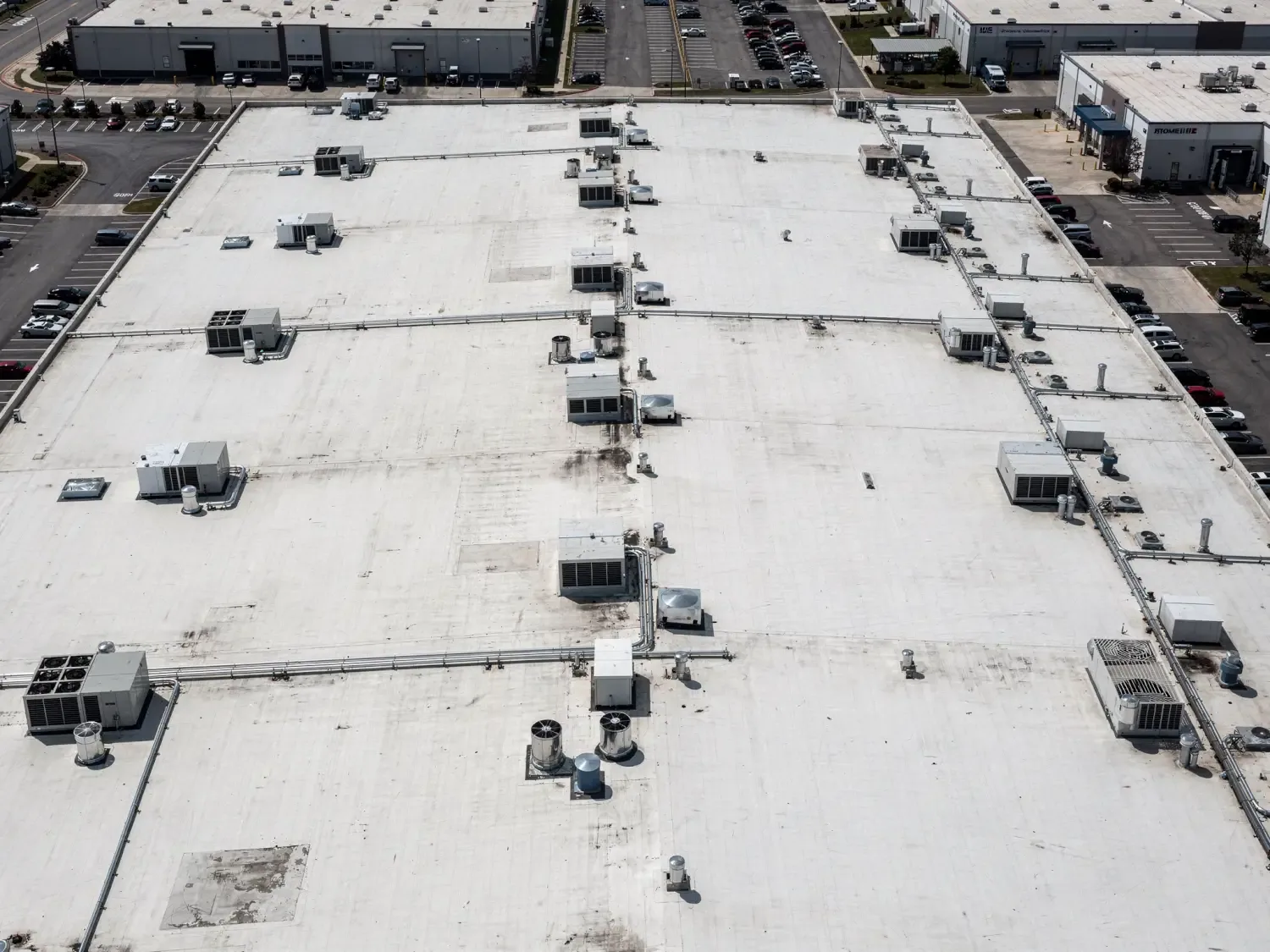
Loading access can set the first roof-work boundary on a warehouse. We begin by mapping the section, recording drains, curbs, seams, and perimeter details, then matching that route to dock activity below. The Great Southwest area offers warehouse and distribution context; a separate I-20 corridor includes commercial properties, so roof planning follows the site's actual loading pattern. Those are useful planning references, not proof of any individual roof assembly. The roof itself decides whether a repair, recover, or replacement fits. We record the observed condition and the work sequence so a general contractor can coordinate staging, dry-in, and loading operations before material moves. A warehouse roof is a connected system: field membrane, insulation, attachment, drainage, penetrations, and edges all affect what can be opened and closed in one shift.
First check: the roof sections
We divide a large roof into sections that can be inspected, priced, and scheduled independently. The first walk notes membrane condition, seam behavior, previous repairs, curbs, roof drains, scuppers, expansion joints, and signs of movement. A leak report is tied to an interior bay or equipment area when the site contact can locate it, then compared with the roof-side water path.
Grand Prairie is described by the City as a distribution center, with much of the Great Southwest Industrial District lying inside city limits. That context makes dock access and material staging relevant questions, but it does not tell us the layout of a particular building. The Great Southwest Industrial District and the I-20 corridor offer geographic context for scheduling. For a property's roof, we confirm entrances, truck lanes, and safe staging with its own contact. A commercial roof inspection can map the sections before the owner requests comparable work scopes.
Assembly: match the repair to the layers
A warehouse roof can contain more than one membrane or insulation package, especially where additions or prior repairs meet. We identify the roof system where field conditions and records support it, then check seams, attachment, cover board, insulation, and deck conditions at suspect locations. A test cut can confirm the layers at one point; it does not prove that every bay is the same. If moisture or loose attachment reaches beyond a visible defect, we show the additional area that needs investigation before pricing the full scope.
Movement around rooftop units and long field seams can stress transitions. We inspect curb corners, pipe penetrations, equipment supports, and metal edges where water can pass below the field membrane. A localized defect may support a defined roof repair. If several sections have wet insulation or repeated seam failure, compare that repair boundary with a roof recover or a tear-off. System choices such as TPO roofing and EPDM roofing have different seam and repair procedures, so selection follows the deck, attachment, drainage, and project specifications.
Water path: keep drainage working
Water needs a continuous route from the roof field to a functioning drain, scupper, or overflow. We check slope, drain bowls, strainers, sumps, and the membrane termination around each outlet. Debris or a high point can hold water against a curb or seam. If drainage is part of the problem, a membrane patch alone will not correct the route.
DFW typically has wetter transition seasons in spring and fall. That regional pattern supports a drainage review and post-storm moisture check, but it does not show that a given warehouse flooded. The City also identifies the SH-161 corridor as including industrial and warehouse-distribution uses alongside other land. At an individual site, we verify where water moves, what operations sit below, and whether an overflow route is clear. A drain and scupper scope can be coordinated with membrane work; the final Diligence Notes ties each correction to the roof section where it was performed.
Work sequence: protect dock operations
We plan the work face around how the warehouse receives and ships material. The general contractor or facility contact identifies dock lanes, truck schedules, equipment routes, and any area that must remain open. If a concealed deck condition changes the sequence, we photograph it, mark its location, and request a documented scope decision before continuing.
Grand Prairie's hot summer conditions affect roof-surface work and material handling. Summer scheduling needs a current roof reading: July averages 95.6°F and August 95.8°F in the DFW normals, and 20.2 days a year reach at least 100°F. We protect materials, keep exposed work within the planned capacity, and adjust the sequence when conditions or access change. For an occupied warehouse, the occupied-building reroofing plan can include tenant notices and protected routes. Emergency protection can be arranged around the clock if an active opening requires attention before permanent work proceeds.
Options: compare scope by section
A repair, recover, and replacement should be compared using the same roof map. A repair may address one failed detail while leaving sound field areas in service. A recover can reduce tear-off but depends on moisture, attachment, layer limits, finished height, and project requirements. Replacement exposes the deck and allows broader correction, with removal, disposal, and concealed deck repairs affecting cost and timing. We list the assumptions for each option: roof sections, insulation, curbs, drains, edge metal, access windows, and allowances for conditions hidden below the membrane.
The City's commercial permit information lists building codes and calls for roof-framing plans and engineer seals for certain commercial construction scopes. We identify work that may involve structural or permitting review and leave project-specific code confirmation to the design team and city. A previous roof permit does not resolve the current scope. A distribution center or a manufacturing plant that shares connected spaces with a warehouse needs its own line in the comparison. Each decision remains tied to the roof areas inspected, not to a general description of the district.
Closeout: leave the map usable
At closeout, we record repaired seams, drains, penetrations, edges, and any section left outside the contract. Photos are labeled to match the roof map, and open items are separated from completed work. If a test cut showed a condition that was not included in the repair scope, the report names it and gives a next step instead of implying the entire warehouse roof was evaluated.
The same record helps compare changes after weather or equipment work. Grand Prairie has the Great Southwest Industrial District, highway corridors, and a Central Business District, which shows that local commercial properties do not all share one operating pattern. For a warehouse, the actual dock schedule, roof access, and assembly remain the controlling details. To plan an inspection, share the property's Grand Prairie location, roof section, active leak status, and access window. We can document the condition and clarify whether the next work is a repair, maintenance visit, or larger capital scope.
Commercial Roofing Questions
Can the roof work proceed while trucks are loading?
The first check is where lifts, dumpsters, and material routes would cross active lanes. We coordinate a work zone with the facility contact and divide the roof into sections that can be protected within the agreed access window.
How do you find a leak across a large warehouse roof?
We start from the reported interior location, then trace the likely route across seams, curbs, drains, and wall transitions. If the path remains uncertain, we document the next test rather than expanding the repair boundary by guess.
What makes a recover possible on an industrial roof?
Moisture, attachment, existing layers, finished height, and project requirements all matter. We inspect or test the assembly and identify which sections support retention before pricing another layer.
Can separate roof sections have different repair plans?
Yes. A dry section with sound attachment may need maintenance while another area requires a repair or removal. We map each condition so the owner can phase the work without treating the whole roof as identical.
What should the closeout package contain?
Keep a marked roof map, labeled before-and-after photos, concealed-condition decisions, and the list of open items. That record lets a later crew find each repair and understand what remains outside the completed scope.
Map the warehouse roof sequence
Share the roof section, active leak status, known assembly, dock schedule, and access window. We can document the first check and plan work around the building's operating route.
Call 555-555-5555 or request a roof assessment.