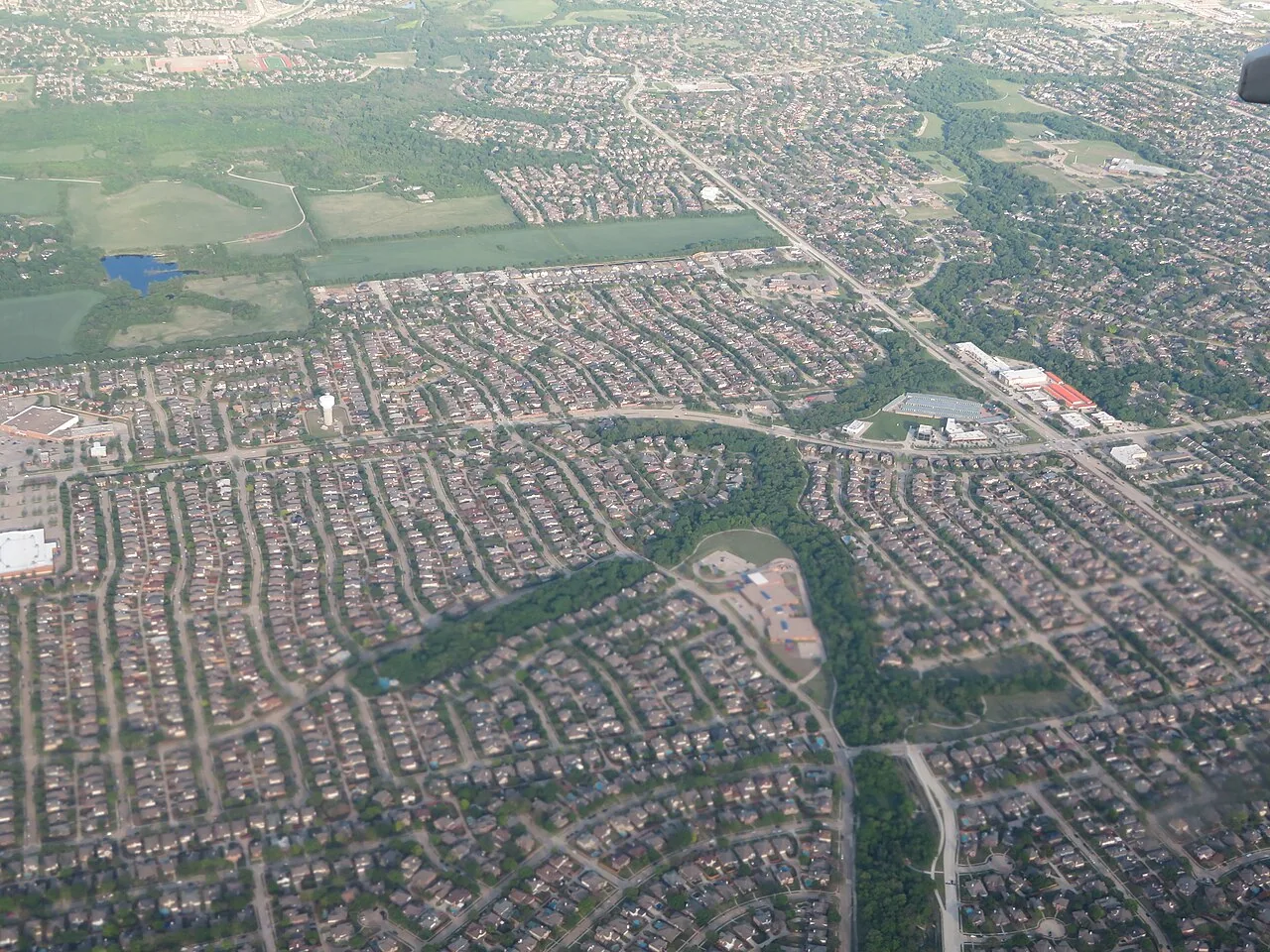
Roof work in the Great Southwest Industrial District is planned from the ground up, because dock doors, truck lanes and rooftop equipment set what can happen overhead. The City of Grand Prairie describes itself as an established distribution center and says much of this district's approximately 80 million square feet lies inside city limits. That floor area tells us the district holds warehouse, distribution and manufacturing uses; it does not tell us what any single roof is made of. So our first check is always the roof section in front of us: membrane, seams, drains, curbs and edges. The finding names the water path, the wet and dry areas and a repair boundary that leaves operations below running.
First observation: the roof section behind the dock doors
A commercial roof in an industrial district rarely behaves as one surface. Additions, mechanical platforms and different installation dates divide it into sections, and each section can have its own membrane age and attachment. We walk each one, mark it on a sketch and test it separately.
The most useful early clue is how water enters the building. A drip near a dock door, a stain at a roof-hatch curb and wet insulation along a parapet all point to different details. We compare interior stains with seams, drains and flashings above, and we confirm with a moisture scan when a leak does not line up with an obvious opening. Our infrared moisture survey is useful in this setting because it shows wet insulation without cutting the roof.
Assembly: matching the repair to the building's roof system
Warehouse and manufacturing roofs commonly use low-slope membranes or metal panels, and the repair follows the system. A heat-welded sheet such as TPO gets a welded patch. A rubber sheet gets tape or adhesive. A metal roof gets fastener, seam and sealant work. The system is confirmed from a sample and the seam construction, never from the building type.
Underneath, insulation and deck decide how far a repair can reach. Wet polyiso, crushed cover board and corroded deck sections all change the scope. Suspect areas are probed, and small test openings are made only where readings justify them; each section is then rated for repair, recover or tear-off.
Rooftop equipment adds its own details. Curbs, supports and refrigerant lines each need clean flashings and room for a tradesperson to work. We note which units are likely to be serviced often, because those areas see foot traffic and need walk pads.
Access and operations: crane, trucks, and dock hours
The City says access to DFW Airport, Dallas and Fort Worth, rail and interstate highways continues to attract warehouse, distribution and manufacturing construction. Those same links mean trucks arrive on schedules the roof crew has to respect. Loading zones, rooftop equipment and phased access become practical roof-planning considerations before any material is ordered.
We lay out the work against the operating plan. Crane position stays clear of truck turns. Material staging sits on a roof section away from active docks. Debris leaves through a protected chute, and fire-watch arrangements match the product being installed. Inside, we ask the facility manager which bays hold sensitive stock, then plan temporary protection over them.
A distribution center roof with dock traffic all day needs a different sequence than a manufacturing building that shuts down on weekends, and we write both plans out for the general contractor.
Water path: drainage across wide roof sections
Drainage is where a wide low-slope roof tells the truth. Water that crosses a long section has more chances to find a weak seam, a settled drain or a clogged scupper, and standing water stays on the surface long after a storm if the route is blocked. We look at where it stands the day after rain, measure depth at the low spots and trace the route to the drain.
Drain bowls, sumps and overflow scuppers get cleaned, checked for height and tested for flow. Equipment platforms and conduit runs sometimes dam water, so we note those too. When the cause is slope, tapered insulation can be added during a recover. When the cause is a blocked line, cleaning solves it. When the cause is deck deflection, the structural question goes to an engineer before the membrane work begins.
Repair sequence: containing a leak over inventory
When water is already coming through, the order matters. The entry point is found, a temporary seal goes on and the condition is photographed. Interior protection goes up over racking and equipment. Then we dry the repair area and make the permanent fix on a clean substrate. Emergency response runs every hour of the year, because a leak over stock cannot wait for office hours; our emergency roof repair crews separate the temporary seal from the lasting repair in the record.
Spring is the regional peak for thunderstorms, with large hail and damaging wind somewhere in the Metroplex nearly every year, and spring and fall are the wettest transitions. We use that pattern to time inspections ahead of the wet months, not to presume damage on a given building.
The record lists what was found, what was done and what remains on the watch list, so the next inspection starts from a known condition.
Options: repair, recover, or replace by section
Findings sort the roof. Isolated seam, flashing and puncture problems on dry insulation get repairs. Sound, dry sections can take a recover. Saturated insulation or end-of-life membrane needs tear-off. Because an industrial roof is divided into sections, an owner can often phase work across budget years by addressing the worst section first.
Cost follows tear-off depth, insulation thickness, penetration count, crane access and how much work must happen after hours. Commercial permits in Grand Prairie reference the 2021 IBC family, with engineer seals expected on larger buildings, so permit scope is settled with the building department before a re-roof starts. Neighboring districts such as the SH-161 corridor and the I-20 corridor have their own building mixes, so we plan each property from its own roof.
Commercial Roofing Questions
Can a warehouse in the Great Southwest Industrial District stay in operation during a re-roof?
Operations usually continue when the plan separates the work zone from dock activity. We stage materials on a quiet side, cap each opened area before the crew leaves and protect stock below. Schedules reach the facility manager early and shift when shipments do.
What does a first roof visit include for an industrial building?
We walk each roof section, probe seams, check drains and flashings, and photograph what we find. A moisture scan follows when interior stains do not match visible openings. The result is a written report that separates repair, recover and replacement by section.
How should an owner of several buildings sequence roof work?
Start with the sections that leak or hold wet insulation, then move to sections near end of service. A roof map with condition notes for every building lets the owner spread cost across years while protecting stock and equipment.
Does a spring hail forecast mean my roof needs an inspection right away?
Large hail occurs somewhere in the Metroplex most years, so a forecast is a reason to schedule a walk, not proof of damage. We look for bruising, punctures and displaced metal, and document only what we confirm.
What information speeds up a quote for an industrial roof?
Useful details are roof area, leak locations, the roof system if known, and the hours trucks and docks run. Photos of stains help. With those details we can plan the access route and the first inspection.
Send the roof section for a first check
Share the roof area, active leak status, known assembly, and the dock or operating hours that limit access. We will inspect the section and document the next scope decision.
Call 555-555-5555 or request a roof assessment.