An EPDM roof can look continuous while a taped seam, curb flashing or perimeter transition has begun to open. In Grand Prairie, TX, we identify the membrane and trace the reported water path before selecting a repair method. The first check is whether the seam is clean, bonded and supported by stable material. On a warehouse roof in the Great Southwest Industrial District, access can involve rooftop equipment and loading schedules. A commercial property along the I-30 Corridor can have other operating constraints. The assembly and observed detail set the scope.
Sheet layout: identify seams and attachment
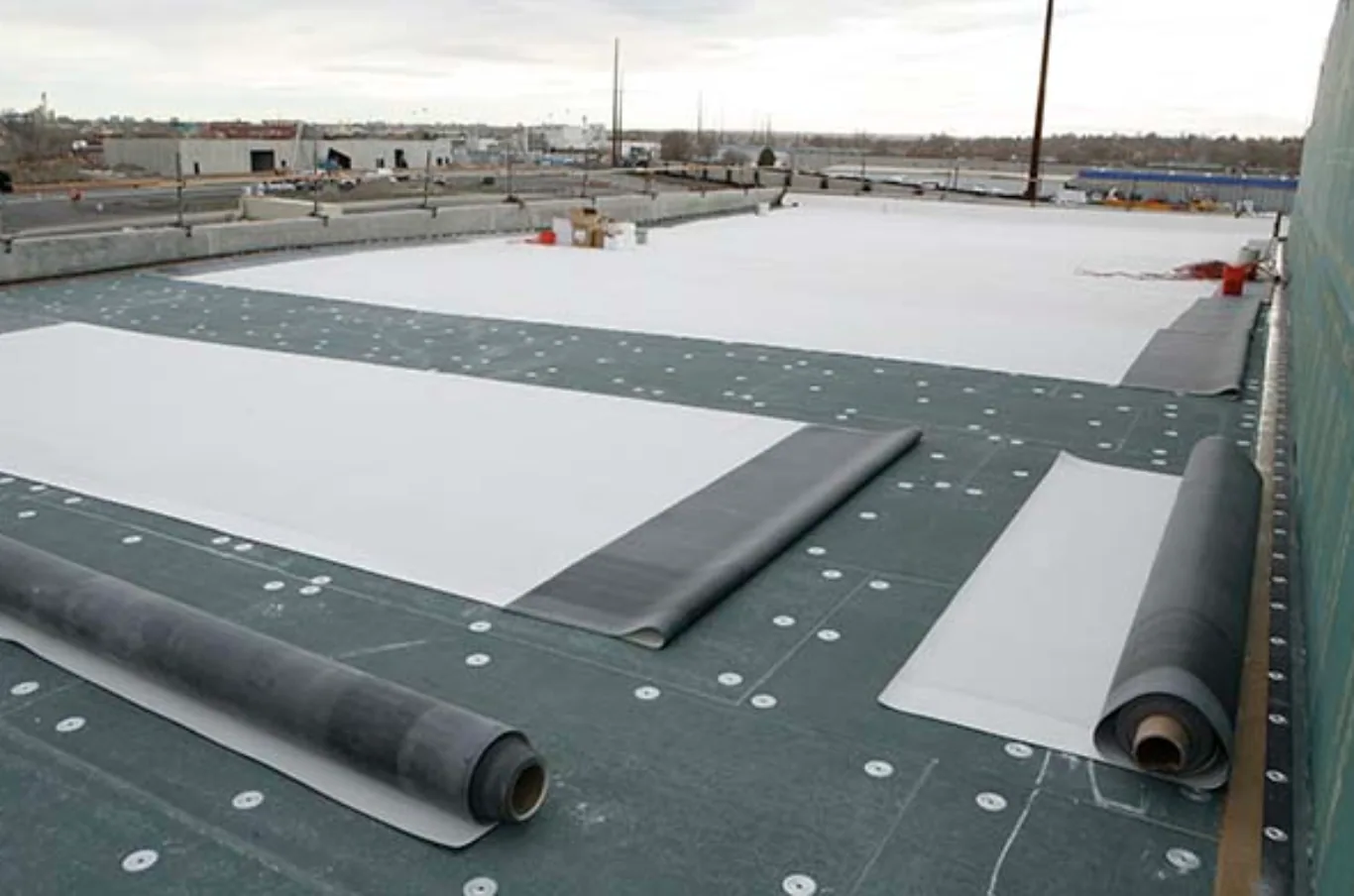
EPDM is a flexible synthetic rubber membrane installed in sheets. We map sheet edges, seam direction, perimeter securement and transitions at walls or curbs. A seam can use tape or adhesive, so a repair begins by identifying the installed detail and preparing a compatible surface. We check for fishmouths, wrinkles, loose edges, contamination and patches that may prevent a reliable bond. At the roof edge, the fastening line and termination matter as much as the field membrane.
Large sheets reduce some seam lines but do not remove the need to inspect the details. We compare the interior report with the roof plane and nearby penetrations, then test an opening where the result will change the repair. A full roof inspection can include drainage and curb transitions outside the reported area. The map names the section and seam so a general contractor can coordinate access and the repair boundary without guessing from a ceiling stain alone.
Bonded repair: prepare the rubber surface
EPDM repairs depend on a clean, dry surface and a compatible flashing or patch system. We remove loose material, prepare the membrane as specified for the chosen repair, and extend the patch onto sound rubber. Corners and curved penetrations need formed details rather than a flat patch that bridges a gap. If the membrane is brittle, contaminated or wet beneath the surface, the proposal may require further testing or a broader repair.
Water can travel beneath an EPDM sheet before appearing inside. We inspect upslope seams, edge transitions and roof openings connected to the leak report. When a seam has separated, the repair needs to restore the lap and check its termination. If the defect is contained, localized repair work may be appropriate. Repeated seam failure or moisture across several sections can call for a system review before another patch is installed. The Diligence Notes records the tested area and what remains outside the repair. Where a seam meets a change in plane, we check whether water can follow the lap into the transition. A repair must close that path without restricting movement in adjacent material. We inspect both edges of a repaired lap and check that the bond remains continuous at corners. Any temporary hold point is identified before adjacent material is covered. If work is staged, the final pass checks each section that was opened and records a separate closeout photograph.
Grand Prairie heat: choose a workable repair window
DFW July and August average highs are in the mid-nineties, and triple-digit days occur in the region. For EPDM work, those conditions affect surface temperature, crew pacing and how adhesives or tapes are handled. We follow the system's material requirements and check the roof before beginning a bond. If the surface is too hot, damp or contaminated for the specified method, we adjust the sequence rather than close a seam under poor conditions.
Grand Prairie's mapped employment districts range from industrial uses in Great Southwest to business and entertainment along I-30; verify the actual roof and access plan. Those uses can shape delivery access and work hours, but they do not establish the roof type. We confirm the building's schedule, route to the roof and any equipment that must remain available. A TPO assembly uses a different seam method from EPDM, so an unknown membrane is identified before material is staged. The chosen product and attachment must match the roof that is actually present.
System decision: repair, recover or replace
One open lap does not automatically require a new roof. We check adjacent seams, flashing, attachment, insulation and drainage, then identify whether the condition is isolated. If the lower assembly is sound, a localized repair or recover may be considered. Wet insulation, recurring failures or an unstable substrate can change that decision. The report separates confirmed conditions from areas that need more investigation so the owner sees how the scope was set.
When replacement is under consideration, we compare the existing assembly with possible alternatives, including PVC membrane construction. The material choice follows deck, attachment, roof use, drainage, project requirements and maintenance plans. For a large roof portfolio, repeated repair locations can be tracked through scheduled maintenance rather than treated as unrelated calls. Each option is documented with the roof sections included and the access plan needed to complete the work.
Closeout map: show each repaired lap
After EPDM work, we photograph the repaired seam, patch edges, flashing transition and surrounding surface. The closeout record identifies the roof section, preparation, materials and any condition left for follow-up. If an area could not be tested, that limit is stated so the next inspection can return to the same location. The record is useful for maintenance because it connects the repair to a specific lap or curb instead of a broad roof label.
For an EPDM evaluation in Grand Prairie, share the roof area, leak status, known assembly and access window. Existing roof plans or a prior repair record can help identify sheet layout, but we verify the conditions in the field. We inspect the seam, trace the water path and explain whether a localized detail or broader system work fits the evidence. A photo-based condition report can give the property contact a clear reference for approval and future maintenance.
Commercial Roofing Questions
Can EPDM seam tape be replaced without changing the whole roof?
A seam can be repaired when surrounding rubber is sound and the defect is contained. We prepare the surface, restore the lap with compatible materials, and verify the patch edges. If nearby seams are also separating or moisture is present underneath, the scope may need a broader review. The inspection record shows which areas support a local repair.
How is EPDM different from TPO for repair work?
The seam and flashing methods differ. EPDM repairs use compatible bonding materials, while TPO seams are heat welded. We identify the existing system before choosing a patch or adhesive. A repair that relies on the wrong joining method can fail at the interface, so the assembly is confirmed first.
What causes an EPDM patch to loosen at a curb?
Surface contamination, movement, poor preparation or a transition that was not fully detailed can weaken the bond. We inspect the curb corners, membrane turn-up and substrate, then decide whether the flashing needs replacement or the assembly needs testing. The repair boundary extends to sound rubber and a stable curb surface.
Does summer heat prevent EPDM repair?
The specified bonding products have conditions that must be checked at the roof. High surface temperatures can change work pace and material handling, so we schedule a suitable window and stage only what can be installed correctly. DFW climate normals inform planning, while the measured surface and product instructions govern application.
What should be documented after an EPDM repair?
The closeout should name the roof section, seam or flashing repaired, surface preparation, material used, photographs and any follow-up point. We note where access or weather limited testing. That lets maintenance staff compare later reports with the original repair rather than starting from an unlocated note.
Inspect an EPDM seam or transition
Send the roof area, active leak status, known assembly and access window. We will inspect the membrane and nearby details, then document whether repair, recovery or replacement fits the observed condition.
Call 555-555-5555 or request a roof assessment.