
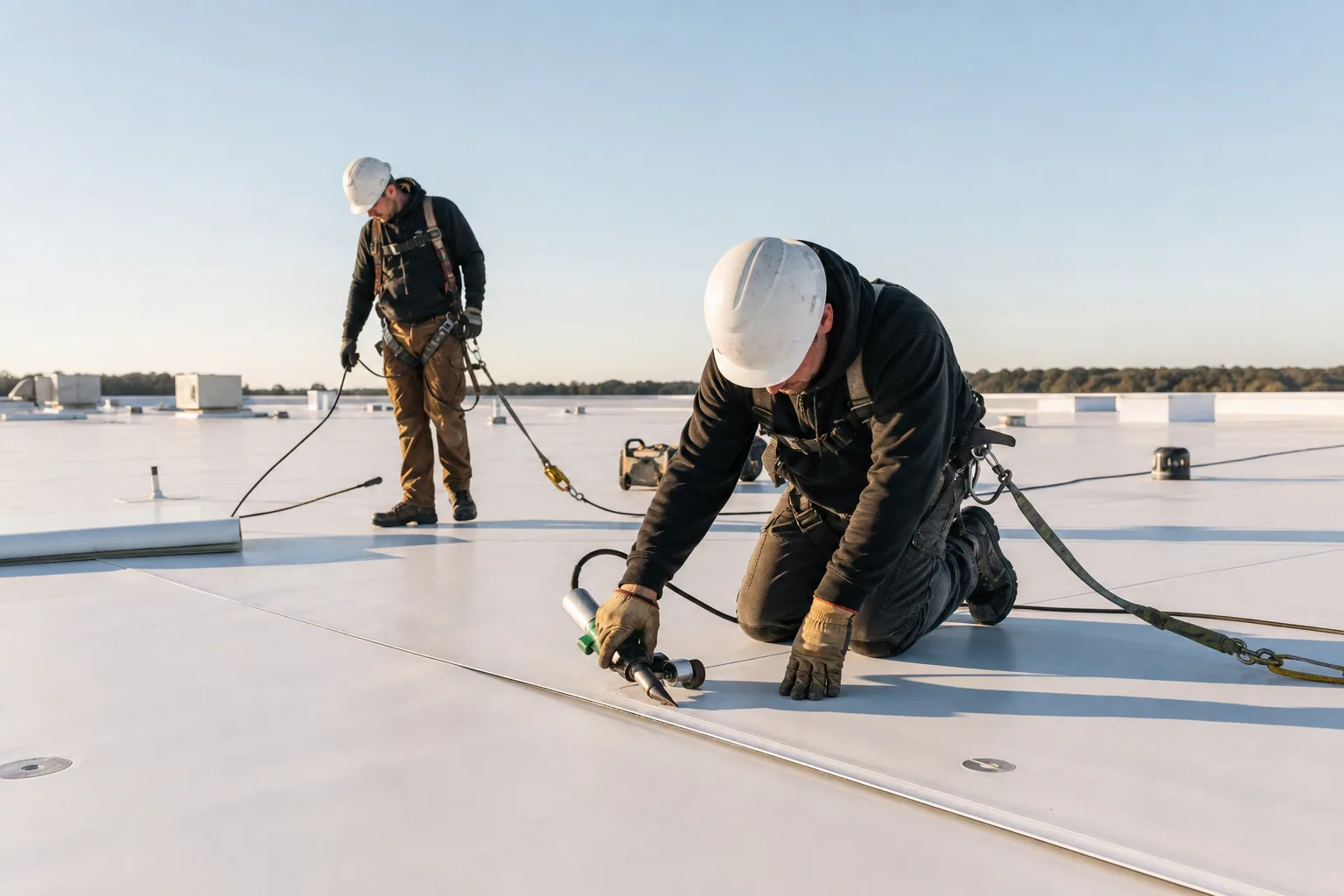
A maintenance visit should leave a roof section easier to manage than it was at arrival. In Grand Prairie, TX, the first check is the water path from field membrane to drain, scupper, curb and edge. We note what is open, what is holding water, and what needs a closer test before recommending work. The Great Southwest Industrial District is distinct from Downtown Grand Prairie. A distribution roof with active loading and a downtown commercial roof can require different access windows, even with similar assemblies. We record the observed condition and schedule the next action around the building's operating needs.
First check: follow the drainage route
Debris at a drain can hide a larger restriction, while a clear bowl does not prove that the full route is moving water. We inspect the strainer, bowl, nearby membrane, seams and any cricket that directs flow. At scuppers, the transition through the wall and the exterior discharge deserve their own look. We note ponding location and depth when present, then compare it with the roof's slope and outlet arrangement. The goal is to separate routine cleaning from a detail that needs correction.
Grand Prairie's spring and fall are typically its wettest transition seasons. That regional pattern makes drainage checks useful before and after those periods, but it does not establish that a particular property has flooded. A maintenance record should identify the roof area observed, the outlet checked, and any water that remained after conditions allowed a fair review. For recurring ponding, we trace the drain, scupper and cricket arrangement before selecting a repair.
Roof assembly: keep compatible materials together
A maintenance plan starts with the assembly already in place. We identify the visible membrane or metal surface, inspect seams and transitions, and note previous patches that may affect the next repair. On a thermoplastic roof, a probe can help locate a seam that has separated. On EPDM or modified bitumen, the inspection follows the system's own lap and flashing details. We do not apply a generic sealant over a surface simply because a small opening is visible.
Grand Prairie's hot summer conditions put repeated solar exposure on exposed roof details. Regional climate normals place average July and August highs near the mid-nineties, with some days reaching triple digits. That context informs the timing of roof work and attention to surface movement; it does not diagnose a roof by itself. Our record distinguishes weather context from observed splits, loose terminations, open laps or brittle material. For a documented system review, TPO seam and flashing details and EPDM repair conditions are assessed according to the installed assembly.
Diligence Notes: sort findings by action
Each finding needs an action that matches its condition. We separate housekeeping, a localized repair, a condition that needs testing, and an item to monitor at the next visit. A loose termination beside a curb can let water move beneath the surface, while a blocked outlet can keep an otherwise intact section wet. The report names the roof section and detail, describes what was observed, and includes photographs that show the repair boundary. That makes the next visit comparable instead of starting from memory.
On a distribution property in the Great Southwest Industrial District, dock schedules, rooftop units and pedestrian routes can limit where a crew stages. We confirm the access window before bringing tools or moving materials. A downtown office or retail building may need a different route through occupied space. Our maintenance sequence accounts for those constraints without treating every Grand Prairie roof as the same property type. The resulting condition report can support a planned roof asset record across more than one building.
Repair boundary: act before a small defect spreads
A maintenance visit is not a reason to patch every mark. We test the suspect detail, compare it with adjacent seams and transitions, and decide whether water has a direct path into the assembly. When evidence supports a contained repair, we define the area and specify compatible materials. If moisture extends beyond the visible opening or insulation has lost its function, the recommendation may involve a broader repair or replacement discussion. Keeping those options separate helps the owner approve the work that fits the evidence.
For an active leak, the response changes from routine upkeep to immediate protection and diagnosis. Our crews can respond around the clock, including weekends and holidays, to limit exposure while the source is traced. Follow-up maintenance then verifies the repair area and checks whether another drainage or flashing condition contributed. A commercial roof inspection gives a broader condition picture, while targeted repair work addresses the confirmed defect. The closeout record states which work was completed and what remains to monitor.
Access window: plan around building activity
Access planning is part of maintenance, not an afterthought. We confirm hatch or ladder access, escort needs, restricted areas, delivery routes and any rooftop equipment that cannot be interrupted. For active warehouse and manufacturing operations, a work zone can be separated from loading and employee paths. The owner can identify quiet periods, production changes or tenant notifications before the crew arrives. That information narrows the visit to the roof areas that can be inspected safely and thoroughly.
When a repair requires opening the roof, we coordinate the sequence so exposed materials are protected and the system is closed at the end of the shift. A Diligence Notes records weather limits, materials used, and any condition that prevented a complete test. For multiple buildings, the same roof map and naming convention should be carried forward so maintenance findings remain comparable. To request a documented visit, share the roof area, current leak status, known assembly, and access window. We can inspect the roof and clarify whether the next step is cleaning, repair, testing, or a larger scope.
Commercial Roofing Questions
What should a maintenance record show after each visit?
A useful record names the roof section, observed detail, action taken, and any condition left for follow-up. Photos should show the finding in context, not only a close crop. We also note where access was restricted or where water conditions prevented a full test. On a Grand Prairie property, that record can distinguish an industrial loading area from a separate office or downtown section. The next visit can then compare the same seams, outlets, curbs and repair boundaries without assuming the roof stayed unchanged.
Can routine maintenance include a coating over small cracks?
A crack needs a cause and a compatible repair before a coating is considered. We check whether the surface is sound, whether moisture is present beneath it, and whether the crack follows a seam or transition. Coating over a moving or wet detail can hide the condition without correcting it. If the assembly qualifies for restoration, the scope should include surface preparation, repairs, test areas and a defined application sequence. Otherwise, a localized repair may be the more direct choice.
How are recurring drain problems handled?
The outlet and the route feeding it are inspected together. We look for debris, damaged strainers, low areas, obstructed scuppers and crickets that direct water away from the drain. If the same location remains wet after cleaning, we document the condition and determine whether slope or membrane work is involved. Seasonal rainfall patterns in North Texas make a post-rain review useful, but the recommendation comes from the roof's actual drainage behavior.
Can a maintenance visit fit around loading and tenant schedules?
Yes, the access window is set before the crew mobilizes. We identify the roof entry, loading conflicts, occupied areas, equipment restrictions and any route that must remain open. A Great Southwest Industrial District warehouse may need work separated from dock activity, while a downtown commercial property may require a different tenant notification. The scope can be split by roof section when one visit would interrupt operations.
When does a maintenance finding become a larger repair?
A larger scope is justified when testing shows the defect reaches beyond a single detail or when moisture affects adjacent materials. We define the proposed boundary, explain what the repair includes, and document any uncertainty that still needs investigation. If the roof section is broadly deteriorated, we compare a repair with recovery or replacement options rather than extending patches without a clear endpoint. The closeout record identifies the selected work and remaining monitoring items.
Schedule a documented roof maintenance visit
Share the roof area, any active leak, the known assembly, and an access window. We will inspect the drainage route and roof details, then document the conditions that support cleaning, repair, testing, or a broader scope.
Call 555-555-5555 or request a roof assessment.