
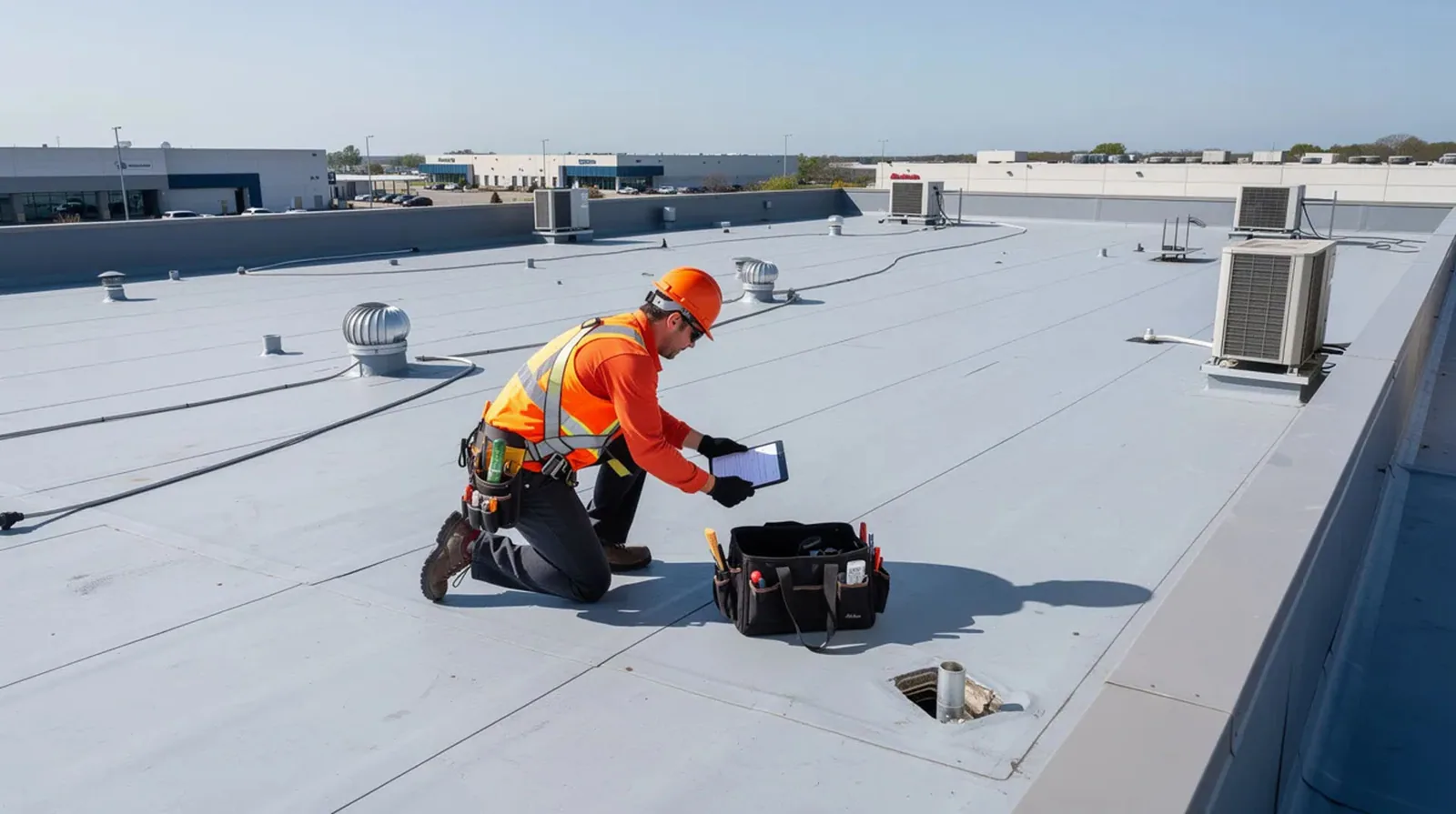
A condition report should let someone find the roof area and understand what was observed there. We map the section, describe the assembly we could identify, attach photographs to the detail, and separate confirmed conditions from items that need access or testing. For Grand Prairie properties, that record also captures loading, equipment, and work-window limits that affect the next scope.
Build the inspection route:
Before mobilization, we review roof plans, prior repairs, leak locations, and access permissions. The route follows roof zones and transitions, not a random walk across the surface. We note the membrane or panel, seams, flashings, curbs, drains, scuppers, edge metal, and visible insulation or substrate conditions. A commercial inspection can cover accessible areas; a drone survey may document high or obstructed elevations when suitable.
Grand Prairie’s large warehouse and distribution footprint makes roof access planning relevant to the field visit. We confirm whether ladders, lifts, roof hatches, escorts, or loading restrictions apply. A report states which areas were reviewed, where visual access stopped, and whether a follow-up test is recommended. It should not imply that an inaccessible area has the same condition as the roof section beside it.
Make each photograph useful:
A photograph needs a location, direction, and reason for inclusion. We label the roof zone and detail, then describe the visible condition without calling a stain a leak source or surface wear a system failure. A wide view shows context; a close image records a seam, curb, drain, or edge. When the image cannot establish attachment or moisture below the surface, the report explains what method could answer that question.
July and August in DFW average highs around 96°F, and the region sees an average of 20.2 days annually at or above 100°F. Those conditions can affect the inspection window and surface temperature. We document any access or handling limit relevant to the visit, then keep weather context separate from the roof finding. The observation remains tied to the date, area, and visible evidence.
The caption should answer three questions: where is the camera, what detail is visible, and what does the image support? Avoid an unlabeled collection of close-ups. A broad view can orient the reader, while a second frame shows the defect. If scale matters, include a safe reference object and note that the image does not measure concealed damage. A drone inspection can help with an elevation that is difficult to view from an approved walking route.
Describe severity without overreach:
A useful report distinguishes an active opening, a deteriorated detail, an isolated patch, a drainage concern, and a condition that needs testing. It marks the repair boundary and explains why that limit was selected. If water has appeared inside, we compare the reported location with roof transitions and low points, while keeping the suspected entry path separate from what was directly seen. That makes a leak investigation easier to scope.
When the report notes a possible assembly-wide issue, it should show what evidence supports broader review and what remains uncertain. Moisture scanning, test cuts, or design input may be appropriate, but they are not interchangeable. A moisture survey can help identify areas for further evaluation when conditions support that method. We say what the measurement can guide and who must approve any invasive confirmation.
Connect finding to action:
Recommendations should name the action, location, urgency, and next decision. A patch, flashing correction, drainage adjustment, or replacement review should each have its own boundary and assumptions. We identify whether temporary protection is needed, what access the scope requires, and which issue may grow if delayed. For a roof with repeated repairs, a capital plan can compare the section with other observed needs.
Grand Prairie’s mapped industrial, highway, and downtown areas include different operating patterns. A distribution roof may need a delivery window or dock coordination; a downtown office can have a different occupant schedule. We include those only when they affect the work sequence. Where permit or framing documentation is relevant, we list it as a project coordination item rather than treating a field report as a structural review.
Use one recommendation per observed issue. A drain obstruction may need cleaning and a return check; a failed membrane seam may require a compatible repair; wet insulation may need further evaluation. State whether the recommendation is based on visual review, testing, or owner records. If two causes remain possible, list the next test and do not merge them into one scope line. That keeps the estimate traceable to the actual evidence.
Timing language should help the owner schedule work. Identify if the condition is active, exposed to another rain event, or stable pending a test. State what temporary measure is approved and when it should be revisited. A flashing repair may require access to the wall or curb detail, so include the coordination needed before the crew is dispatched.
Handoff and records:
The final report includes date, areas inspected, assembly notes, photo references, limitations, observed conditions, recommendations, and any unresolved questions. A manager should be able to pass it to an estimator or facilities contact without translating shorthand. Keep approved repairs and later photographs with the record so the next inspection can compare the same section. A roof asset record can preserve those updates over time.
Share the roof plan, recent service history, leak locations, and access contact before the visit. We can prepare a documented review for Grand Prairie, including properties near the Great Southwest Industrial District or I-30. After inspection, the report identifies what was seen, what was not reachable, and the next action that would reduce uncertainty. The owner can then approve a bounded repair, additional testing, or a broader capital review.
When the report supports a larger project, carry its roof-zone identifiers into the estimate, submittal, and closeout package. That avoids renaming the same area at each stage. If a code or framing document needs review, list the question and responsible design contact separately from field repair recommendations. The permit and structural record should not be confused with a visual condition report.
Commercial Roofing Questions
What should a condition report show besides photographs?
It should identify the roof zone, visible assembly, observed condition, access limits, repair boundary, and recommended next action. The photo caption should help a new reader locate the detail and understand why it matters. We also mark questions that need testing or design input.
Does a roof condition report confirm the leak source?
It can trace the reported interior area toward likely roof transitions, but the entry point needs field evidence. We separate the indoor symptom from the roof detail observed and identify any test that could confirm the path. That keeps the repair scope tied to the evidence.
Can you inspect areas blocked by equipment?
We identify the blocked zone and the access constraint. A drone or approved lift may provide a view in some conditions, while other questions need a return visit or controlled access. The report records what additional method would be useful and what it would establish.
How does the report support a bid?
The report gives the estimator a mapped work area, visible condition, assumptions, access requirements, and open questions. If concealed moisture or deck condition could change the price, we identify the needed test or allowance before the scope is finalized. That makes alternatives easier to compare.
Set the next roof decision
Share the roof plan, affected areas, known system, recent work, and the contact who can authorize access. We will document the condition and identify the next scope decision.
Call 555-555-5555 or request a roof assessment.