
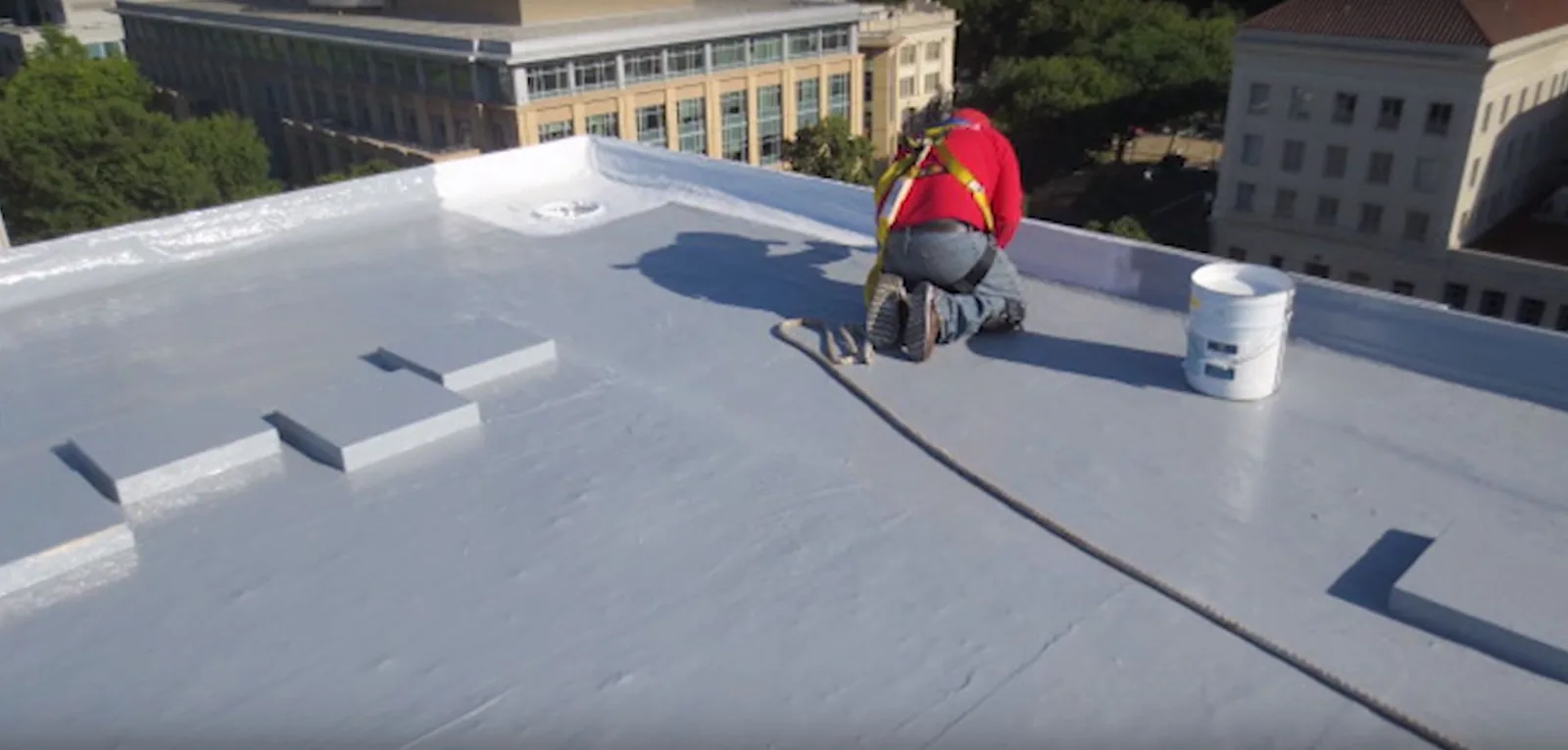
A TPO seam that has lifted at one corner needs a closer check before anyone calls for a full roof replacement. We compare the weld, membrane condition, edge termination, and water path, then test the area after it cools. On Grand Prairie roofs, July and August heat can affect work windows and material handling. Spring storms are a reason to inspect a reported condition, not proof that a particular roof was struck. We identify the roof section, separate repair from broader assembly concerns, and record the next decision for the owner.
First check: the weld and its edge
Thermoplastic polyolefin joins through heat welding, so a seam needs sound contact across its width, not a bead of surface sealant. We look for an open lap, fishmouth, contamination, uneven weld, or a section that pulls apart under a controlled probe. The check continues to the edge metal and any termination bar, because field membrane can stay intact while the perimeter connection has loosened. We mark the location and compare it with the leak report before defining how far a repair should run.
For a distribution roof in the Great Southwest Industrial District, loading activity may affect the access window and staging area. A commercial roof inspection can map adjacent seams and transitions when the reported defect is part of a wider pattern.
Read the assembly before choosing a repair
A TPO surface is only one layer in the roof assembly. We confirm the membrane type and condition, inspect insulation and cover board at suspect areas, and note earlier patches or coating that may change how a new weld bonds. If the roof includes multiple sections or repairs from different periods, the map keeps each condition in its own boundary. We do not assume that a dry-looking field proves the substrate is dry. Where moisture is uncertain, a survey with verification can help decide whether a contained repair remains practical.
That distinction matters when a recover is considered. A new layer cannot correct trapped moisture, loose insulation, or an unstable deck. If only a defined section has failed, a repair may preserve the surrounding assembly. If findings extend farther, we compare a recover with removal and replacement, using the roof condition and project constraints to set the work sequence.
Trace the leak past the membrane field
Water can travel from a seam before appearing on a ceiling, so the interior stain is a starting point rather than a roof location. We trace the likely route uphill and check nearby drains, penetrations, curbs, wall transitions, and changes in slope. At each detail, we look for a break in the membrane or a termination that lets water move below the surface. When a drain is holding debris or discharging slowly, we record that separately; the seam repair should not conceal a drainage issue.
On an I-20 Corridor building, commercial uses can differ between retail, office, and distribution properties. The corridor is a recognized district, but the roof evidence still has to come from the individual property. A documented leak investigation can compare the reported interior area with exterior transitions. We photograph the suspected entry point, test the seam where appropriate, and identify whether the repair boundary reaches the drain or stops at the weld.
Set the work in a safe order
Surface preparation comes before a new TPO weld. The crew removes dirt, moisture, and incompatible material from the repair area, then checks that the membrane can accept the selected patch. Heat, wind, and roof temperature affect how work progresses, so a small test weld can confirm the setting before the field repair proceeds. If rain threatens an open repair, the work area is secured and the site contact receives a clear status.
Hot summers make access planning part of the sequence in Grand Prairie. We coordinate roof entry, lift or ladder locations, occupant notices, and protected routes for equipment service. A warehouse with active loading uses a different access window from an office or retail building. If the building must remain occupied, the scope identifies work zones and any temporary protection needed below. For active leaks, our emergency response is available at any hour, every day, while permanent TPO work follows the verified condition and suitable application window.
Choose repair, recover, or replacement from the findings
A localized seam defect with sound membrane and substrate may support a contained repair. Repeated failures, broad brittleness, or widespread moisture can shift the decision toward removal or a larger replacement scope. A recover is considered only after checking the existing assembly, attachment, drainage, and applicable project requirements. The recover option is not treated as a shortcut around an unresolved moisture question.
Cost and schedule reflect more than membrane area. Access, tear-off, insulation replacement, curb details, edge metal, occupied operations, and disposal can each affect the work. If a property contains manufacturing or logistics activity, sequencing around loading and equipment service may influence crew access. Owners can compare TPO with PVC membrane or KEE roofing after the assembly and maintenance needs are understood.
Leave a record that supports the next roof decision
The closeout should show the repaired section, seam or flashing work, product information, test results, and any area left outside the scope. Photos of the original condition and finished weld give the facility manager a practical comparison for the next inspection. We note access limits, weather interruptions, and any coordination with mechanical or electrical trades. That detail helps distinguish a new issue from a location already repaired and keeps maintenance tied to the actual roof map.
For an industrial or distribution building, records can also help plan later work around loading and rooftop equipment. Share the roof section, active leak status, known assembly, and preferred access window. We can inspect the TPO, document what the weld and substrate show, and outline whether a repair, recover, or replacement is the next responsible step.
Commercial Roofing Questions
How do you know whether an open TPO seam needs a patch or a larger scope?
The seam test is only one part of the decision. We check adjacent welds, membrane flexibility, terminations, insulation, and the reported water path. A single failed transition may support a contained repair, while recurring separation or moisture across several sections can change the scope. The report marks the boundary and notes any test that remains before pricing is final.
Can a TPO roof be repaired after a spring storm?
Yes, when the membrane and substrate remain suitable for a compatible repair. DFW severe weather can include hail and damaging wind somewhere in the Metroplex, but a regional event does not establish damage at a particular property. We inspect seams, punctures, edges, drains, and curbs, photograph observed conditions, then protect any active opening while the permanent repair is scheduled.
What information helps plan a TPO installation around building operations?
A roof plan, equipment locations, loading schedule, access rules, and any shutdown limits give us the first work-sequence inputs. We divide the roof into workable sections, identify areas that must stay open, and coordinate rooftop trades before removing or welding membrane. The plan can then show staging, daily protection, and the closeout records the facility needs.
Does a white TPO surface eliminate summer heat concerns?
A reflective surface does not remove heat from the workday or prove that the insulation and deck are performing as intended. We check roof condition, drainage, attachment, and any moisture concern separately. Application timing still follows product requirements and measured conditions. Grand Prairie heat influences scheduling, while the building's actual assembly determines the roof scope.
When should an owner compare TPO replacement with a recover?
That comparison starts after moisture, attachment, drainage, and existing-layer conditions are known. If the existing assembly can remain and project requirements permit another layer, a recover may be evaluated. Wet insulation or unstable areas require a different plan. We document the evidence by section so the owner can compare removal, repair, and recover without relying on appearance alone.
Review the TPO roof section
Send the roof area, active leak status, known assembly, and access window. We will inspect the seam and transitions, record the water path, and explain whether a contained repair or broader scope fits the observed condition.
Call 555-555-5555 or request a roof assessment.