
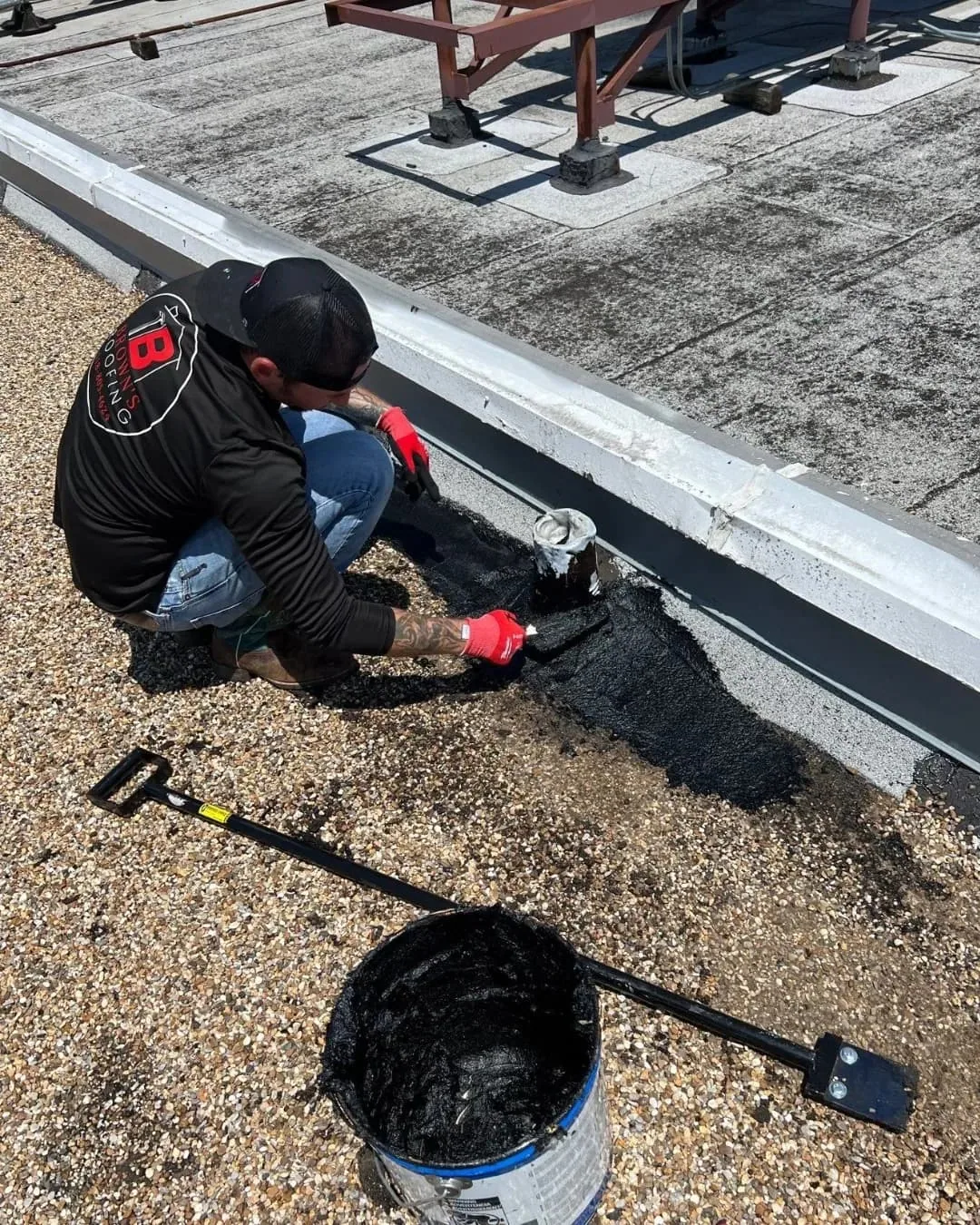
A split lap or blistered cap sheet can leave a modified bitumen roof with more than one possible repair boundary. In Grand Prairie, TX, we begin at the reported section and check the surface, seams, drains and transitions before selecting materials. SBS and APP systems use asphalt-based plies, but their reinforcement, surfacing and installation details vary. The Great Southwest Industrial District includes warehouse, distribution and manufacturing uses; along I-30, the City describes a broader business and entertainment corridor. Roof access and daily operations differ, while the assembly decides the repair sequence.
First observation: map the exposed layer
Granules, mineral surfacing or a reflective coating can hide the condition of the cap sheet. We note open laps, fishmouths, cracks, exposed reinforcement, soft areas and patches that interrupt the original surface. At a termination or curb, the field membrane has to connect to flashing without leaving a path behind the detail. We compare the interior report with the roof section and trace water toward drains or penetrations rather than assuming the nearest defect is the entry point.
Plies and repairs reveal how the assembly was built. A smooth area may be a prior patch, while a raised edge can signal a lap that no longer lies flat. We photograph each observation and mark the test locations before cutting or heating material. If records identify SBS or APP, we check that information against visible reinforcement and product details. An inspection record can help the owner distinguish confirmed surface failure from questions that require a test opening.
For a roof with several repair generations, we mark each seam and patch before assigning a boundary. One newer layer may cover an older split without correcting the original transition. We check whether edges are bonded, whether surfacing blocks a clean tie-in, and whether moisture extends beyond the visible opening. The Diligence Notes separates direct observations from conditions that need a test opening. That distinction helps a general contractor coordinate follow-on trades without carrying an uncertain repair into unrelated roof sections.
Assembly review: distinguish SBS from APP
SBS and APP describe different modifiers used in bitumen membranes, not interchangeable labels for every dark roof surface. We review available product records, membrane layers, surfacing and repair history before choosing a compatible material. Built-up roofing also uses multiple asphaltic plies, but its construction and surfacing may call for another repair method. When the system remains unclear, the scope records that limit and provides a test step instead of relying on appearance alone.
A repair can involve a compatible membrane patch, reinforced flashing or a controlled replacement of a deteriorated section. The substrate must be stable, and the lap edges need preparation suitable for the selected product. Heat-applied work also requires the right precautions and conditions at the roof. A built-up roof calls for a different layer review, and EPDM membrane work requires its own seam and adhesive checks. The distinction matters when a previous repair crosses from one material into another.
Water path: test laps, drains and transitions
A lap opening can admit water even when the field surface looks intact nearby. We probe accessible edges, inspect corners and compare the defect with the drainage route. Ponding or debris may slow drainage, but neither observation alone identifies the point of entry. We note whether moisture is confined to one section or appears to continue beneath adjacent plies. A drain and scupper review can be included when outlet conditions intersect the reported leak.
DFW summers expose roof details to repeated heat, so crews plan handling and work windows around actual conditions and product requirements. The regional normals show July and August average highs near 96 degrees, with some days at or above 100. That context informs scheduling; it does not establish that a particular modified bitumen roof has failed. For a property in the I-30 corridor, access coordination may also account for business hours, tenant movement and rooftop equipment. We confirm these constraints before setting the repair boundary.
Scope options: contain a repair or compare broader work
A localized repair makes sense when the damaged ply is isolated, the surrounding material is bonded and the substrate remains suitable. We describe the surface preparation, reinforcement, flashing tie-in and checks that close the work. If blisters, open laps or deteriorated plies recur across several roof sections, a patch list may only postpone a system decision. The owner then needs findings by area, not a general statement that the whole roof is worn.
Recovery or replacement is evaluated against existing layers, drainage, edge conditions and building use. Grand Prairie permits call for a roof-framing plan and engineer seals or signatures for buildings above the stated area threshold, and structural plans for metal buildings require an engineer seal regardless of size. We verify project requirements with the City before defining a construction submittal. A recover assessment can compare options, and replacement planning can identify sequencing, tear-off limits and transitions that need coordination.
Closeout record: leave the next decision clear
After work, the closeout record identifies the roof section, materials used, repaired laps and flashing details, photographs and any area that could not be tested. This record gives a facility team a repeatable starting point for later checks. At distribution properties in the Great Southwest Industrial District, staging and dock activity may affect when a crew can reach a roof section. We set the access window with the site contact and keep the work zone tied to the approved scope.
Spring is the DFW region's peak season for thunderstorms and severe weather, but regional activity is not proof of damage to an individual roof. After a storm, we check the membrane, edge metal, drains and penetrations against observed conditions. A hail review can document findings without expanding the scope beyond what testing supports. For recurring upkeep, a maintenance visit can revisit the same drainage and lap details.
Commercial Roofing Questions
What separates an SBS membrane from an APP membrane during repair planning?
Product records and installed layers are the first check. We confirm the membrane type and its surfacing before selecting a repair method, then test compatibility when needed. The scope identifies what is confirmed and how the selected patch ties into the existing roof.
Can a blister be cut open and patched without checking nearby plies?
The surrounding assembly needs review before that repair is set. We look for trapped moisture, loose bonding and a path into adjacent laps, then define how far the repair should extend. If testing shows a wider condition, the work boundary follows those findings.
How do you handle a modified bitumen leak near rooftop equipment?
We inspect the curb flashing, adjacent membrane and drainage route as one roof section. Equipment access and operating restrictions are coordinated before work begins. The closeout shows which transition was repaired and any related condition left for a separate decision.
When should a Grand Prairie owner compare repair with replacement?
Repeated open laps, deteriorated plies or conditions across several sections can justify broader review. We map the test results, check drainage and attachment details, and compare the repair boundary with recovery or replacement. The proposal describes the sequence and project requirements for each option.
Does summer heat determine whether a bitumen repair can proceed?
The crew checks actual surface conditions and the selected product instructions before applying material. Regional heat affects staging and work timing, but the roof itself and manufacturer requirements govern the method. We can coordinate an access window that keeps the work sequence clear.
Document the modified bitumen roof section
Share the leak location, known SBS or APP records, active water status and roof access window. We will inspect the laps and transitions, then provide a repair boundary and next-step options.
Call 555-555-5555 or request a roof assessment.