
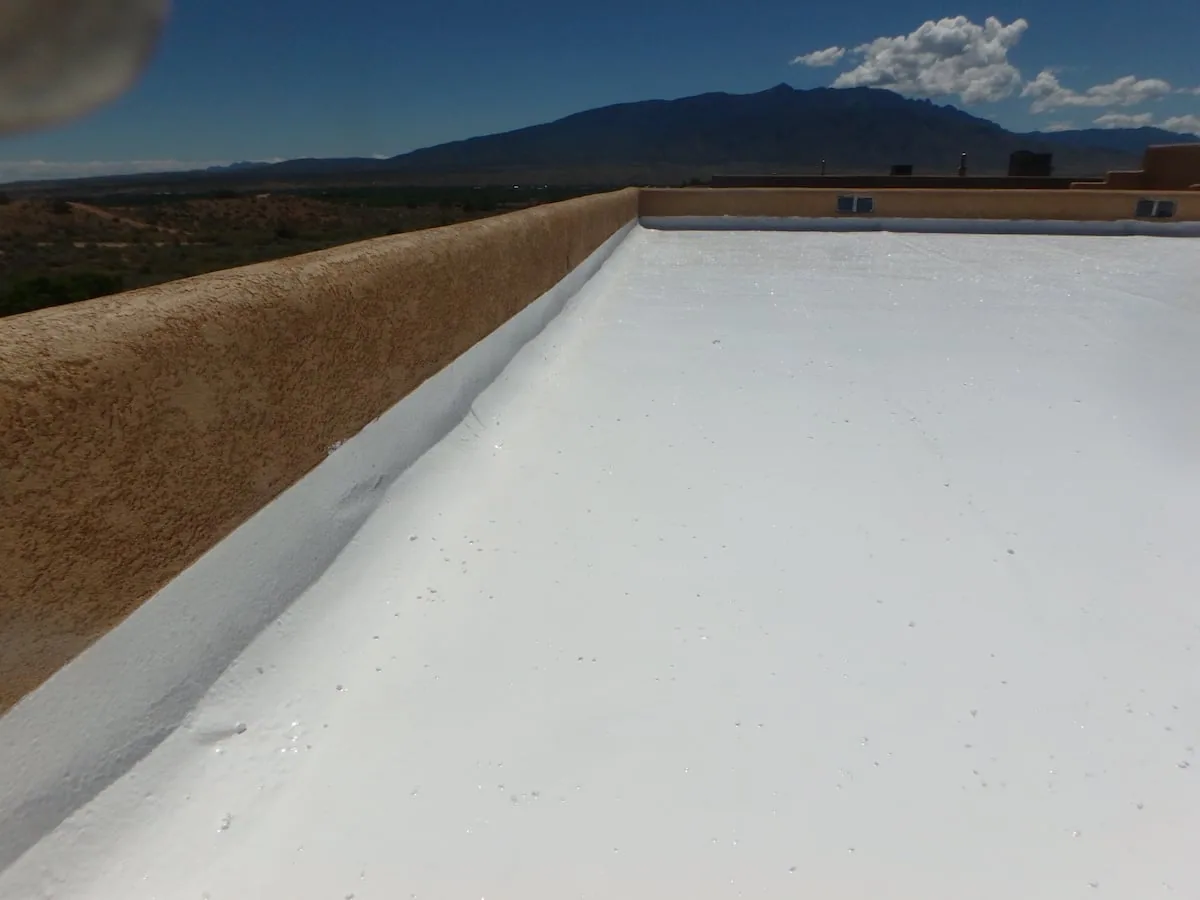
Loose gravel, exposed bitumen or a soft area can signal different conditions within a built-up roof. In Grand Prairie, TX, we start by mapping the affected section and checking the cap, edges, penetrations and water route. BUR is a layered assembly, so a surface repair only works when the plies below it can support the tie-in. The Great Southwest Industrial District has a broad warehouse, distribution and manufacturing base, while downtown presents a different access pattern. We plan the inspection around the roof section and building operation, then set the repair boundary from what testing confirms.
Surface review: find the layer that moved
Gravel can conceal a split, while a smooth cap sheet may show wear at a lap or flashing transition. We look for displaced surfacing, open seams, blisters, exposed reinforcement and ponding that persists around drains. At the perimeter, we check how the membrane turns up and terminates. A leak report is compared with those observations across the water path, because moisture can travel between plies before it appears inside. The first Diligence Notes records each roof section separately.
Some BUR assemblies use a gravel surface, while others carry a cap sheet or coating. We identify visible layers and review available records rather than assume every dark area is the same material. A test cut may be useful when the condition below the surface changes the repair choice. We document its location and close the opening with a compatible detail. A commercial inspection can establish the layer sequence and identify where the assembly needs further testing before a scope is priced.
Ply condition: separate wear from trapped moisture
Built-up roofing relies on bonded plies to keep water out. A localized split may be repairable when surrounding layers remain stable, but widespread blisters, open laps or wet insulation can change the decision. We inspect around drains, penetrations and past patches, then compare the surface condition with the reported interior area. If an opening is needed, the findings describe the tested layers rather than projecting a condition across the entire roof.
The repair method depends on surfacing and temperature at the work area. A patch may use compatible bitumen and reinforcing material, with surfacing restored after the membrane detail is closed. A cap sheet transition needs a sound lap that sheds water. Where an owner asks about a coating, we first check whether the surface and plies can support that system; silicone coating work has separate preparation and drainage requirements. We identify preparation, tie-in dimensions and any access constraints in the work order. Modified bitumen systems have related asphaltic materials but a different sheet assembly, while insulation and cover board work addresses layers that support the field membrane.
Drainage route: check the field and the outlet
A BUR roof can hold debris around drains, overflow points and equipment supports. We trace the route from the high side of the section to its outlet and check whether the surface redirects water around a patch. Ponding is an observation, not a complete diagnosis. The inspection notes outlet condition, drainage slope, blisters and any soft or displaced areas that may need additional testing before repair proceeds.
DFW spring storms bring regional severe-weather activity, including heavy rain and damaging wind somewhere in the Metroplex nearly every year. The regional pattern supports a post-storm roof check, but it cannot establish what happened at a particular building. On a distribution property in the Great Southwest Industrial District, dock movement and rooftop equipment can affect access to drains and staging. We coordinate a workable window and keep the active section defined. If a water path involves blocked outlets, drain and scupper repairs can be scoped with the membrane work.
On a wide roof, we divide the inspection into sections and record where surface conditions change. That map helps separate a drain issue from a field condition and gives the crew a defined route for follow-up. We note penetrations, walkway impacts and equipment supports that interrupt drainage. The purpose is a usable work sequence: address the confirmed opening, protect adjacent layers, and keep the owner informed if the test shows a larger condition.
Work choice: compare repair, recovery and tear-off
A focused repair addresses a confirmed split, failed flashing or isolated blister where the surrounding plies remain suitable. If testing finds deterioration over several areas, the owner may compare a broader recovery with tear-off and replacement. That comparison checks existing layers, deck condition, drainage, edge height and how new details connect to curbs and walls. We list what is confirmed and what remains concealed until construction exposes it, so a repair proposal does not quietly become a larger scope.
For new commercial construction above 5,000 square feet, Grand Prairie requests roof-framing documentation with engineer seals or signatures. We confirm the current requirements with the City for the actual project rather than infer approval from a roof type. In the Central Business District, access and occupant coordination may guide phasing differently than in an industrial facility. A recover evaluation can compare existing layers, and replacement planning can map tear-off limits and transition details.
Record the repair boundary before the next visit
After the repair, the closeout record identifies the area, ply layers addressed, materials installed and photos of completed transitions. We note whether any section remained inaccessible or whether further testing was recommended. That record allows maintenance staff to revisit the same drains, parapets and patch edges without relying on memory. In the I-30 corridor, the mix of business and entertainment properties can bring different operating hours, so the access window and work zone belong in the field record.
A follow-up visit checks whether the repaired lap remains closed and whether nearby drainage stays clear. On a built-up assembly, review drain bowls and laps before DFW's wetter transition months, then revisit any locations with reported ponding. It is not evidence that a building has taken on water. A maintenance plan can keep observations by section, and a photo condition report can support future repair or capital planning. The next decision then starts with a specific roof location.
Commercial Roofing Questions
How can you tell whether a BUR blister needs a repair or a test opening?
The blister's size, surrounding bond and moisture indications guide that decision. We inspect nearby laps and transitions, then decide whether a small opening will answer the question that affects scope. The report identifies tested conditions separately from areas that remain concealed.
Does gravel surfacing need to be removed before a BUR patch?
We expose only the area needed for a sound tie-in, remove loose surfacing and restore the detail so water sheds across it. The proposal states the preparation and closeout check.
What should a Grand Prairie property manager provide before an inspection?
A roof plan, known repair history, leak location and access restrictions help us select the first roof section. We confirm equipment and tenant requirements at the site, then record what can be inspected safely. A test opening is coordinated before it changes the work area.
Can a built-up roof be recovered instead of removed?
Recovery remains practical only when existing layers, deck condition, drainage and flashing height support it. We inspect those elements and check the applicable project requirements before comparing it with tear-off. The options identify added transitions and any concealed conditions that could alter the scope.
How do storms affect a BUR inspection?
After regional severe weather, we check the actual roof for displaced surfacing, opened seams, debris and drainage changes. DFW storm activity provides a scheduling cue, not a finding about a specific building. We photograph observed conditions and connect each one to a repair decision.
Review a built-up roof by section
Send the roof area, active leak status, available assembly records and access window. We will inspect the surface, plies and drainage path, then document a repair or system decision.
Call 555-555-5555 or request a roof assessment.