
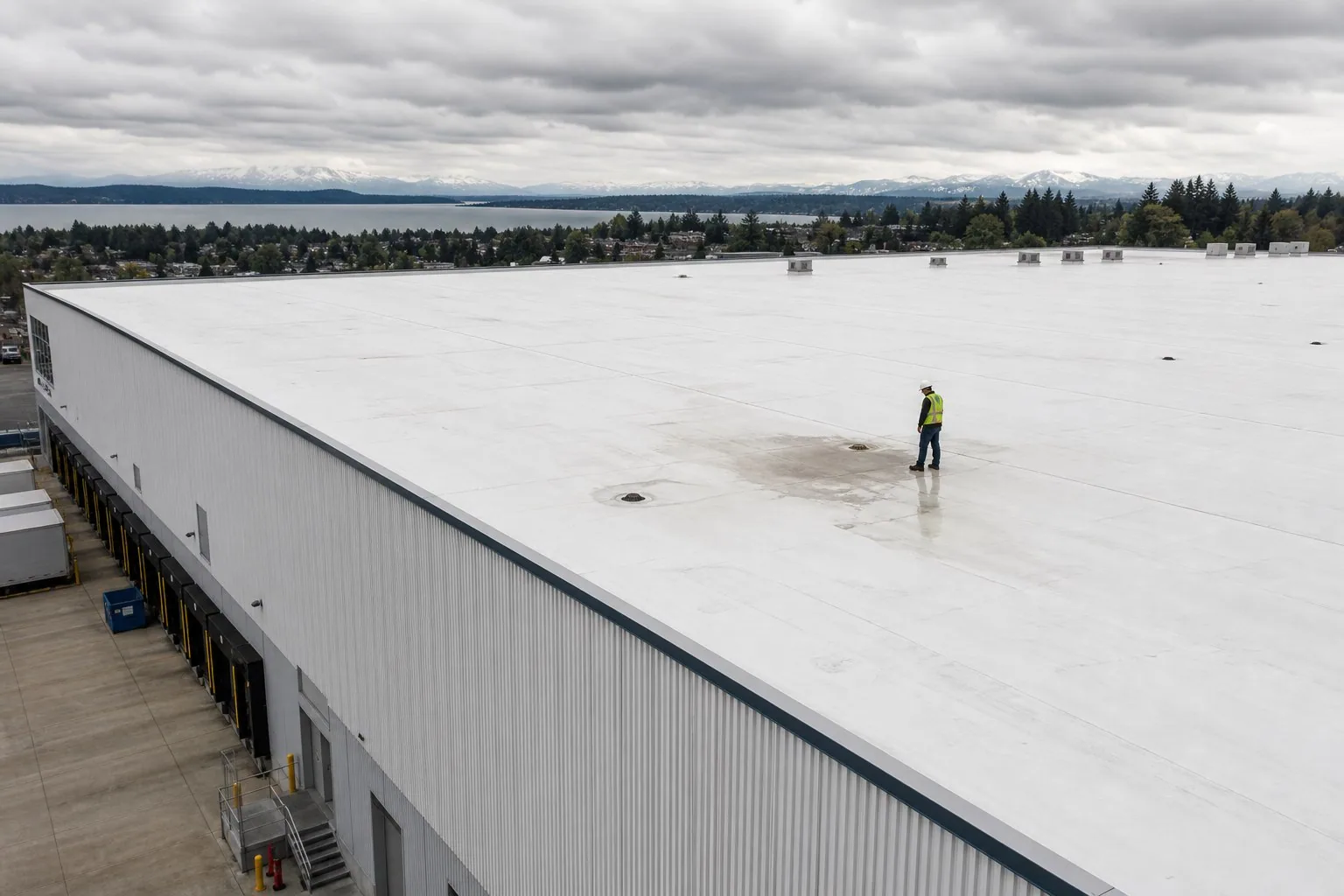
A drip over a work area calls for two records at once: where water is showing inside and which roof details sit above that zone. We protect the interior as needed, then inspect the membrane, seams, curbs, drains, and wall transitions that could feed the leak. In Grand Prairie, the work sequence may differ between the Great Southwest Industrial District and the Central Business District, where access and occupied space vary. Neither location proves what failed. Testing the actual assembly sets the repair boundary and helps the owner decide what can be stopped today and what needs a broader scope.
Protect the room and map the report
We start with the interior report: time noticed, weather at the time, affected room, and whether water is still entering. That information helps the crew compare the ceiling mark with drains, curbs, laps, and penetrations on the roof. We can place temporary protection while checking the path, especially where equipment, inventory, or occupied areas sit below. A ceiling stain may reflect water that traveled along a deck or framing member, so it is a starting point rather than a roof diagnosis.
Grand Prairie includes warehouse, distribution, and manufacturing uses across much of the Great Southwest Industrial District. A leak near a dock can require coordination with loading activity and stored goods. The I-20 Corridor has a developing retail and corporate role, where the crew may need to keep an entrance usable while tracing the water path. We label the roof and interior locations on the same field record. That gives the owner and general contractor a common view of the affected zone before permanent materials are selected. Emergency dry-in work can protect the building when active water cannot wait for the full diagnostic sequence.
Follow possible entry details
On the roof, we look for open laps, punctures, failed flashing, loose termination bars, deteriorated sealant, drain defects, and changes around equipment supports. We compare those observations with the interior report instead of sealing every nearby detail. If moisture is suspected below the membrane, selected testing can help determine whether it is confined or has spread. We explain the test location and what the result means for the repair. Water that moves beneath a membrane may have a longer route than the visible ceiling area suggests.
Rooftop units and piping create penetrations that move differently from broad field membrane. Curbs need continuous flashing, sound corners, and secure connections to the surrounding roof. Equipment curb and support details may need inspection when vibration, prior service work, or exposed fasteners appear near a leak. At a drain, we look at the bowl, clamping ring, sump, and surrounding membrane. Drain and scupper repairs address the water outlet itself when it is part of the failure.
Match the fix to the roof system
The repair material has to bond with the existing membrane and stay compatible with its surface. We identify TPO, PVC, EPDM, modified bitumen, metal, or another assembly when the evidence allows. Surface preparation, reinforcement, seam welding, adhesive, and flashing methods vary by system. A patch placed over dirt, moisture, or an incompatible coating can conceal a defect without restoring the connection. When the material is unclear, we check before applying a product and keep the uncertainty in the scope record.
Heat is a recurring regional condition. DFW July and August climate normals show average highs in the mid-nineties, with many days reaching 100 degrees. That affects when a repair crew handles and installs materials, but it cannot identify a leak source. The roof section still needs to be dry enough and prepared for the selected method. TPO membrane repairs require attention to the weld and nearby transitions, while other membranes call for their own compatible procedure.
Separate the active leak from future work
Leak repair has a clear immediate goal: stop the confirmed water entry and protect the interior. The scope also records nearby defects that were not opened or included, so temporary stabilization is not confused with permanent replacement. If testing finds wet insulation beyond the detail, we show its extent and discuss removal or a larger repair. If the membrane and substrate remain sound around a single opening, a local patch may be sufficient. The recommendation distinguishes those findings and does not turn every active leak into a full-roof proposal.
Spring is the DFW region’s peak season for thunderstorms and severe weather. The Metroplex sees severe storms in many years, but a leak repair starts with evidence on that roof: inspect seams, penetrations, drains, and the reported water path. After a reported storm, we look for actual impact marks, displaced metal, open seams, and fresh moisture. Hail damage evaluation follows the same evidence-first method. A regional event gives a reason to inspect, not proof that this roof was struck.
Coordinate the visit around operations
Access can determine how quickly the roof is reached. We confirm the roof hatch or ladder, escort needs where applicable, safe staging, and any area that must remain open below. A distribution site may need truck lanes kept clear. A retail operation may need a customer entrance protected. If water is near electrical equipment or stored goods, the site contact can identify immediate interior controls while the roofing crew traces the exterior path.
When rain is ongoing, temporary protection may come before a permanent repair. We record where the temporary measure begins and what follow-up inspection will confirm. A forecast change can alter the sequence, so the owner or general contractor receives an update about access, weather, or a concealed condition that changes the plan. Once the roof is dry and conditions permit, the crew can prepare the membrane and complete the repair to the selected system’s requirements.
Connect the roof repair to the interior result
The closeout should connect the reported interior area with the repaired roof detail. We save photographs of the original condition, preparation, and completed work, then mark the location on the roof map. If the crew saw other conditions that were not included, those are listed separately with a recommended next check. The owner can then compare the next rainfall or inspection with the same location instead of searching the whole roof again.
A recurring leak can justify a larger inspection when water appears in multiple rooms or returns after more than one repair. A written report can compare seams, drains, insulation, and prior patches across the roof sections. A hands-on roof inspection provides that broader record. For a property in Grand Prairie, the report can name the building use and access constraints without treating all local roofs as alike. Share the active leak area, roof assembly if known, and access window to start with the right section.
Commercial Roofing Questions
What should staff do before the roofing crew arrives?
Move people and movable inventory away from the active drip when safe, place a container or temporary protection, and note when the leak appears. Keep electrical or sensitive equipment clear and tell the site contact where water is entering so the roof and interior locations can be compared.
Can a leak be repaired during rain?
Temporary protection may be possible, but a permanent membrane repair usually needs suitable surface and installation conditions. We assess the active water path, secure the interior as needed, and identify the follow-up work once the roof can be prepared correctly.
Why inspect curbs and drains if the water mark is elsewhere?
Water can move beneath a roof covering or along the deck before it reaches a room. We check nearby penetrations and outlets because they may connect to the reported area. The field map records the test path so the repair addresses a supported entry detail.
How do you know if the leak needs more than a patch?
Testing and surrounding roof condition decide the next scope. We look for wet insulation, failed attachment, repeated seam openings, or multiple related defects. The findings distinguish a contained repair from a section that needs removal or replacement.
Trace the active water path
Share where water is appearing, whether it is still entering, the known roof system, and the site access window. We can protect the affected area, inspect the roof section, and document the repair boundary.
Call 555-555-5555 or request a roof assessment.