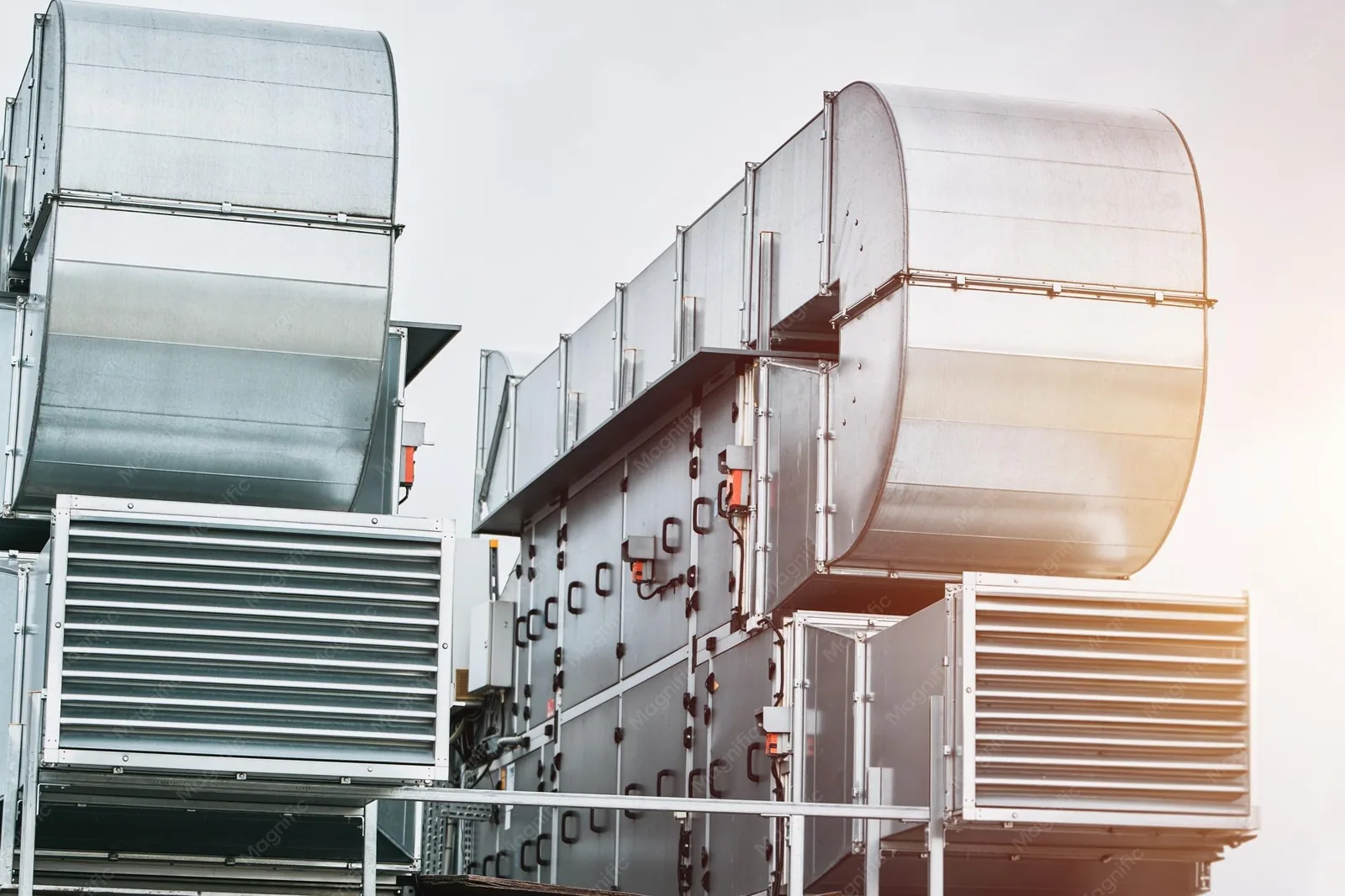
Equipment changes can disturb a roof even when the membrane around a unit looks intact. We check curb height, corners, flashing, fasteners, and nearby seams before closing a repair. In Grand Prairie, the Great Southwest Industrial District contains broad warehouse and manufacturing uses, while the I-30 Corridor serves a different mix of business activity. Those settings can bring different equipment and access limits, but the detail at the roof is what matters. We map the affected curb, confirm the surrounding assembly, and set a repair boundary that keeps water out without blocking service access.
Start where the unit meets the roof
The curb-to-membrane connection carries movement, weather, and maintenance traffic. We look at flashing height, corners, counterflashing, termination, and any change made during equipment service. Loose fasteners, split corners, exposed reinforcement, or a surface patch can show where the connection needs closer review. We also inspect how the curb sits on the roof assembly. A new flashing layer may not solve a problem if the curb itself is unstable or the substrate below is wet.
The Great Southwest Industrial District includes warehouse, distribution, and manufacturing properties. Some roofs there may have several units or piping runs, but we do not assume a standard layout. The field map identifies the unit, nearby roof section, and available service route. For a property near the I-30 Corridor, staging and service access can have another schedule. A roof inspection can document other penetrations when a leak report points beyond one curb.
Follow water around the curb corners
Water commonly enters where a flashing turns a corner, meets a vertical surface, or terminates against a unit. We trace the likely path from the suspected opening toward the roof field, seams, and drains. Sealant may be part of a detail, but it should not hide a separated membrane or failed termination. We remove unsound material as needed, prepare the surface, and rebuild the transition with components compatible with the roof system.
Equipment service can also leave a fastener, conduit support, or access panel disturbed. We ask what work was performed and compare that information with the roof condition, without assuming the cause. If moisture is suspected below the detail, a moisture survey with verification can help establish whether the repair is limited to the curb or extends into the insulation. Drainage around the unit matters too. A low area holding water against a curb can require a separate correction through drainage and scupper work.
Match flashing to the roof system
Flashing methods vary across TPO, PVC, EPDM, modified bitumen, metal, and coating assemblies. We identify the existing material and check whether previous coatings or repairs affect adhesion. A thermoplastic membrane may call for welded flashing, while another roof uses a compatible adhesive or reinforced detail. The project documents and product instructions guide the method. If the assembly cannot be confirmed, the scope notes what must be exposed or tested before a permanent repair is applied.
The unit may need support or curb work beyond membrane flashing. We coordinate that scope with the mechanical contractor when a unit must be lifted or adjusted. Roof work should not leave equipment out of level, block condensate drainage, or restrict later service. The TPO system has its own seam and flashing requirements, while other roof repairs follow the confirmed assembly. The closeout records the work around the unit and any service coordination that affected access.
Keep equipment service in the sequence
Roofing and mechanical work often share the same curb. We establish who controls unit shutdown, lifting, access, and reconnection before a crew opens the detail. A property manager may need tenant notice if cooling is interrupted. A production or distribution building may have an operating window that rules out a shutdown during peak activity. The sequence shows when the roofer can remove flashing, when the mechanical contractor can work, and how the roof will be protected before the unit returns.
Material staging and access matter on a busy roof. We identify walk paths, fragile surfaces, nearby intakes, and the equipment that must remain available. July and August DFW highs average in the mid-nineties, so crews account for hot surfaces and material handling when planning work periods. That climate context supports scheduling, not a diagnosis of an equipment leak. If storms interrupt the work, the crew secures the open detail and gives the site contact a clear status before leaving.
Separate the curb from related roof work
A proposal should say whether it includes membrane flashing, curb reconstruction, support replacement, equipment lifting, or substrate removal. Those are distinct tasks with different trades and approvals. We identify any concealed condition that would change the scope and explain how it will be recorded. If water has reached insulation below the curb, the repair may need to extend beyond its perimeter. If the roof field and substrate remain sound, a contained transition repair may be appropriate.
Cost and timing depend on curb dimensions, material compatibility, access, shutdown requirements, and whether other trades must move the unit. The repair boundary is shown on a roof map, with photos of the original detail and completed work. Where leaks continue after the curb is corrected, we can inspect the connected water path rather than repeatedly applying surface sealant. Leak tracing can compare the report with nearby seams and penetrations. A future maintenance visit can include the curb in a documented check.
Leave the next service visit a clear record
After repair, the closeout identifies the unit or roof section by location, documents the material used, and photographs the flashing, corners, termination, and nearby membrane. We note any equipment work completed by others and confirm which access path remains available for future service. A facility manager can use that record to compare later leak reports with the repaired detail rather than opening the entire roof scope again.
When equipment replacement is planned, the record helps sequence curb inspection before the new unit is set. It can identify a support or flashing issue while mechanical access is already coordinated. For commercial buildings across Grand Prairie, that planning stays specific to the building and its operation. Share the unit location, recent service history, active leak status, and roof assembly if known. We can inspect the curb, map the water path, and define which trade needs to act next.
Commercial Roofing Questions
Why does a roof leak around a curb after HVAC service?
The work may have disturbed flashing, fasteners, conduit supports, or a nearby seam, but the service date alone does not prove cause. We inspect the curb corners and trace the water path before defining a repair.
Does the mechanical contractor need to lift the unit?
That depends on curb condition and the detail that must be rebuilt. We coordinate with the mechanical contractor when lifting, shutdown, or reconnection is part of the scope and record who handles each step.
Can new sealant stop a curb leak?
Sealant can support a correctly built detail, but it does not replace failed flashing or an unstable curb. We remove unsound material, check the substrate, and use a repair method compatible with the roof system.
What should the proposal include around rooftop equipment?
The scope should identify membrane flashing, curb work, equipment movement, shutdowns, access, and any substrate repair as separate tasks. That lets the owner coordinate trades and see what may change if concealed damage appears.
What belongs in the curb repair closeout?
Photos should show the corners, termination, nearby roof, and completed transition. We also note the roof location, material, equipment coordination, and any condition that remains for the next service visit.
Check the equipment transition
Share the curb location, recent service history, leak status, known roof system, and access window. We can inspect the connection, document the water path, and coordinate the repair boundary with the mechanical scope.
Call 555-555-5555 or request a roof assessment.