
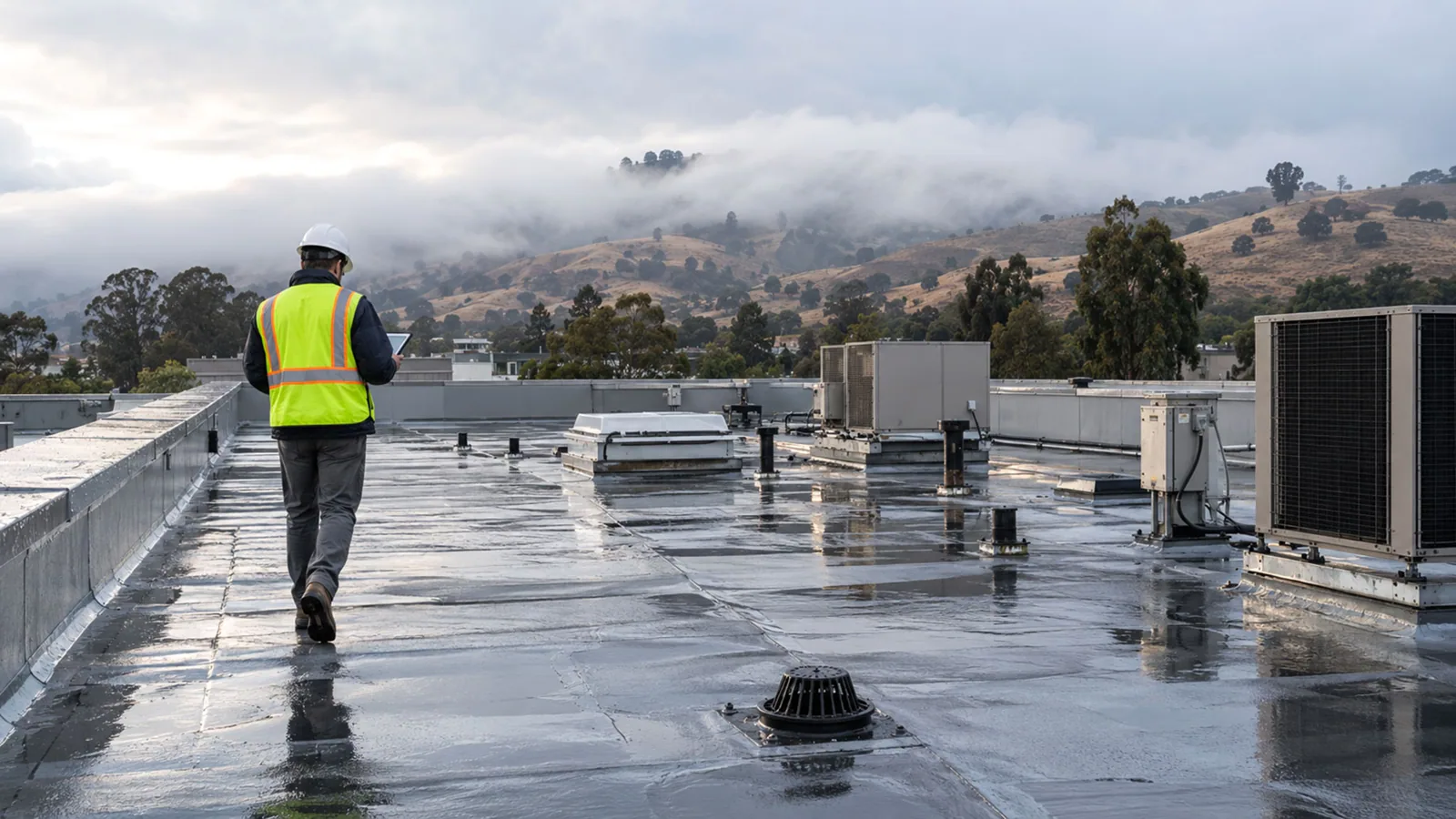
One roof visit is most useful when it answers a decision. We record membrane condition, seams, flashings, drainage, curbs, and perimeter details in a roof map that the owner or general contractor can use. Grand Prairie’s mix of Great Southwest Industrial District warehouses and I-20 retail and corporate properties creates different access and staging questions, but the inspection checks the building itself. We separate active defects from maintenance items, photograph the roof sections, and identify where testing is needed before a larger scope is priced.
Set the inspection objective
Before walking the roof, we clarify what prompted the visit. An active leak, upcoming capital review, storm report, tenant concern, or property transaction can call for a different emphasis. The roof map keeps that objective connected to each observation. If a leak is active, we compare the interior report with nearby details. If the owner is planning work, we record system, condition, and repair priority. We do not infer damage from a regional weather report or assume that a roof has a particular assembly.
The Great Southwest Industrial District includes warehouse, distribution, and manufacturing uses, while the Central Business District is a separate setting. That distinction can help plan inspection access and roof traffic, but a property’s own layout must be confirmed on site. We note hatch or ladder access, rooftop equipment, restricted areas, and occupied space below. Drone imaging may supplement a hands-on visit when roof size or access makes overhead views useful, while close inspection remains important at seams and transitions.
Identify the system and its details
We identify the roof system where records, markings, and field conditions support it. The inspection checks membrane wear, seam attachment, flashing height, edge metal, drains, scuppers, and penetrations. At equipment curbs, we look for open corners, movement, exposed fasteners, and repairs that may affect the water path. A roof’s age or appearance alone does not establish how much life remains. The report ties each recommendation to a visible condition, a test result, or a document reviewed for the property.
For suspected moisture, infrared imaging can help locate areas that warrant verification under suitable conditions. Selected core cuts can confirm the assembly at a specific point. We label each test location and record what it showed, including where conclusions remain limited. Moisture surveying is useful when the result could change repair or replacement boundaries. If evidence points to an isolated membrane defect, a defined repair scope may be enough; widespread wet material or attachment issues can justify deeper evaluation.
Trace water through the drainage route
Drainage review starts at the high points and follows slope toward drains, scuppers, and overflow paths. We note debris, standing water, open joints, and transitions that interrupt the route. A drain can appear clear while the surrounding sump or clamping detail is compromised. We inspect the assembly around each outlet and identify whether maintenance, localized repair, or a drainage change belongs in the next scope. Drain and scupper work is coordinated with the membrane detail, not treated as a plumbing-only item.
Use the seasonal walk to check outlets before the wetter spring and fall periods arrive in the Dallas and Fort Worth area. That regional pattern supports paying attention to drainage during an inspection, but it does not establish flooding at any parcel. The report focuses on observed conditions and notes any moisture testing performed after weather. At a retail property along I-20, access near customer areas may shape how the inspector reaches a drain or edge. At an industrial building, equipment and loading operations can define a separate route across the roof.
Sort findings by action
A useful report separates immediate water entry, repair items, maintenance, and future capital decisions. We identify the location, defect, supporting evidence, and a practical next action for each item. A loose flashing section may need repair before the next rainfall. A surface that remains serviceable but has deferred maintenance can be monitored. If moisture or attachment concerns extend into a larger roof area, the report can recommend additional testing before choosing a repair or replacement.
Cost and timing depend on material compatibility, access, extent of removal, substrate condition, and coordination with equipment or interior work. DFW summer normals include average July and August highs in the mid-nineties, so scheduling and material handling can matter during hot weather. The inspection records that as a planning condition, not as proof of membrane damage. Wind-related findings or hail observations are documented only when the roof shows relevant evidence.
Make roof access part of the record
Inspection access affects what can be seen safely. We confirm hatch location, ladder conditions, fall-protection needs, escort requirements, and any roof zones that are off limits. A distribution building may require coordination around dock schedules and truck traffic. An office or retail property may have tenant notices or customer areas below the route. These details appear in the report only where they shape the observation or the recommended work sequence.
For occupied buildings, the site contact can identify sensitive equipment, interior leak reports, and times when a roof entry would interrupt operations. If an area is inaccessible, we mark that limitation rather than treating it as inspected. A return visit, drone image, or coordinated shutdown may be appropriate depending on what remains unknown. The owner receives a clear account of which sections were reviewed and which next step would resolve an open question.
Use the map for the next decision
The deliverable connects photos, roof sections, Diligence Notes, and recommendations. Each observation should point to a location and explain whether the issue needs repair, maintenance, monitoring, or further testing. We distinguish what the crew saw from what remains concealed. A general contractor can use the map to request comparable proposals, coordinate other trades, and track open items without translating an unlabelled photo folder.
After the inspection, the same map can guide follow-up checks after a storm, a repair, or a planned project. The owner can compare new conditions with the original record and decide whether the roof’s scope has changed. A roof condition report gives a consistent basis for that review. For commercial roofs in Grand Prairie, the findings remain specific to each property’s system, use, and access. Share the reason for the visit, active leak status, and access window to define the inspection route.
Commercial Roofing Questions
What should a roof inspection report tell the owner?
It should identify the roof sections reviewed, the system where known, observed defects, photos, and the next action for each item. We separate repair, maintenance, monitoring, and further testing so the owner can make a decision from the field record.
Can an inspection confirm a leak if the roof is dry that day?
A dry visit can still document suspect details and compare them with the interior report. We note what was observed and whether testing is needed. If the entry path cannot be confirmed during that visit, the report identifies the next useful check instead of claiming certainty.
When does infrared imaging need a core cut?
A temperature pattern is a screening clue, not a moisture reading by itself. When the result affects repair boundaries, we choose verification points and record the core findings. The owner can then distinguish a confirmed wet area from a location that only needs monitoring.
How does a property manager prepare for roof access?
Provide the hatch or ladder location, escort contact, restricted areas, active leak reports, and any tenant or equipment limits. We can plan a route that keeps the inspection focused and records any section that remains inaccessible.
Will the inspection recommend replacement automatically?
No. The report ties any replacement recommendation to the condition and extent found. An isolated defect may be a repair, while widespread moisture or failed attachment may require broader work. The evidence and options are listed separately.
Set the inspection route
Share the roof area, reason for the visit, active leak status, known assembly, and access window. We can map the observed condition and identify the repair, testing, or capital decision that follows.
Call 555-555-5555 or request a roof assessment.