
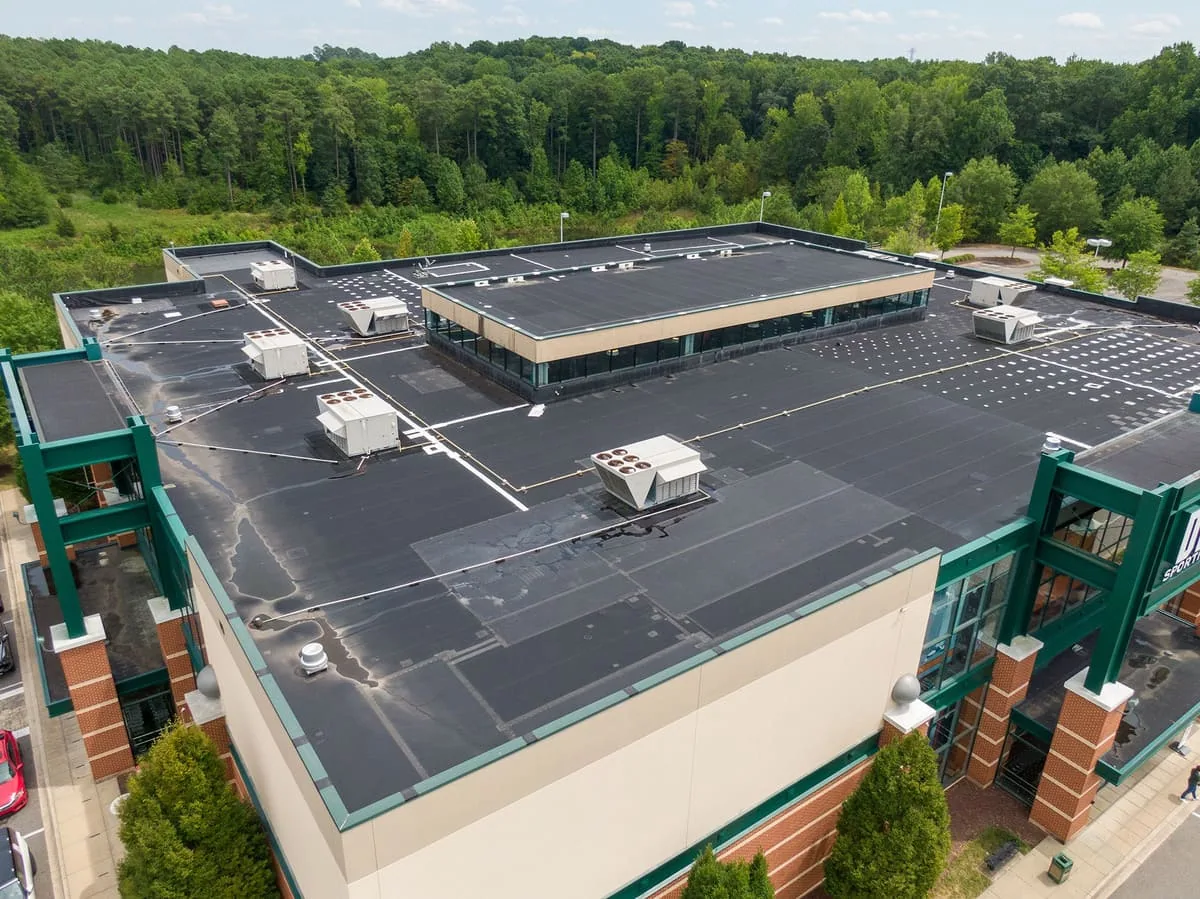
After a wind event, a displaced edge, lifted flashing, or loose metal may leave a roof exposed although the field looks intact from the ground. We check the reported area, active water entry, and any opening that needs temporary protection. The first inspection records what moved, what remains attached, and where the water could travel. That distinction keeps an isolated repair separate from broader replacement planning. Grand Prairie roofs have different assemblies and operating schedules, so we verify the building before selecting materials.
First check: stabilize the opening
We ask when the wind occurred, which rooms or production areas are affected, and whether the leak is active. If a temporary measure is appropriate, the crew protects the exposed detail without concealing evidence needed for inspection. Interior protection can mean moving stock, covering equipment, or catching a drip. We identify who can authorize roof access and whether the facility can pause rooftop equipment or deliveries. The initial note separates immediate control from permanent repair; a dry interior after temporary work does not prove every edge or seam is secure.
Wind can pull at perimeter metal, corners, penetrations, and transitions where different materials meet. A field observation should record location, direction, attachment, and visible deformation. We photograph the detail before disturbing it, then note any temporary fastening or sealant applied. If wind or lightning makes access unsafe, we set a return condition. That sequence helps properties keep operating equipment in service.
Trace the path before opening the assembly
A ceiling stain may appear some distance from the point where wind-driven rain entered. We compare the interior report with the roof plan, slope, drains, curbs, and wall transitions above it. Roof inspection checks seams, edge terminations, counterflashing, coping, and exposed fasteners for movement. We also look for older patches that could route water beneath the surface. If a wet area is suspected, targeted testing can help distinguish damp insulation from surface discoloration. A test opening answers a defined question about the layers; it is not a substitute for mapping the surrounding conditions.
In Grand Prairie, spring is the regional peak for thunderstorms and severe weather. That regional pattern helps explain why owners may schedule inspections after a storm, but it cannot establish that a particular building sustained wind damage. We tie recommendations to photographed movement, water entry, or failed attachment at the property. If hail damage roof repair and wind effects may both be involved, the notes keep those observations separate until the roof surface and perimeter are reviewed. The scope can then address a demonstrated defect without attributing unrelated aging to one event.
Review roof edges and penetrations
The repair boundary matters as much as the visible tear. We check whether a metal edge can be resecured to sound substrate, whether a termination bar remains continuous, and whether membrane can be welded or patched to a clean, compatible surface. A loose coping cap may require review of perimeter metal, cleats, splice plates, and joints along the affected run. At a curb or pipe penetration, the crew examines the flashing height, corners, and attachment before selecting a repair detail. We document inaccessible or concealed conditions so that the owner understands what the inspection established and what still needs verification.
Related roof details may need separate attention. A wind-damaged flashing repair can expose a drainage issue; roof drains and scuppers affect how water moves after weather passes. We compare the area with the recorded water path during leak investigation before adding related work. If the building has a TPO system, we confirm membrane type and seam condition before proposing heat-welded work. If materials cannot be identified with confidence, the scope states how a representative sample or test can resolve compatibility.
Scope: repair what the evidence supports
A written scope describes the location, material, preparation, fastening, flashing, and closeout checks for each repair. It should state whether work is temporary or permanent, identify any test areas, and distinguish visible conditions from concealed assumptions. If a damaged section is isolated, a localized repair may restore the detail while preserving sound surrounding roofing. If attachment or membrane condition is compromised across a broader area, we explain the evidence for expanding the work and compare repair, recover, and replacement paths. The owner can then review the next decision with the affected roof sections and operating needs in view.
For some properties, insurance claim documentation and repair records are needed for an insurer, property manager, or maintenance file. We can organize dated photographs, a roof-area sketch, observed conditions, and completed work notes. Insurance requirements vary, and the contractor does not determine coverage. The building owner should follow the insurer's process and preserve records requested by its adjuster. Our role is to describe roof conditions and repair work accurately, without promising an approval, reimbursement, or outcome that depends on another party.
Coordinate access and active operations
Before mobilization, we confirm roof access, fall-protection requirements, loading hours, tenant entrances, and any equipment that must remain in service. A lift, staging area, or material drop cannot block a fire lane or shared drive. The work plan identifies which roof section will be opened, how it will be protected at the end of the shift, and who receives a status update if weather changes. For a distribution center roofing project, sequencing can follow loading activity without assuming that every building shares one schedule.
Grand Prairie's SH-161 corridor plan describes industrial and warehouse-distribution uses in parts of the corridor. A roof in that broad area may have different access and loading constraints from a property near the City's I-30 business corridor. Those place names provide planning context, not a claim about a particular site. We verify the actual address, roof layout, and operating conditions before dispatch. Clear access instructions also help the crew locate the correct section and keep the repair record tied to the building rather than a generic service description.
Verify the repair and close the record
After work, we review seams, fasteners, flashing terminations, and the repair perimeter against the agreed scope. Where practical and safe, the crew checks the repaired area using a method suited to the roof system and weather conditions. The closeout record notes material used, work date, limits of the repair, and any follow-up observation that could change the recommendation. A repair visit cannot confirm conditions at unrelated details, especially where older transitions remain. The record instead gives the owner a clear baseline for future inspection.
If water returns, the next step is to compare its location and timing with the original report. Standing water may call for a separate ponding water roof repair review or point to another condition outside the boundary. We can inspect that area separately, test where needed, and update the roof map. Keeping the first and follow-up records together helps maintenance teams avoid repeating a test or confusing an old patch with a new condition. It also helps a property manager compare the repair history across roof sections without assuming every section shares one failure mode.
Commercial Roofing Questions
What should we do while the roof is still leaking?
Protect people, equipment, and stock below the leak, then report the affected room and whether water is continuing to enter. Do not climb onto a wet or wind-damaged roof. We can coordinate access and evaluate a temporary measure before defining the permanent repair.
Can a loose roof edge be repaired without replacing the whole roof?
Sometimes. The inspection checks the affected run, substrate, attachment, adjacent membrane, and any concealed damage. If sound material surrounds an isolated defect, a localized repair may be appropriate. Broader deterioration or failed attachment can require a larger scope, which should be supported by documented conditions.
Does a storm inspection prove that the building had wind damage?
No. A regional weather event is a reason to inspect, not proof about an individual roof. The report should connect each recommendation to observed movement, water entry, or another verified condition at the property. Coverage decisions remain with the insurer.
What information helps plan a commercial roof repair?
Share the roof area, active leak status, prior repair notes, known membrane or metal system, access rules, and work hours. Interior photos can help locate the report, while roof plans or section labels help the crew verify the right area on arrival.
Document the affected roof area
Share the reported location, current leak status, roof records, and access window. We can inspect the exposed details, map the water path, and provide a repair scope tied to conditions observed at the building.
Call 555-555-5555 or request a roof assessment.