
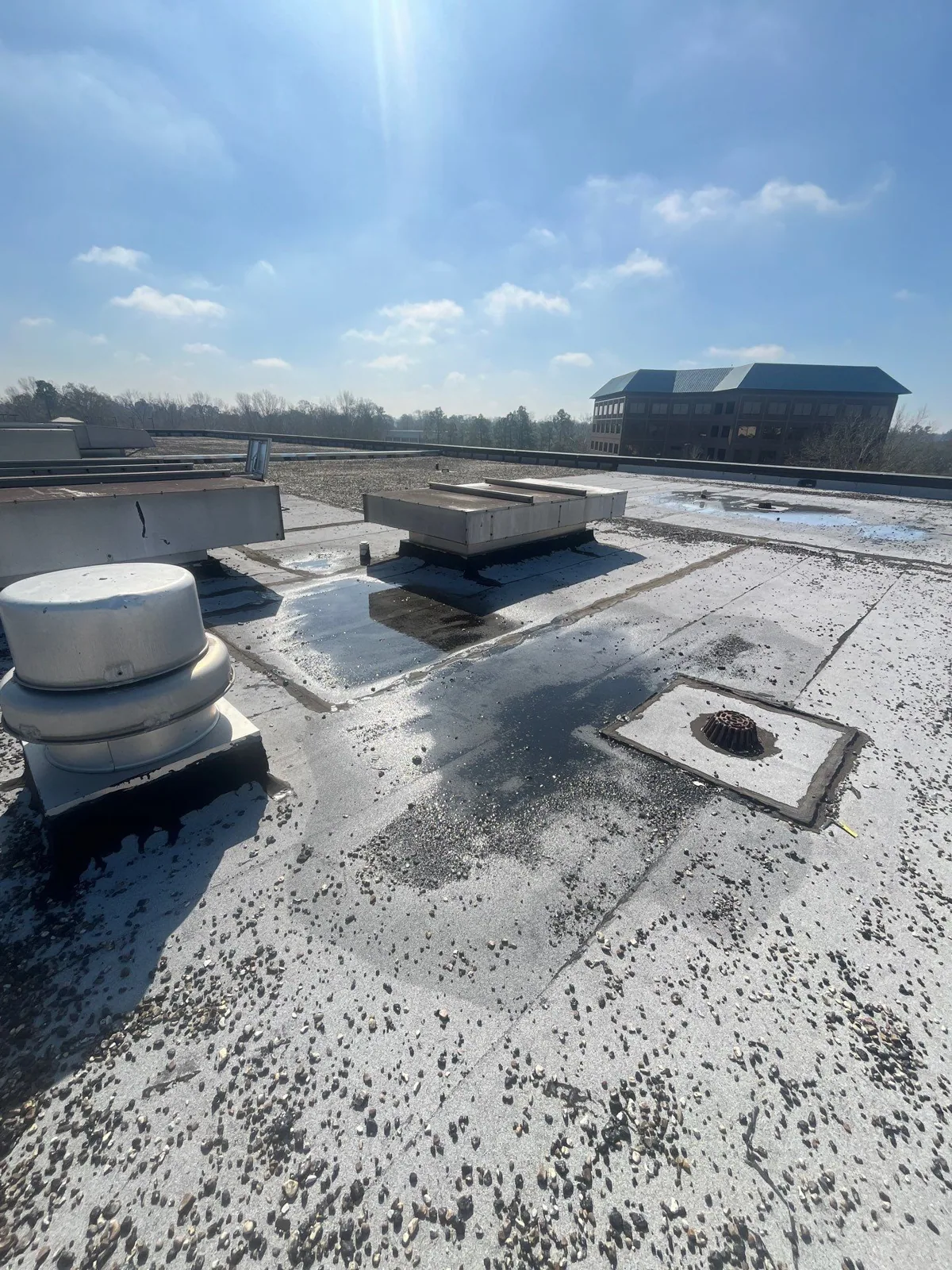
A shallow pool that remains after nearby roof areas dry can point to a blocked outlet, a low plane, deflected structure, or an assembly detail that needs closer review. We map the water boundary, check how deep it is, and look for a clear route to a drain or scupper before recommending work. In Grand Prairie, spring and fall are typically the wettest transition seasons in DFW. That pattern informs drainage checks, not a diagnosis of one roof. The first visit separates a drainage obstruction from a slope or concealed-moisture question and identifies what evidence would change the repair scope.
Drain path: follow the low point
We locate drains, scuppers, overflow outlets, crickets, and roof transitions around the standing water. Leaves, packaging, sediment, or an obstructed strainer can slow flow, so the inspection records what is visible before clearing anything. We check whether water can reach the outlet without crossing a curb or raised seam. If water remains after the drain is clear, we measure the affected area and compare it with the roof plan. The notes identify the observation time and weather context, since a photograph taken during rain does not show the same condition as one taken after the roof has had time to drain.
A drain and scupper inspection can distinguish an accessible blockage from an outlet or flashing defect. We also review overflow protection and nearby terminations. If the outlet is open but water still collects, we trace the slope toward the low point rather than prescribe drain work that would not correct the plane. A mapped water route makes the next test useful, especially when a property contains several roof sections that drain in different directions.
Surface condition: read the water boundary
Water lines, sediment, algae, surface discoloration, and membrane changes can help show where water has stood, but none alone confirms wet insulation. We photograph the boundary, compare it with seams and patches, and check whether membrane is soft, blistered, or separated at a nearby detail. A suspected moisture area may warrant infrared screening or a test opening. The scope names the method and the location because each test establishes a limited fact about the assembly. We keep the roof map precise enough for a maintenance team to find the same low point on a later visit.
Where water touches a seam or penetration, the crew checks weld continuity, flashing height, and termination condition. A leak can enter at an edge above the visible pool, so we compare the interior report with the roof geometry. Leak investigation follows that path without treating standing water as the only possible source. If the membrane has punctures or open laps, a seam failure repair review can define a separate repair line.
Plane and support: check for movement
A low area can develop from insulation layout, settlement, deck movement, or a structural condition that needs review beyond roofing work. We note the span, nearby supports, roof transitions, and any change from prior records. A roof contractor can document the surface and assembly details, but a suspected structural concern may require an engineer to evaluate the deck and framing. We do not hide that boundary inside a drain proposal. The owner receives the observation, its location, and the next qualified review needed before material is added.
Tapered insulation can redirect runoff where the existing assembly and edge heights allow a workable design. A cover board or membrane replacement may be part of the same scope, but added layers affect drains, curbs, parapets, and perimeter metal. We compare the proposed height with those details before pricing a build-up. If only one section holds water, the recommendation may stay limited to that plane rather than spread across a larger roof without supporting measurements.
Weather window: plan inspection after rain
Spring and fall are the wettest stretches of the DFW year, and that makes a post-rain drainage check a sensible maintenance step. It is not proof that a particular Grand Prairie building has ponding or a leak. We schedule an observation around safe roof access and record whether rain was recent. During hotter periods, work windows can change as a surface warms. We note timing and may review wind damage roof repair separately if a storm also moved a roof detail.
The Great Southwest Industrial District is a distribution area, and I-20 is a retail and corporate corridor. Roof access, loading, and equipment schedules can differ across those broad commercial areas. We confirm the actual building and gate process before setting the visit. A Great Southwest Industrial District property may need a different staging plan from one near the I-20 corridor, while the inspection standard remains tied to the roof section and observed water path.
Repair scope: match work to the cause
If debris blocks a sound outlet, the immediate work may be limited to clearing it and checking the surrounding flashing. If the outlet detail has separated, the repair may require cleaning, compatible materials, and a new watertight transition. A low plane may call for tapered insulation or a broader recover or replacement evaluation. We describe each option, what it changes, and the concealed conditions that could alter the final amount. The owner can compare an isolated correction with a larger assembly scope using the same roof map and photographs.
For a thermoplastic membrane, repair materials and welding method must fit the identified system and surface condition. We verify the membrane before specifying a patch. If moisture testing shows an affected area beyond the visible boundary, the scope identifies the measured limit and how the test supports that conclusion. A commercial roof inspection can document the repair area, while a roof recover assessment helps compare added layers with removal when the existing assembly permits either option.
Access and closeout: keep the record usable
Before mobilization, we confirm roof access, fall protection, tenant routes, rooftop equipment, and any loading window that could affect staging. A lift or material drop should not block a shared drive or emergency route. The work plan identifies which outlet or roof section will be opened and how the area will be protected at shift end. For occupied buildings, we coordinate noise and any shutdown before disturbing equipment curb flashing. That sequence prevents a drainage repair from creating an avoidable operational interruption.
Closeout records the outlet condition, materials installed, photographs, water boundary, repair limits, and any test still recommended. If water remains after work, we compare a later observation with the original map and check whether another low point or entry path is involved. The record does not call an entire roof dry based on one cleared drain. It gives maintenance staff a repeatable point for follow-up and a clear distinction between corrected blockage and any separate plane, flashing, or moisture question.
Commercial Roofing Questions
How long should we wait after rain before checking a roof pool?
The observation should note when rain ended and whether nearby surfaces have drained. Access and weather safety come first. We compare the pool with the outlet and roof plan, then return at a suitable interval if the first visit cannot distinguish a temporary wet surface from water that remains trapped.
Can adding a drain solve a low area?
A new outlet may help only if the roof plane, structure, overflow path, and edge heights support it. We first map the low point and check existing drains and slope. If the deck or support appears to move, that concern needs the appropriate structural review before an added outlet is priced.
Does ponding water mean the insulation is wet?
No. A pool shows where water stands at the surface, not the condition of concealed layers. We document indicators and recommend targeted testing when the answer would change repair or replacement scope. Each test location and its limits appear in the report.
What should be included in a drainage repair record?
The record should locate the outlet and pool, describe the observed obstruction or defect, show the repair area, and include dated photographs. We also note whether water cleared and identify any separate low plane, flashing, or moisture question that remains open.
Map the Standing Water
Share the roof section, drainage history, and a safe access window. We can trace the low point, inspect the outlet and nearby details, and scope work around the condition the roof shows.
Call 555-555-5555 or request a roof assessment.