
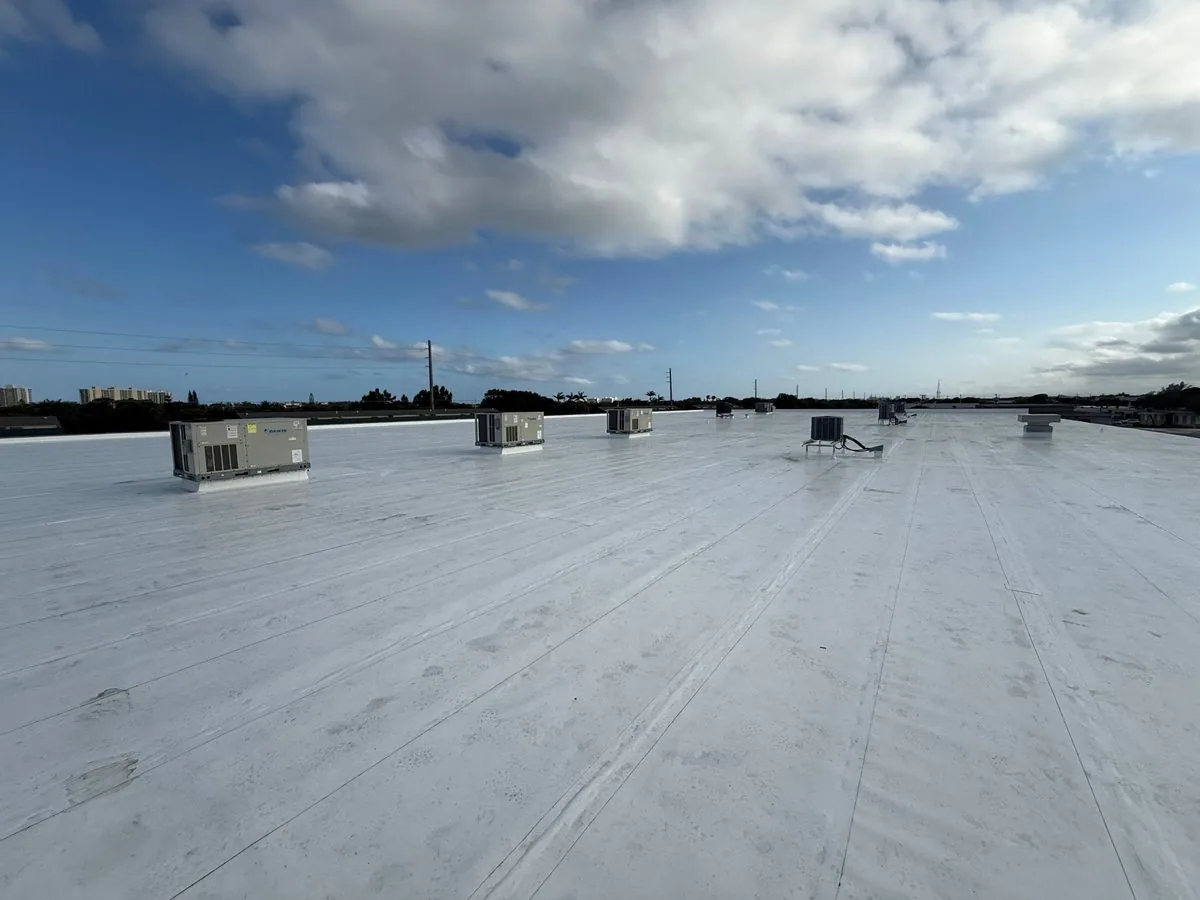
A seam can open along a short run while the surrounding membrane still appears serviceable. We mark the separated length, identify the roof system, and test whether the failure is at a weld, overlap, adhesive bond, or adjacent flashing. That distinction matters on a Grand Prairie roof where heat cycling and the building’s drainage path affect how a repair is prepared. The broad SH-161 corridor and I-20 corridor provide local context, while the membrane itself directs the repair method.
First check: mark the open seam
We record the seam direction, length, edge condition, and whether separation repeats at corners, penetrations, or changes in plane. The crew does not treat a loose edge as proof that an entire roof field has failed. A probe or system-specific test helps distinguish an open weld from surface wear or a lap that is bonded but contaminated. Photos show the failed section and a sound comparison area, which gives the owner a measurable scope instead of a broad allowance.
For thermoplastic membranes, the repair may require cleaning and a compatible hot-air weld with a test weld before production. For EPDM or another adhered system, the bond surface and seam materials call for a different method. The TPO assembly has its own weld preparation. We confirm the existing membrane rather than selecting a repair based on color. A roof inspection can map the seam and identify nearby field concerns.
System check: confirm what the lap joins
Submittals and previous repair records can identify membrane type, reinforcement, attachment, and cover board. We compare them with field markings and the exposed edge where approved. An older repair may use a different membrane, so the tie-in needs a compatibility check. If the substrate is wet or the deck moves, a surface seam repair may not resolve the underlying condition. The written finding separates a confirmed seam failure from a suspected moisture or attachment issue.
DFW’s summer heat makes surface temperature and manufacturer instructions relevant to cleaning, priming, and welding. The crew uses a test area and adjusts the work method to the actual system. Grand Prairie ties its warehouse and distribution construction to air, rail, and highway access, and the Great Southwest Industrial District is a broad area where roof sectioning and freight access can affect staging. Neither regional context substitutes for the roof record or field identification.
Water path: check where the seam drains
A seam that runs with the roof slope can admit water into an insulation layer and carry it away from the visible opening. We inspect the low side, adjacent drain, overflow, and any curb or lap intersection. The report records interior staining as a clue and notes where moisture mapping could narrow the affected area. If water sits beside the seam, the crew evaluates drainage separately. A repair should not simply bridge a low point without understanding how the water leaves the roof.
Grand Prairie’s I-20 planning context identifies retail and corporate activity, while I-30 is described as a separate business and entertainment corridor. Those distinctions frame where the service team is traveling, not the roof use or assembly. The project map records the actual roof zone, drain direction, and access point. A drain and scupper review can be priced alongside seam work when outlet condition changes the water path; ponding repair planning addresses a low plane as its own condition.
A seam map also distinguishes a short missed weld from a lap separated along one membrane run. We inspect adjacent weld edges, compare test results with a sound seam, and mark any place where contamination or a prior patch changes the bond. On a large roof, the grid reference and seam direction make repeat measurements useful. This lets the owner compare the current break with repair sketches and prevents a narrow defect from being priced as an undefined field replacement.
Repair boundary: separate one weld from field replacement
We set the patch width and length around a clean, sound seam, then prepare the substrate and use a compatible membrane strip or system detail. Where multiple seams have separated, we map each run and look for a common installation or movement pattern. Replacement becomes a separate option when the membrane, attachment, or substrate cannot support a durable tie-in. The estimate lists test welds, patches, corner details, and any moisture removal as distinct work items.
A roof with broad seam weakness may need a repair program or replacement evaluation. A single opening does not justify a new membrane across the entire area. We compare options using the number and distribution of failures, remaining system condition, drainage details, and access requirements. For an active interior leak, emergency roof service can arrange temporary protection while the permanent seam method is confirmed. A neighboring flashing failure receives a separate detail and price.
When several joints open at similar spacing, attachment movement or an older installation detail may need review. We note each occurrence and whether it crosses a deck change, rooftop load, or drainage pocket. The owner can decide whether approved sampling or a consultant review should precede a permanent repair budget. That short investigation keeps one weld correction separate from a wider system issue, and it creates a map the next maintenance crew can use without probing unrelated seams.
Work sequence: test, weld, inspect
The crew clears the planned section of loose debris, confirms the membrane identification, and prepares the seam per the system requirements. A test weld or adhesion check is reviewed before production. Work proceeds only across the approved length, with the field kept clean and dry enough for the selected method. After the repair cools or cures, the crew checks the finished edge and records any spot that requires a second pass. Roof access and interior protection are coordinated with the building contact.
Grand Prairie permit information lists code families and structural documentation for applicable construction. If the seam scope expands into deck replacement or structural corrections, the engineer and city confirm which documentation applies. The initial repair estimate should identify that dependency rather than bundle unknown structural work into a membrane line. On a warehouse roof near interstate access, delivery timing can be planned around the site’s receiving operations. The actual route and hours come from the property contact, not from the corridor name.
For a roof with active production below, a narrow repair can limit disruption if the crew can isolate the seam and keep its weld area dry. We confirm material storage, power, and lift access before mobilization. The closeout record names the test method and completed footage, so later inspection can compare the same run rather than search the entire roof.
Commercial Roofing Questions
Can you weld every membrane seam?
No. We first identify the system and joint. Thermoplastic welds, adhesive seams, and flashing transitions use different preparation and repair materials.
Does a separated seam mean the full roof is failing?
The map shows whether the opening is isolated or repeated. The condition of other seams, attachment, moisture, and substrate guides a broader replacement discussion.
How do you know a patch bonded correctly?
We prepare a test area, use the method suited to the membrane, and inspect the finished repair. The closeout record identifies any area that needs a follow-up check.
Could a blocked drain be part of the seam leak?
It can affect water exposure near the joint. We record the outlet and low point separately so drain work and seam work can be evaluated together or as separate line items.
What if water is found under the membrane?
We map the wet area and state the approved testing or removal needed. The owner reviews concealed conditions before the work boundary is expanded.
Map a seam repair
Share the membrane records, roof section, active leak location, and available access window. We can identify the failed joint and prepare a scoped repair.
Call 555-555-5555 or request a roof assessment.