
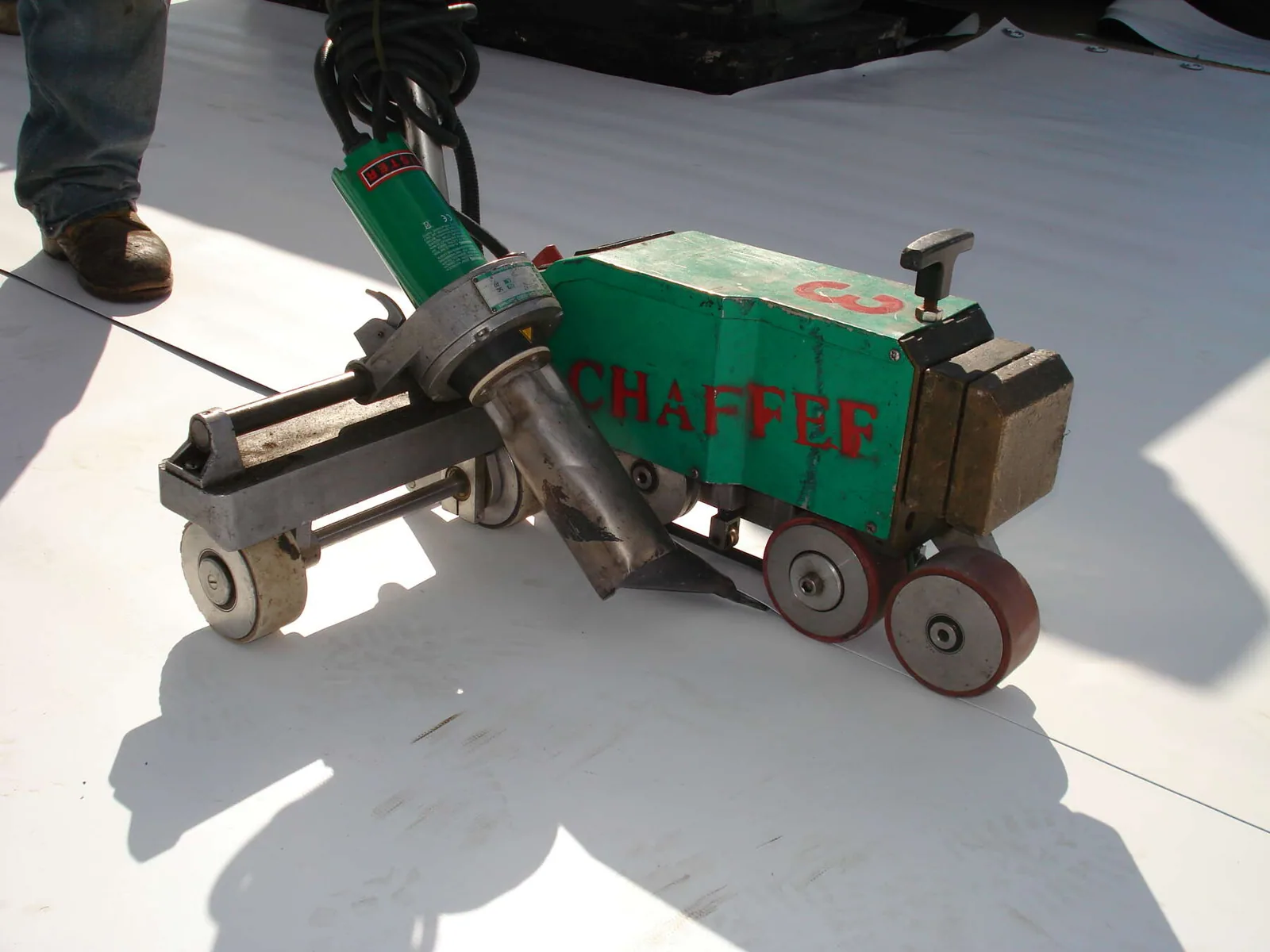
A PVC roof decision turns on the membrane's condition at seams, curbs and drains, not its color alone. In Grand Prairie, TX, we identify the installed assembly, inspect the welds and trace the water path before proposing repair or replacement. Heat, rooftop traffic and prior patches can change how a detail performs. We map the roof section and test a suspect seam where the result would affect the scope. A distribution building in the Great Southwest Industrial District may have different staging constraints from a retail property along the I-20 Corridor, while material compatibility remains specific to the roof.
Membrane behavior: inspect the weld and transition
PVC is a thermoplastic single-ply membrane. Its seams are joined with heat, so an inspection checks the welded lap, corners, patches and flashing transitions. A probe can find a gap that looks closed from a distance. We also examine the substrate and fastening pattern around the roof edge, since membrane performance depends on the full assembly. A sound field seam cannot compensate for a loose termination or a curb flashing that has separated.
We compare the reported leak location with the roof section above it and nearby details. Water can move along a lap or beneath a patch before reaching the interior. If the seam is contaminated, brittle or poorly bonded, preparation and repair must restore a clean weldable surface. We document each tested area so the owner can see whether the issue is local or repeated. A system inspection can include drains, curbs and edge conditions beyond the reported seam.
Assembly fit: verify what is installed
Membrane thickness, reinforcement, attachment and flashing components vary by assembly. We check available project records, visible labels and roof details, then verify the system before specifying a repair material. PVC may be mechanically attached, adhered or secured with a different approved method. The repair should match the membrane and substrate, not rely on a generic sealant. Where materials are uncertain, we identify what needs testing before permanent work proceeds.
PVC can be considered for commercial roofs where the owner needs a heat-welded membrane and compatible details. The decision also accounts for rooftop equipment, grease exposure, foot traffic, drainage and the existing deck. We do not select it from a product name alone. The proposed build-up should state insulation, cover board, membrane, attachment and edge details. Compare the seam and transition behavior with TPO roof construction or KEE membrane details when evaluating alternatives.
Grand Prairie conditions: plan around heat and access
DFW summers bring sustained heat to exposed roof surfaces. Check conditions at the membrane before heat-sensitive PVC work; regional averages place midsummer highs in the mid-nineties, with occasional 100-degree days. That context affects material storage, worker pace and the window for hot-air welding. We follow the membrane system's temperature and surface requirements, then check the actual roof conditions before making a seam. A regional normal informs scheduling; it does not establish the condition of one PVC roof.
The Great Southwest Industrial District is a distribution and manufacturing area, and the I-20 Corridor is a separate part of the city. Those broad contexts can influence loading, equipment access and work phasing. They do not tell us which membrane is on a particular building. We confirm staging routes, rooftop unit restrictions and tenant windows with the site contact. The installation plan names each roof section and identifies where the crew can complete and protect work before moving to another area.
Repair choice: keep the scope inside sound material
A contained PVC defect may be repaired by preparing the membrane and welding compatible material over the affected area. The patch needs sound edges and a continuous weld. At a curb, the work may require formed flashing rather than a flat field patch. If moisture extends under the membrane, or multiple seams show failure, we investigate before deciding whether spot repair remains practical. The written scope shows the repair boundary and any unresolved condition. We note whether the seam is on the field, at a wall or around equipment because the flashing transition determines how the patch turns up and terminates.
Grand Prairie's wettest transition seasons are generally spring and fall. A drainage review after rain can help determine whether water is reaching the seam from an outlet or low area, but it does not prove a leak source without inspection. We record the path and inspect adjacent details before closing the repair. If the membrane has broad wear, we compare repair with recovery or replacement. A defined repair scope or a drainage correction may address the confirmed condition without changing the entire assembly.
Closeout record: leave a useful seam map
After work, we photograph the prepared area, completed weld and nearby transitions. Notes identify the roof section, membrane repair material and any detail that remains under observation. If a test was limited by moisture or access, the record says which area needs another look. Those details make a later inspection more useful than a note that simply says the roof was patched. The owner can compare recurring leak reports against a known seam map.
For a Grand Prairie PVC evaluation, share the roof area, active leak status, known assembly and access window. If prior plans or repair records are available, they can help identify the membrane and fastening approach. We inspect the roof and document the condition, then explain whether a weld repair, flashing correction, drainage work or broader replacement is supported. The photo condition report can give a general contractor and property contact a common reference for the next scope decision.
Commercial Roofing Questions
How can an inspector tell whether a PVC seam is open?
A visual review is followed by a probe at the lap and corner details. We check whether the weld is continuous and whether contamination, movement or an earlier patch interrupts it. If a seam is wet or the test cannot be completed safely, we record the limit and return when conditions allow. The repair boundary follows the confirmed separation, not the length of the stain indoors.
Can a PVC roof be patched with a different single-ply material?
Material compatibility must be confirmed before patching. A different membrane may not weld to PVC, and an adhesive or flashing product must suit both surfaces. We identify the assembly and verify the selected detail before applying it. If the original membrane cannot be identified, the proposal states the needed test or exposure rather than promising a bond.
Does summer heat change when PVC seam work is done?
It can affect the surface and application window, so we follow system requirements and measure the conditions at the work area. Hot periods also influence material staging and how much roof can be opened safely. Regional DFW climate normals help us plan the schedule, while the actual membrane temperature and weather decide whether a weld can proceed.
When is a larger PVC replacement scope considered?
Widespread seam failure, wet insulation, unstable attachment or repeated defects across sections can move the decision beyond a spot repair. We map the findings and test where the result changes the scope. A localized defect in otherwise sound material may remain repairable. The report separates confirmed conditions from areas that need additional investigation.
What should the PVC repair closeout show?
The file should identify the roof section, preparation, patch or flashing installed, completed weld and nearby transitions. Photos need enough context to find the repaired location again. We also list any test limitation or follow-up condition. That record supports maintenance and helps the next inspector decide whether a later report is new or tied to the same seam.
Review a PVC roof section
Share the affected roof area, active leak status, known membrane assembly and access window. We will inspect the seams and transitions, then document the repair boundary or broader system decision supported by the roof.
Call 555-555-5555 or request a roof assessment.