
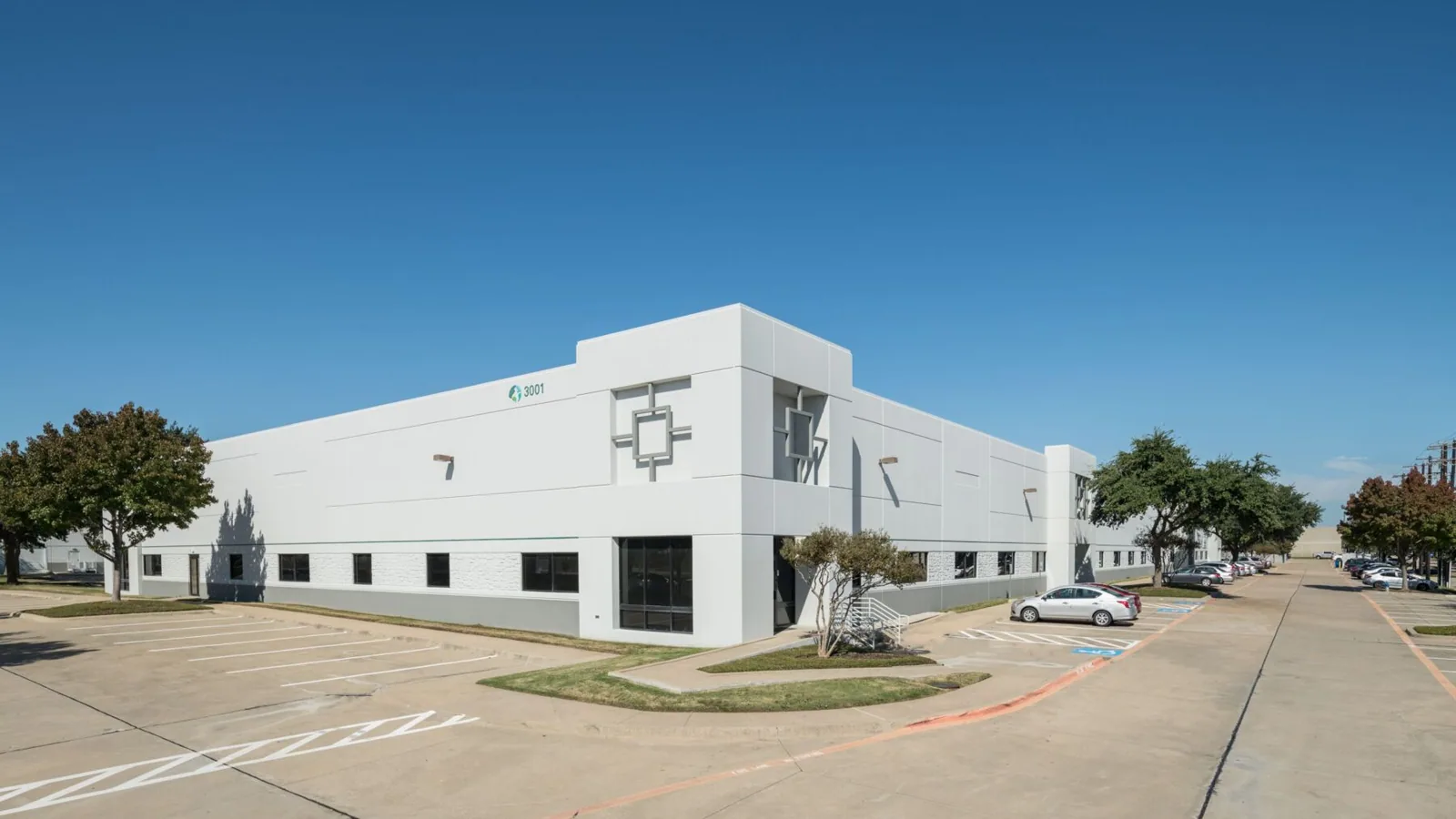
A roof sequence at a distribution center is shaped by more than square footage: dock turnover, trailer circulation, equipment access, and the number of roof sections that can be safely opened at once all affect the plan. We start by mapping drains, curbs, seams, and reported leaks to the operating areas below, then agree on a work boundary with the owner or general contractor. The City describes Grand Prairie as an established distribution center and notes that much of the Great Southwest Industrial District lies within the city. That broad context does not establish a particular building's use or assembly. For each property, field observations determine whether the next step is targeted repair, recover evaluation, or replacement planning.
Survey: separate roof zones
We divide the roof into inspectable zones and record membrane condition, attachment clues, previous patches, curbs, drains, expansion joints, and perimeter transitions. Reports from the interior are tied to a bay or operating area when staff can locate them, then compared with the roof-side water path. A ceiling stain alone does not show where water entered. Photographs should include both the observed detail and enough surrounding field to support a defensible repair boundary. This map also helps the facility team identify areas needing access controls or a temporary interruption.
Great Southwest, the I-20 Corridor, and downtown each have their own character within Grand Prairie. Those place names help with geography, not assumptions about an individual roof. At the site, we verify truck access, crane or lift locations, roof ladders, and staging with the facility contact. A commercial roof inspection can establish those conditions before bidders compare quantities. We note which observations are confirmed and which still need a test cut or design review.
Assembly: verify what is installed
Distribution buildings may have additions or repaired areas that leave different roof layers in adjacent zones. We identify the membrane and attachment only where field evidence or reliable records support it. Seams, cover board, insulation, deck, curbs, penetrations, and perimeter metal are checked at representative locations; one test opening is not proof that all bays match. If moisture or loose attachment extends past the visible defect, we mark the boundary for further evaluation before turning it into a full-roof allowance.
Rooftop equipment and long field seams can create multiple transitions. We inspect curb corners, equipment supports, pipe boots, and edge details while avoiding claims about hidden conditions. A localized failure may support commercial roof repair. Broader wet insulation or repeated seam distress can justify comparing a recover or tear-off. TPO roofing and EPDM roofing have different detailing methods, so the system decision follows verified assembly, deck, drainage, and specifications.
Drainage: follow the complete route
Water should have a continuous path from the field into a drain, scupper, or overflow. We inspect slope, drain bowls, strainers, sumps, and membrane terminations at the outlet. Debris or a blocked route may hold water against a curb or seam, but the remedy depends on the actual flow path. The work record separates routine cleaning from detail repair or designed slope correction and identifies the roof zones to recheck afterward.
For a distribution roof, confirm that each drain path is clear before seasonal rain increases in the DFW area. That regional pattern supports drainage review and post-storm checks, but it does not establish that a specific facility flooded. On SH-161, Grand Prairie's corridor study includes warehouse and industrial land among other development types, so confirm each site's loading and roof-access setup. At each property, we verify overflow locations and the area below before selecting a correction. A drain and scupper scope can be coordinated with the membrane work.
Sequence: protect receiving and shipping
The operating contact identifies dock schedules, trailer routes, receiving peaks, and any door or lane that must stay available. We place lift and dumpster locations with the general contractor, establish material paths, and stage the work so a crew can remove, inspect, install, and dry-in within the agreed shift. Sections should match actual crew capacity and weather windows, not an arbitrary grid. If concealed deck damage changes the plan, we photograph the condition, mark its location, and request written direction before extending the scope.
Grand Prairie has access to DFW Airport, rail, and interstate routes, which the City connects to ongoing logistics and manufacturing construction. Those regional links make delivery coordination a practical planning item, not a claim about a particular tenant. Summer heat also affects work timing; DFW normals show average July and August highs near 96°F. We protect staged materials, limit open roof area, and adjust for conditions. A warehouse or a cold-storage building brings related operational constraints.
Options: compare scope by roof zone
Use the same roof map to compare repair, recover, and replacement. A repair can address one supported failure while leaving sound field in service. A recover may avoid some tear-off but depends on moisture, attachment, existing layer limits, finished height, and project criteria. Replacement exposes the deck and can allow wider correction; removal, disposal, and concealed deck work affect schedule and cost. The estimate should show which zones, drains, curbs, edge metal, insulation, access windows, and allowances are included in each alternative.
Grand Prairie’s commercial permit information lists applicable code families and calls for roof-framing plans and engineer seals in certain scopes. The design team should confirm current edition, amendments, and permit needs with the city for this project. We flag structural questions rather than treating a prior permit as approval for new work. For sites combining storage and production, compare manufacturing roof coordination as a distinct sequence. Every option remains tied to inspected sections and stated assumptions.
Closeout: preserve a useful roof record
At completion, we label photos to the roof map and record repaired seams, drains, penetrations, transitions, and any area excluded from contract. Open items are separated from completed work, with a recommended next observation when investigation remains incomplete. The owner can use this record to track maintenance, coordinate later equipment work, and compare future leak reports against a known baseline. If a test opening revealed an unpriced condition, the closeout should state where it occurred and what decision remains.
Grand Prairie maps business corridors including I-20 and I-30, while the Great Southwest Industrial District is a separate broad area. The operating model still varies property by property. Share the building’s city area, roof zone, access window, and active leak details to plan an initial review. We can document what is visible and identify whether the next step is maintenance, repair, or capital replacement. No district label substitutes for an assembly check or an agreed work boundary.
The site record should name the section, observed condition, and access window in terms the owner can verify. Keeping the repair boundary visible also helps compare future bids, avoid duplicating work, and separate maintenance from a capital project. Where equipment installation is planned, the roofing detail is coordinated before the new support or curb reaches the field.
For regional orientation, the I-20 corridor is one of several mapped areas; the site survey still controls the work boundary.
Commercial Roofing Questions
What should be mapped before pricing?
Roof zones, drains, curbs, penetrations, edges, reported leak areas, access points, and operating restrictions give bidders a common basis. We note unverified layers separately.
Can loading continue during reroofing?
Often, but only after the facility contact and contractor agree on dock lanes, lift placement, delivery timing, and daily dry-in limits. Conditions can change the sequence.
Does a leak location identify the roof opening?
No. Interior water can travel along the assembly. We compare the reported area with roof details and document the evidence before defining a repair.
When is recover considered?
After checking moisture, attachment, layer limits, deck, height, and project requirements. If conditions do not support it, the estimate should explain why replacement is the alternative.
Will one test cut verify the whole roof?
No. It verifies layers at that point. Additional openings or records may be needed where additions or repairs suggest a different assembly.
Map the distribution roof scope
Share the roof zones, operating windows, known leak reports, and available assembly records. We can document the first observations and plan a phased commercial roof scope.
Call 555-555-5555 or request a roof assessment.