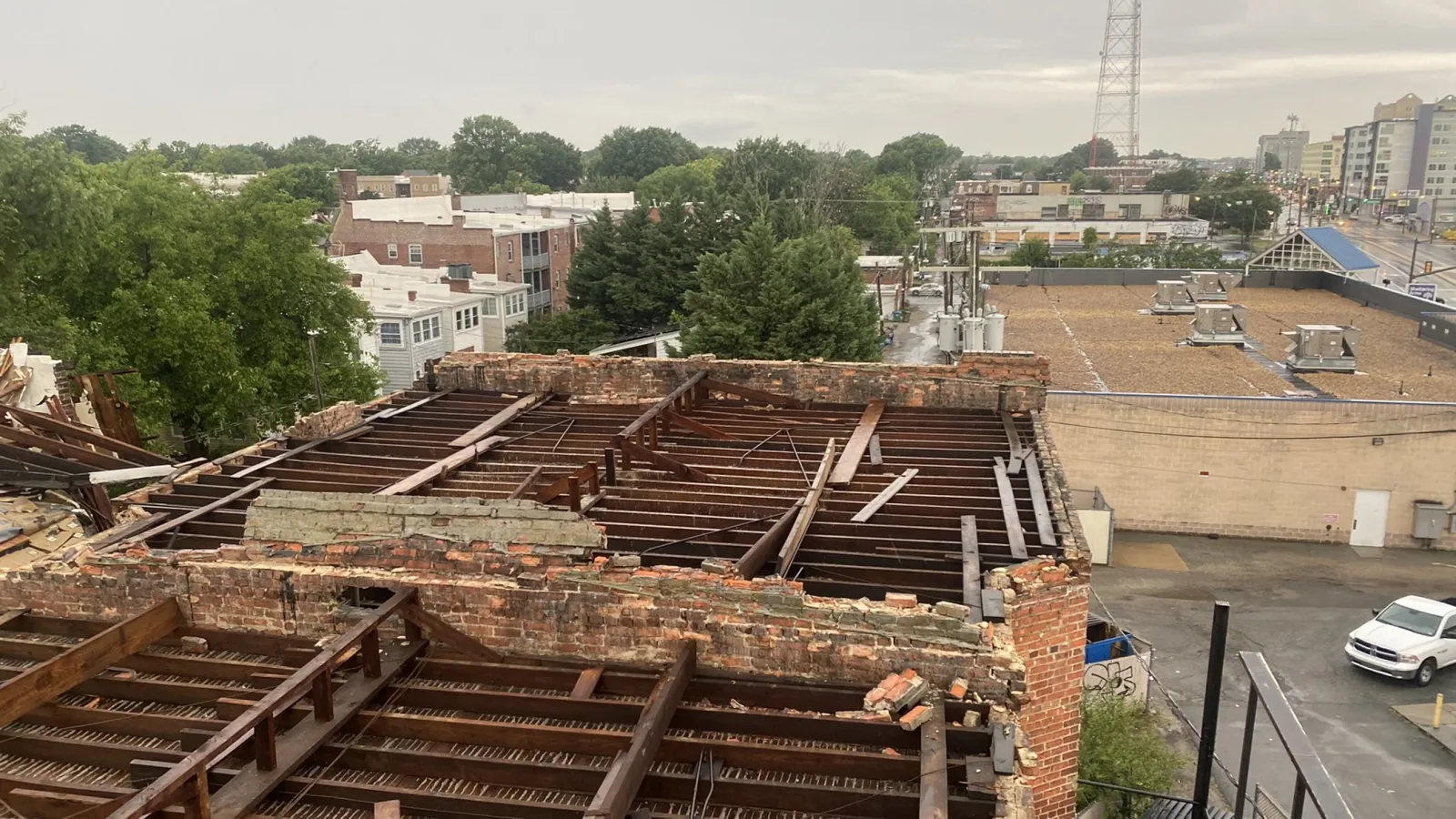
Water entering an occupied building needs a controlled first move. We help protect the interior, locate the affected roof section, and secure temporary cover when conditions allow. In Grand Prairie, a distribution property in the Great Southwest Industrial District can have active dock lanes below the work, while a business near the I-30 Corridor may need a different access window. The weather report cannot tell us which roof detail failed. A crew checks the membrane, drains, curbs, and edges, records what is safe to address, and sets the next repair step. Emergency response is available at any hour, every day of the week.
Protect people and operations first
Before roof work, the site contact can move people and movable inventory away from a drip when safe, isolate sensitive equipment, and identify any electrical concern. We confirm where water is entering, whether it is still active, and which access route is available. At a warehouse, keeping a dock lane or forklift path clear may be part of the response. For retail or office space, a temporary interior barrier can protect a doorway or occupied room while the crew reaches the roof.
The Great Southwest Industrial District includes broad warehouse and distribution uses. That context helps shape access questions but does not establish a specific building’s layout or damage. We ask for the roof hatch, ladder, escort or lock requirements, and any restricted areas before dispatch. A field lead then records the visible condition and the immediate protection completed. If the roof cannot be accessed safely during severe weather, the next safe inspection window is communicated rather than guessed.
Find the opening that needs control
Emergency work begins with the likely entry detail: a displaced edge, open seam, puncture, damaged flashing, backed-up drain, or failed curb transition. We inspect the roof section that aligns with the interior report and trace the water path toward the nearest plausible openings. A ceiling mark may be several feet from the roof defect because water can move along insulation or framing. We avoid spreading sealant over unrelated details. The Diligence Notes shows what was observed, what was covered, and which permanent test or repair remains.
Where the membrane is wet or material is moving, temporary protection must be compatible with the roof and stable in the current conditions. We can install a controlled dry-in or tarp where safe, then schedule permanent work after the surface and weather permit proper preparation. Leak tracing and repair addresses the confirmed path, while drain and scupper service is appropriate when an outlet or sump is part of the problem. Each task stays tied to the observed condition.
Work with the conditions on the roof
North Texas spring is the regional peak for thunderstorms and severe weather. Hail, damaging wind, flooding, and tornadoes occur nearly every year somewhere in the Metroplex, although a specific property is unlikely to experience every hazard each year. That context supports checking the roof after a reported event. It does not confirm impact or wind damage at a particular building. We look for displaced metal, lifted edges, punctures, seam openings, and fresh moisture before defining emergency work.
Heat also changes the work window. July and August DFW normals show average high temperatures near 96 degrees and about twenty days per year at or above 100 degrees. We account for handling and installation conditions, follow product requirements, and keep materials out of unsuitable exposure. A temporary dry-in protects the building only when secured to the roof conditions present. After the immediate threat is controlled, we can identify whether the next step is a membrane repair, flashing replacement, or a larger moisture check.
Separate stabilization from permanent work
A temporary cover is a short-term control, not the same scope as a completed roof repair. We record what it protects, where its limits are, and what needs a follow-up visit. The permanent scope may require removing wet material, preparing the substrate, rebuilding flashing, welding a seam, or correcting the drainage detail. If the roof condition extends beyond the active leak, we map the additional area and discuss testing before expanding the work.
Cost and timing depend on dispatch access, roof height, safe staging, materials, extent of removal, and whether other trades must move equipment or restore the interior. For properties near the I-30 Corridor, work hours and staging may reflect nearby business activity; at the Great Southwest Industrial District, truck routes or production schedules may matter. We confirm those limits with the site contact, rather than assuming every emergency has the same setup. Wind damage repair and hail damage repair remain evidence-based scopes after a storm.
Keep the response coordinated
An emergency roof visit can involve facility staff, a general contractor, property management, and interior remediation. We identify who can authorize roof access and who should receive updates as findings develop. The crew uses an agreed route and staging point, protects completed sections, and flags any area that remains unsafe or inaccessible. If water is near electrical systems, the site team determines the appropriate shutdown or isolation while the roofing scope is kept clear.
When rain is ongoing, the initial visit may focus on safe stabilization and a limited inspection. Permanent membrane work generally requires a suitable dry surface and product conditions. We communicate when a return visit is needed and what the crew will verify, so temporary measures are not mistaken for final closeout. If the forecast changes the work window, the owner receives an update about the roof section and the next safe action.
Leave a clear next step
After the visit, the closeout record should show the reported interior area, roof section inspected, temporary protection installed, and permanent work recommended. Photos locate the detail and show its condition before repair. We note what remains untested, including concealed moisture or inaccessible areas. That way the owner can coordinate interior work and decide whether the roof needs a return visit, a broader inspection, or a replacement discussion.
A repeat leak or multiple open details can signal that the issue extends beyond a single emergency patch. A written condition inspection can compare other roof sections, seams, drains, and equipment transitions. A weather event in the Metroplex is a reason to review local conditions, not a substitute for a roof record. For commercial buildings across Grand Prairie, the response remains specific to the property’s access, operation, and actual roof assembly. Share the active leak status and access contact to start the dispatch check.
Commercial Roofing Questions
Can your crew respond overnight or on a holiday?
Yes. Emergency response operates around the clock, every day of the week, including holidays. We first confirm the active leak, roof access, and site contact so the crew can determine what safe stabilization is possible on arrival.
What information helps dispatch the right response?
The affected room, current leak status, known roof system, roof access point, site contact, and any safety concern help define the first visit. Photos from inside can help locate the area, but the crew still checks the roof detail before selecting a permanent repair.
Is a tarp the final repair?
A tarp or dry-in is temporary protection. The closeout should identify its limits and the permanent repair that remains, such as seam work, flashing replacement, or removal of wet material after conditions permit.
What if the leak is near equipment or electrical service?
Tell the site contact and identify the equipment before roof access. Facility staff handle any needed shutdown or isolation, while the crew plans a safe route and inspects the roof detail. We do not work through an unsafe access or electrical condition.
How soon can a permanent repair follow emergency protection?
Surface moisture, weather, material compatibility, and the findings under the temporary cover set the next visit. We explain whether a repair can proceed at the first safe window or whether testing and removal must happen first.
Start the emergency roof check
Share the active leak status, affected roof area, known assembly, access contact, and work window. We can assess safe protection, document the condition, and define the permanent repair that follows.
Call 555-555-5555 or request a roof assessment.