
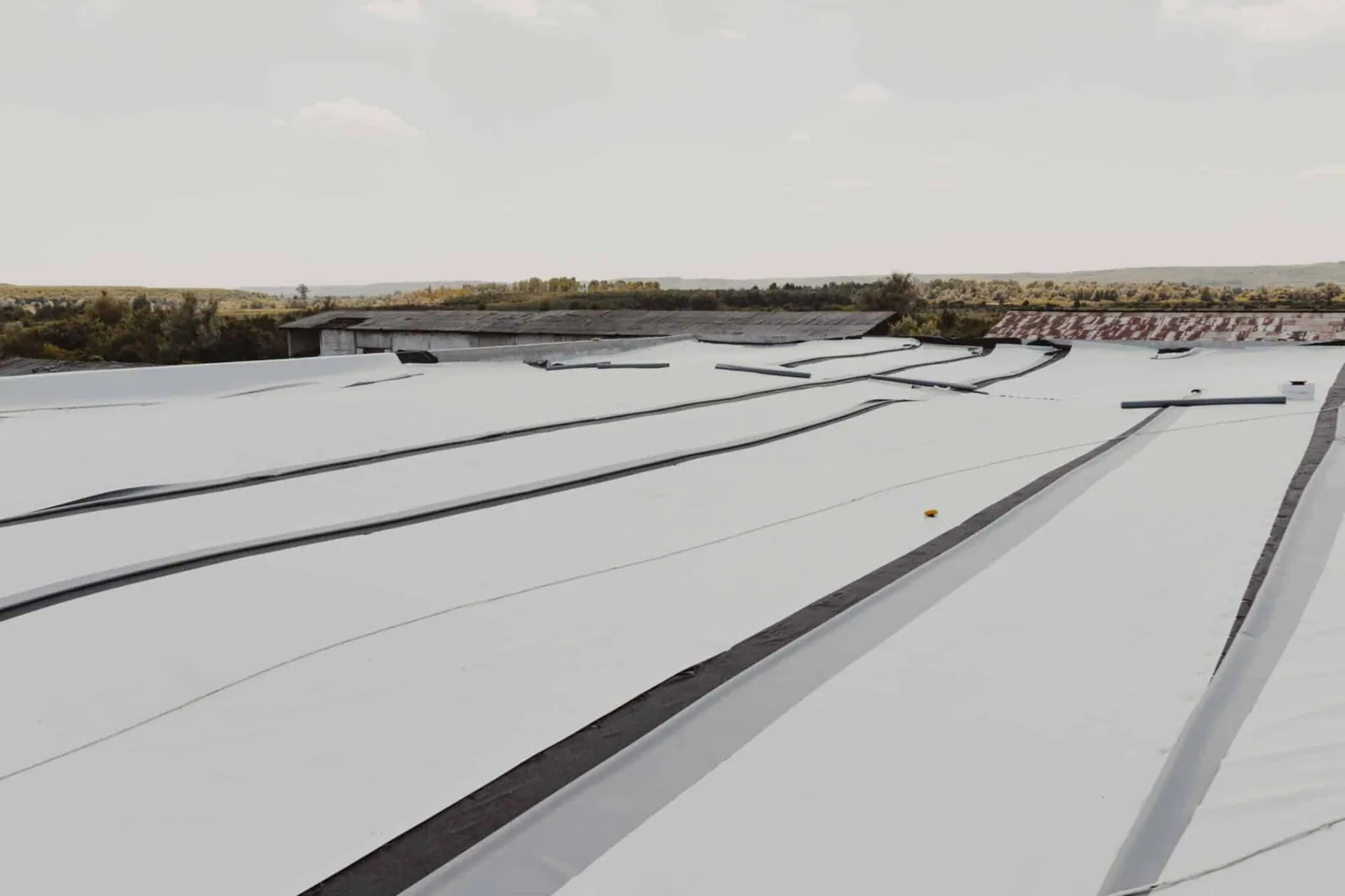
A wall or curb can remain dry while water travels behind a failed flashing termination. We start at the reported interior area, identify the roof transition above it, and compare the flashing with the membrane, counterflashing, and drainage path. The building contact marks any equipment or tenant access limit. On a Grand Prairie property near the I-20 corridor, delivery timing may differ from a downtown roof, but the observed detail sets the repair boundary.
First check: locate the transition
The survey identifies whether the reported condition sits at a parapet, curb, expansion joint, wall, or roof edge. We photograph the flashing termination and surrounding field, then note splits, open laps, loose metal, sealant condition, and the height of any wet interior finish. One stain does not map the full entry path. Water may travel along the deck or insulation before it appears, so the Diligence Notes connects what is visible with the roof section that can be inspected safely.
A counterflashing detail can conceal the upper edge of a membrane flashing. We check both parts and the substrate behind them, rather than sealing the exposed line before understanding how the assembly sheds water. If the metal is secure and only a local lap is open, a targeted correction may be possible. If attachment or substrate is compromised, the crew records the larger boundary. A roof inspection documents the detail and nearby drains before the estimate defines labor and materials.
Assembly review: identify each flashing layer
Drawings, repair records, and a small approved test opening can establish how the membrane turns up the wall and how metal counterflashing protects it. We record membrane type, attachment, insulation, deck, fasteners, and the condition of the receiving surface. A patch over a contaminated or loose base may fail again. The scope names any cleaning, removal, priming, fastening, or replacement needed to make the new tie-in compatible with the existing system.
At a rooftop unit, the curb height and corner geometry affect how flashing terminates. At a parapet, coping and wall movement can create a different failure path. In Grand Prairie, the Great Southwest Industrial District includes broad distribution and manufacturing use, but that does not determine a particular roof assembly. We inspect the actual curb or wall. If the defect extends into a seam, the adjacent seam repair boundary is mapped separately instead of extending a flashing allowance without evidence.
Water path: test the edge above the interior mark
We compare the visible wet area with roof slope, nearby drains, overflow locations, curbs, and the direction of the flashing lap. The first check should distinguish a failed termination from water entering farther upslope. A moisture survey can help map wet insulation where access permits; a test cut needs owner approval and a documented closure. The report labels confirmed conditions and areas that still need access, so the owner can price a known repair without treating every nearby roof detail as defective.
DFW climate normals include hot summer conditions that make sealants, coatings, and exposed flashing work sensitive to product requirements. The crew follows the system specification and checks the actual surface before installation. Grand Prairie’s permit information lists code families and roof-framing documentation requirements for applicable projects. For a flashing-only repair, the scope still identifies whether structural or permit review is relevant, rather than assuming every small detail changes the permit path. Drainage work can be separated from the flashing line item through drain and scupper service.
Repair boundary: decide what to remove
A repair plan marks how much metal, membrane, and insulation will be opened. The crew removes failed material to a sound bond or attachment surface, checks for wet substrate, and documents any concealed condition before covering it. If the wall or curb requires a changed termination, the detail should show the new height, fastening, and seal. We identify whether the adjacent field remains in place or requires a wider tie-in, and keep hidden-deck allowances visible in the proposal.
A narrow flashing issue may fit a localized repair; repeated separation across several walls can point to broader movement, material incompatibility, or deferred maintenance. A replacement proposal should not be inferred from one failed corner. The owner compares repair with restoration or replacement using the same roof map and quantities. A ponding-water review is relevant only if water remains at the transition and the drainage plane needs separate evaluation. For an urgent opening, temporary protection can precede the permanent detail.
Work sequence: protect the occupied area
Before the crew opens the transition, management identifies interior protection needs, roof access, equipment clearances, and any work window. The daily section is limited to the material that can be removed, repaired, and secured before conditions change. The crew protects the interior below when required and keeps debris away from drains. If concealed damage expands beyond the approved boundary, photographs and a written direction pause the added work until the owner reviews its cost and schedule.
A large distribution roof can have several parapets and curbs that are easy to confuse. In the Great Southwest Industrial District or elsewhere in the city, we use the project drawing or marked roof plan to label each transition. A commercial roof repair scope states who moves equipment, who restores mechanical connections, and when the space below can return to its normal use.
Closeout record: photograph the finished tie-in
At completion, we photograph the repaired flashing from the roof field and the wall or curb side. The record notes materials, work date, limits of removal, and any substrate that was not exposed. Management receives the roof map, open observations, and the next check that fits the roof condition. Clear closeout helps a later leak call distinguish a new event from the repaired transition and gives the facilities team a detail to protect during mechanical service.
Downtown and the highway corridors sit apart in Grand Prairie, so service routing can be discussed without treating every property alike. A parapet wall shared with a neighbor, or a curb beside a rooftop unit, gets its own note in the closeout so the next leak call starts from a known detail. The owner confirms the actual site, access procedure, and work-hour constraints. If the transition sits beside an active unit, maintenance staff should coordinate shutdown or service windows with the roofing sequence. A documented repair can then be reviewed with the original roof records before another layer or coating is considered.
Commercial Roofing Questions
What shows that the wall flashing is the entry point?
We compare the interior mark with the roof transition, adjacent field, drains, and visible flashing. If the path remains uncertain, the report identifies the testing needed before the repair boundary expands.
Can failed sealant be covered with new sealant?
Only when the detail and receiving surfaces support that method. We inspect the metal, membrane, attachment, and substrate, then specify removal or replacement where a surface patch would not correct the failure.
Will a parapet repair require interior access?
Not always. The roof survey can identify the exterior detail, while interior access helps map the reported water path. The owner decides what access is available and we note any remaining limit.
How do you handle a wet insulation area?
We map the area and recommend approved moisture testing or a test opening when needed. The proposal states whether removal is included and how concealed substrate changes will be handled.
Can the roof remain in use during the work?
Management sets access and interior protection requirements. We size each work area for a secure daily closeout and coordinate any equipment interruption before opening the transition.
Document a flashing repair
Share the wall or curb location, active water condition, roof records, and access window. We can map the detail and define a repair boundary.
Call 555-555-5555 or request a roof assessment.