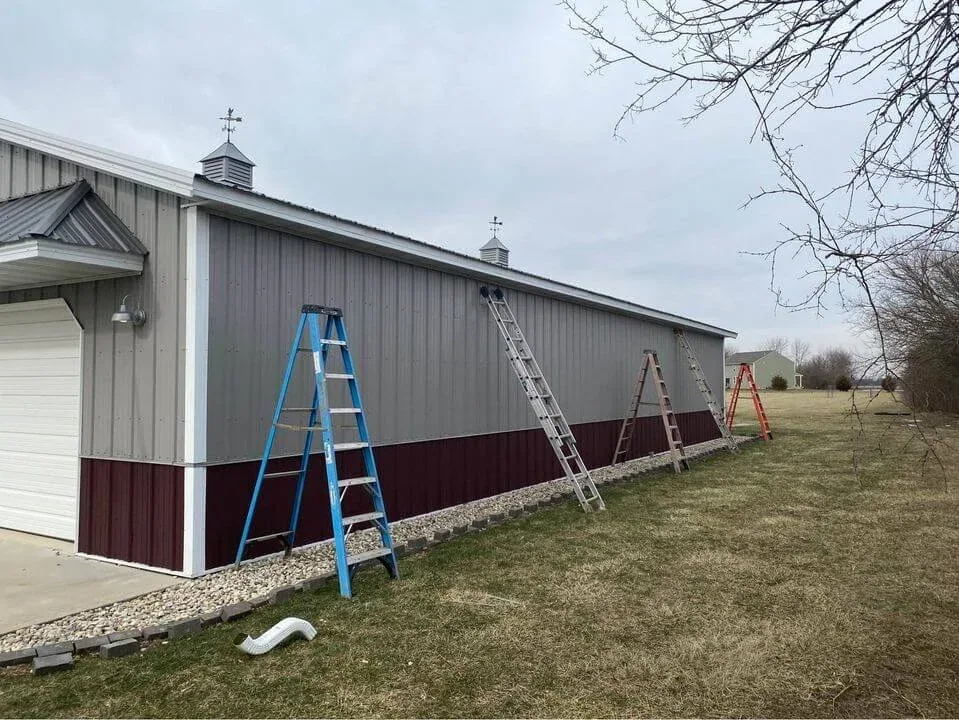
A loose coping joint, split gutter seam or open roof termination can send water behind the edge assembly. In Grand Prairie, TX, we start by tracing the transition from roof membrane to edge metal and checking where runoff leaves the building. A repair needs to secure the metal, restore the membrane tie-in and keep the drainage path open. The Great Southwest Industrial District and SH-161 Corridor include varied commercial and distribution properties, so roof height, loading activity and access differ from one project to another. We document the edge condition first, then choose a repair sequence that matches the existing roof assembly.
Edge condition: follow the membrane termination
At the perimeter, we check whether membrane, fasteners, cleats and metal termination remain connected. A lifted metal face may be cosmetic, or it may signal a loose cleat, failed splice or membrane separation beneath the edge. We inspect corners and changes in direction because those joints need a complete transition. If wind has disturbed the assembly, we record the affected length and determine whether securement, replacement metal or a wider repair is needed.
Spring is the region's primary severe-weather season across the Dallas-Fort Worth area. That context can justify a timely inspection after a reported event, but the metal on the building must show the condition. We photograph the edge with enough surrounding roof to locate each finding. For a confirmed uplift condition, wind-related roof edge repair may be scoped separately from gutter work. A roof inspection can also check adjacent field seams and penetrations before the perimeter is closed.
Coping joint: secure each change in direction
Coping caps cover parapet walls and shed water away from the wall assembly. We inspect joints, corners, cleats, end dams and any sealant that bridges moving metal. A long run can open at a splice while remaining secure at nearby supports, so repair is mapped by joint rather than applied as a continuous bead. At corners, we check how the cap returns and whether the end condition directs water away from the wall. A roof membrane termination below the coping is inspected as part of the same detail.
On a warehouse or distribution roof in the Great Southwest Industrial District, perimeter work can occur above loading and vehicle routes. We verify lift or roof access, staging boundaries and protection below the edge before removing metal. The repair detail must fit the existing substrate and attachment condition. If a parapet requires structural review or a different metal profile, that decision is established before fabrication. We record dimensions and existing conditions so replacement sections meet at the correct laps and transitions.
Gutter route: check capacity and discharge
Gutters and downspouts need to collect water and carry it to a discharge point without returning it to the wall or roof edge. We look for sagging hangers, separated seams, blocked outlets, crushed downspouts and evidence of overflow at the fascia. An interior leak near an exterior wall may involve the gutter, coping or membrane termination, so we compare both sides of the edge. The inspection distinguishes a cleaning need from failed metal or an outlet path that is no longer functional.
DFW typically has wetter transition periods in spring and fall. Before rainfall periods, a clear gutter and downspout route can make routine maintenance easier; it does not prove that a specific roof has had water damage. We note standing water, discharge location and any condition that needs follow-up. Where roof drains and perimeter discharge connect, the drainage detail is reviewed with the exterior route. A maintenance visit can carry the same gutter and coping observations forward.
Membrane tie-in: preserve the roof system
Metal repairs meet the roof membrane at a transition that must remain watertight. We identify the membrane type and use a compatible flashing or termination method. A thermoplastic membrane may require welded material and prepared seams, while another assembly may use a different attachment and sealant detail. The repair is not complete if the new metal is secure but the membrane edge remains loose. We check the substrate, fastening line and water path before closing the assembly.
For a Grand Prairie roof with a metal perimeter, the roof assembly still determines how details are restored. A standing-seam metal roof has different laps and movement behavior from a low-slope membrane. A TPO transition requires compatible welding and surface preparation. Along the SH-161 Corridor, city planning documents identify industrial and warehouse uses in parts of the study area, but a property's actual roof must be inspected before selecting a detail. We document each system rather than infer it from the corridor.
Closeout walk: verify joints and water exit
After the repair, we review the full affected run, corners, splices, membrane transition, gutter outlet and downspout attachment. Photographs show the repaired section and its location, while notes identify any area not included in the approved work. If an outlet remains blocked or a wall condition needs separate attention, that item stays open in the record. The owner can then distinguish a completed metal repair from a drainage or masonry question that needs another trade.
Edge work often requires a lift, controlled ground zone or coordination with vehicles and tenants below. We confirm the access window and protect the work area before metal is removed. At completion, the closeout file records the repair boundary, materials and any next maintenance action. Share the building location, affected edge or gutter, active leak status, known assembly and available access window. We will inspect the perimeter and document whether the condition calls for securement, metal replacement, drainage correction or a combined repair.
Commercial Roofing Questions
Can a loose coping cap cause a roof leak?
It can create a path behind the parapet when joints, cleats or the membrane termination are open. We inspect the metal and the roof-side transition together, then trace any interior report back to a specific section. If the coping is loose but the membrane detail remains intact, the repair may be limited. The scope follows what the inspection shows rather than treating every movement as a leak.
Do gutters need replacement when water overflows?
Overflow can come from debris, a restricted downspout, a poor slope or a damaged seam. We check the full collection and discharge route before recommending metal replacement. If cleaning restores flow, that is recorded as maintenance. If the gutter has separated or cannot carry water to its outlet, we define the replacement length and connection details.
What information is needed to repair a roof edge?
The affected elevation, approximate edge length, active leak status, roof assembly and access conditions help set the first inspection. Photos from the ground can show loose metal, but roof access is needed to inspect the cleat and membrane termination. We also confirm whether loading, pedestrian traffic or tenant access below the work area must remain open.
Can coping and membrane work happen in one mobilization?
They can be sequenced together when the membrane detail and metal scope are both confirmed. We inspect the substrate, measure the metal run, and plan removal so the roof remains protected during the work. If the transition needs a different material or the parapet requires additional review, that condition is resolved before the final detail is installed.
How do you document completed perimeter work?
We record the roof edge section, joint or gutter repaired, materials used, photographs and any remaining issue. The check includes corners, splices, termination and discharge where those details were part of the scope. If the project was staged, each completed run is identified. That makes future maintenance more specific than a note that simply says the perimeter was serviced.
Inspect a roof edge or gutter route
Share the building location, affected edge or gutter, active leak status, roof assembly and access window. We will inspect the metal and membrane transition, then document the repair boundary and discharge conditions.
Call 555-555-5555 or request a roof assessment.