
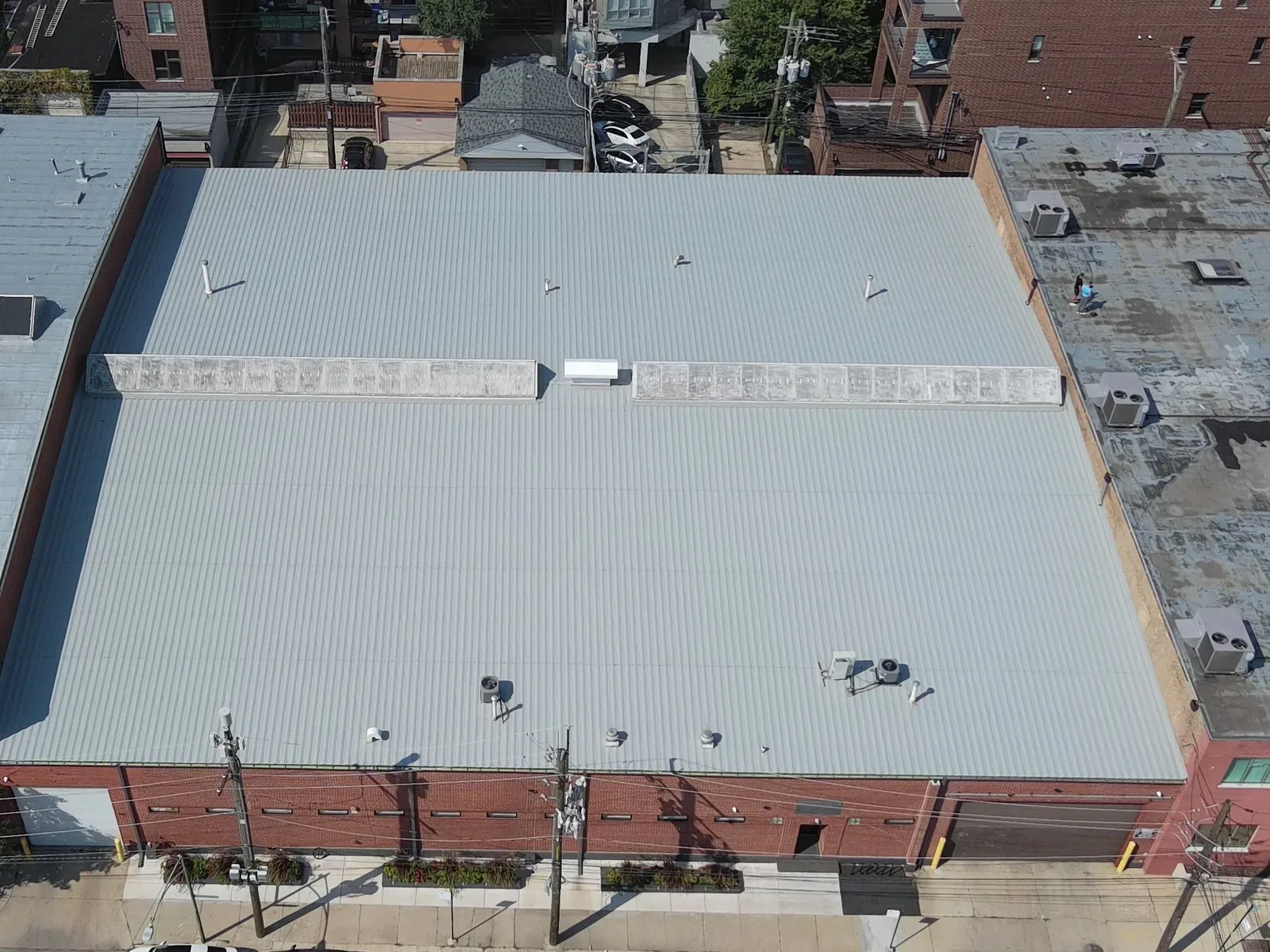
A standing seam roof can show a loose panel edge, a failed penetration or movement at a long run without making the whole system a replacement case. In Grand Prairie, TX, we start by checking the panel profile, seam engagement, clips and water path. The I-20 Corridor includes retail and corporate development, while the Central Business District is a separate planning area. Building use changes the access plan; panel condition defines the repair boundary.
Panel profile: identify the seam and attachment
Standing seam panels join at raised vertical ribs, with clips or other concealed attachments holding the panel to its support. We identify the seam profile, panel direction, edge terminations and transitions before selecting a tool or replacement piece. A seam that appears separated may involve a clip, a fold or movement at a fixed point. We record the condition at several locations so a single damaged panel is not confused with a system-wide attachment concern.
Panel length and detailing affect how the roof accommodates thermal movement. We check the clips, end laps where present, ridges, eaves and changes in plane. At curbs and pipes, flashing has to follow the panel profile while leaving the intended movement path. A roof edge inspection can include fascia and coping where water crosses the perimeter. For a broader metal roof retrofit, we also review the existing support and overlay approach before recommending a new assembly.
When panels cross a broad roof, we record where the run begins and where its movement is restrained. A change in direction, valley or wall can create a different edge condition than the field seam. We also check whether a repair has added fasteners through a panel, because that may create a new water entry point. The field sketch connects these details so the proposed correction follows the assembly rather than stopping at the most visible mark.
Water path: follow penetrations and panel ends
Water can reach a leak through a fastener, a seam, a curb corner or an edge transition. We compare the interior report with roof-side evidence and trace the route across panel ribs and valleys. Sealant condition is one observation, not a substitute for checking the metal detail beneath it. We photograph penetrations and note whether the panel surface, attachment and flashing all remain stable around the opening.
On a standing seam roof, an incompatible patch can block movement or leave a new path at the next joint. The repair detail should match the profile and preserve the assembly's drainage direction. When a panel is punctured or a clip has moved, we define whether the work remains local or reaches an adjacent run. A commercial repair scope records the panel count, access area, attachment check and closeout test. The same process helps a general contractor coordinate other trades that need roof access. If the project compares panel replacement with another membrane system, a PVC roof brings a separate seam and perimeter approach.
Work window: set handling and access
DFW summer heat changes the practical timing for roof access and metal handling. Regional July and August normals are near 96 degrees on average, with about twenty days in a typical year reaching 100 degrees. That climate context informs staging and crew timing; it does not diagnose a panel or seam. We confirm conditions at the roof and use the system requirements for the specific panel and flashing products.
Along I-20, retail and office operations may set a narrow access window. A downtown building can require a different roof entry, lift location or tenant notice. We map the section, identify equipment that limits movement, and agree on staging before panels are removed. If a leak is active, emergency protection can secure the opening while the permanent panel detail is prepared. Emergency response can be coordinated around the immediate water path and follow-up inspection.
Scope decision: repair a detail or replace a run
A local repair can address a damaged penetration, loose trim or isolated panel, provided adjacent clips and seams remain sound. We specify the panel profile, metal finish and attachment detail needed to make the tie-in. When corrosion, repeated movement or attachment concerns span several runs, the owner may compare a larger panel replacement with retrofit or full roof replacement. Each option lists the transitions and drainage changes that affect the next trade.
Grand Prairie plan review requires a sealed engineer's structural plans for metal buildings of any size, and roof-framing documents once a new building exceeds 5,000 square feet. We check current project requirements with the City before finalizing design documents. The roof scope also accounts for parapet height, skylights and equipment curbs that may change panel termination. A replacement evaluation can compare a new panel system with repair, while flashing work addresses openings that cross the raised ribs.
Closeout record: make the panel path traceable
The closeout record shows which seams, clips, penetrations and trim pieces were repaired, with photos before and after work. We note the panel type, fasteners or clips addressed, and any roof area that remained inaccessible. That record helps facilities staff follow the same panel run during maintenance. It also gives a future roofer a clear starting point if a leak appears at a nearby curb or end condition.
Spring is the DFW region's peak period for thunderstorms and severe weather, with hail and damaging wind occurring somewhere in the Metroplex nearly every year. A post-storm review checks the actual roof for displaced trim, opened seams, impact marks and drainage changes rather than presuming damage. On an industrial property in the Great Southwest district, loading schedules may influence access to a long panel run. Wind-related roof repair can document observed edge conditions, and a maintenance visit can revisit fasteners, penetrations and outlets.
Where a panel section cannot be safely reached during the first visit, we identify the access limitation and schedule a separate check rather than leave the record unclear.
Commercial Roofing Questions
How do you check whether a standing seam is actually separating?
We compare the seam profile along the affected run and inspect nearby clips, panel ends and transitions. A visual gap may be limited to one fold or may connect to a moving attachment. The report shows the tested locations and the repair boundary supported by those observations.
Can a pipe flashing be replaced without removing a full panel?
The panel profile and opening detail decide how the flashing can tie in. We check the metal condition, access from the roof surface and the intended movement path. The work plan names the flashing detail and any panel removal needed to complete it.
What does a panel retrofit change on an occupied Grand Prairie building?
The scope identifies where new supports, panels and edge transitions meet the existing structure. We review access, equipment and tenant operations before setting the sequence. A phased plan can limit the open work area, but weather protection and structural requirements remain part of the decision.
When is seam repair no longer enough?
Repeated failures across several runs, damaged clips or corrosion at multiple edges can justify a broader review. We map affected panels and inspect the support conditions before comparing repair, retrofit and replacement. The owner receives the extent and transition details for each option.
How does summer heat affect standing seam work?
It can change staging and the practical access window. We check roof conditions and follow the panel system's handling requirements before removing or fastening metal. Regional normals help plan the visit, while the actual conditions and assembly guide the work.
Check the standing seam assembly
Share the panel type, affected roof run, active leak status and access window. We will inspect the seams, clips and transitions, then document a repair or larger system decision.
Call 555-555-5555 or request a roof assessment.