
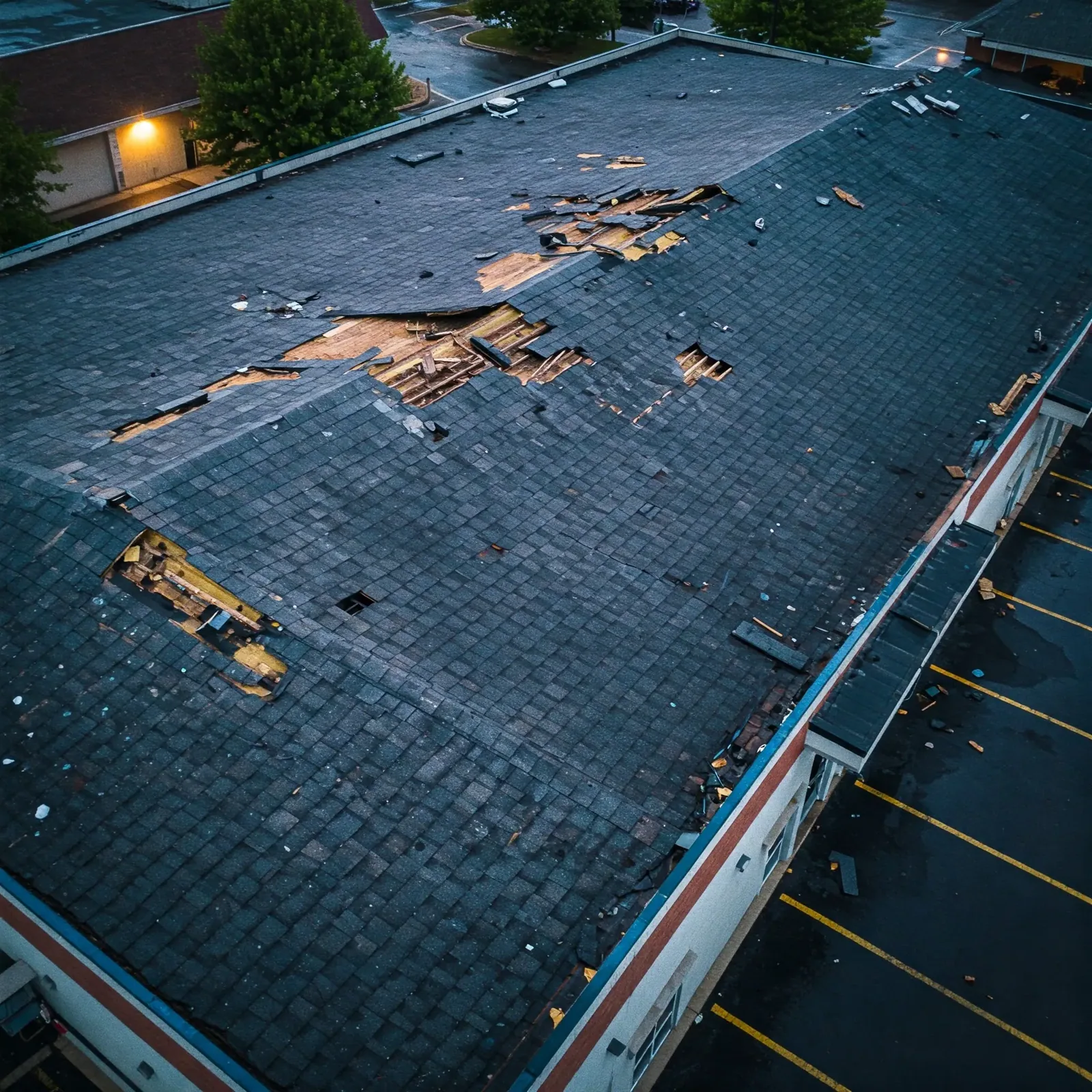
A roof claim file is stronger when each observation is tied to a location and a repair question. In Grand Prairie, TX, we inspect the reported roof area, photograph visible conditions and document the assembly before defining work. A regional weather report can explain why an inspection is timely, but it does not establish damage at a particular building. The Great Southwest Industrial District includes distribution and manufacturing properties, while the I-30 corridor serves a different mix of business and entertainment uses. We account for the building's actual operations and roof details, then provide records the owner can submit for insurer review. Coverage decisions remain with the carrier under the policy.
First record: establish the reported condition
We begin with the report from the property contact: when water appeared, which interior area was affected, what changed after the event, and whether entry is still active. The roof inspection then maps that report to the relevant roof section. We photograph the membrane, seams, edges, penetrations and nearby drainage details before disturbing them. Images include context so a reviewer can locate the condition, not merely see a close-up without a roof reference.
Grand Prairie lies in a region where spring is the peak season for thunderstorms and severe weather. That context can prompt a timely review, but the file must distinguish regional conditions from property evidence. If a roof has older patches, separated seams or blocked outlets, we record those separately from the reported condition. Our storm damage assessment connects the observed detail to a potential repair boundary without assigning a cause that the inspection cannot support.
Condition map: keep each roof section distinct
Large commercial roofs often include additions, repairs or multiple membrane types. We identify each section and note the transitions between them. That map can prevent a repair description from blending a newer assembly with an older area or assigning one condition to the entire roof. At a curb, drain or parapet, we show the nearby surface and the detail that matters to water entry. A condition not visible during the visit is labeled as unconfirmed and may need additional access or testing. For a thermoplastic section, TPO seam details are recorded separately from adjacent assemblies.
If an industrial claim involves a loading roof, set the inspection route around active dock movement and record which sections the crew can reach. Along I-30, tenant activity or customer access may set a different work window. We coordinate those conditions with the building contact and identify them in the proposed scope. If separate sections require distinct work, the photo report can group findings by roof area and show which repair applies to each one. The file stays useful for both an insurer and the property team.
Repair description: state what the work changes
A repair scope should name the affected detail, preparation, materials and completion check. We explain whether the work is a seam repair, flashing replacement, edge securement or a larger assembly intervention. If testing shows wet insulation or deterioration beyond the visible opening, that finding is listed separately from the initial repair. The owner can then compare the immediate work with any additional investigation instead of treating every item as one undifferentiated claim.
We do not decide policy coverage or promise a claim outcome. The owner or authorized representative submits the documentation and communicates with the carrier. We can answer questions about the roof assembly, observed condition, repair method and scope boundary. A commercial roof inspection can document the broader system, while repair work is completed only after the approved scope and access sequence are clear. When a leak remains active, our around-the-clock response, including weekends and holidays, can protect the building while the permanent work is reviewed.
Site coordination: preserve access and operating records
Claim-related roof work still has to fit the property's operating plan. We confirm escorts, ladder or hatch access, delivery points, equipment shutdown limits, and interior protection before opening any assembly. On a distribution site, loading routes and inventory protection may constrain staging. On a business property, tenant notices and customer access may determine which zone can be isolated first. The work record includes the selected sequence and any change caused by weather or access.
DFW's spring storm season can make roof conditions change between inspection and repair. We note when a follow-up image or reinspection reflects a later condition rather than the original visit. That distinction helps the owner maintain a clear chronology. We keep the record limited to what was observed, tested, repaired and left for monitoring. If an insurer requests a specific format or additional inspection, the property contact can provide that request before we schedule the next visit.
Closeout file: connect photographs to completed work
After repairs, we add completion photographs, material notes and a description of the work performed to the project file. The record identifies the roof area and checks the transition that was repaired. Any excluded or deferred condition remains separate, with the reason noted. If the scope changes after concealed damage is found, the additional condition is documented before the work boundary expands. Those details help the property team understand what the contractor completed and what still needs review.
For a Grand Prairie claim, share the property location, affected roof section, active leak status, known system and available access window. Include any insurer inspection date or documentation request that the owner has received. We can inspect, prepare a factual roof condition record and explain the repair sequence. That gives the property contact a clear file to review with the carrier while leaving policy interpretation and coverage determinations where they belong.
Commercial Roofing Questions
What can a roofer provide for a commercial roof claim?
We can inspect the roof, photograph observed conditions, identify the assembly, describe a repair method and document completed work. The record distinguishes confirmed conditions from items that need more access or testing. It can help the owner explain the roof scope to an insurer, but it does not decide coverage or replace policy review.
Can the report say a storm caused every roof condition?
The report should connect cause only where the evidence supports it. We document the reported event, visible condition, location and any test performed, then separate older wear or unrelated maintenance items. A regional severe-weather pattern is context, not proof of impact on one property. If cause remains uncertain, the record states what was observed and what further review may be needed.
What should we have ready before the roof inspection?
Provide the affected interior area, date water was first noticed, active leak status, roof access contact, and any known assembly details. If the carrier has requested specific photos or a site meeting, share that schedule. We can then plan the inspection route and document the relevant sections without interrupting areas that are not part of the reported condition.
Will the contractor attend an insurer inspection?
Attendance can be coordinated when requested and when access is arranged by the property contact. The participants can review the roof location, assembly and documented repair scope together. The carrier retains responsibility for its coverage decision. We make sure the building contact knows which areas are safe to access and what work has been completed before the meeting.
How are newly discovered conditions handled during repair?
Work pauses at the agreed boundary when concealed conditions change the repair. We photograph the newly exposed area, explain why the scope may need adjustment, and document the additional work before proceeding. That process keeps the original repair, any added condition, and the approval record distinct. The owner can send the new information to the carrier or other reviewer as needed.
Prepare a roof record for review
Share the property location, reported roof section, active leak status, known assembly and access window. If the carrier has asked for particular documentation, include that request. We will inspect the roof and document observed conditions and the repair scope.
Call 555-555-5555 or request a roof assessment.