
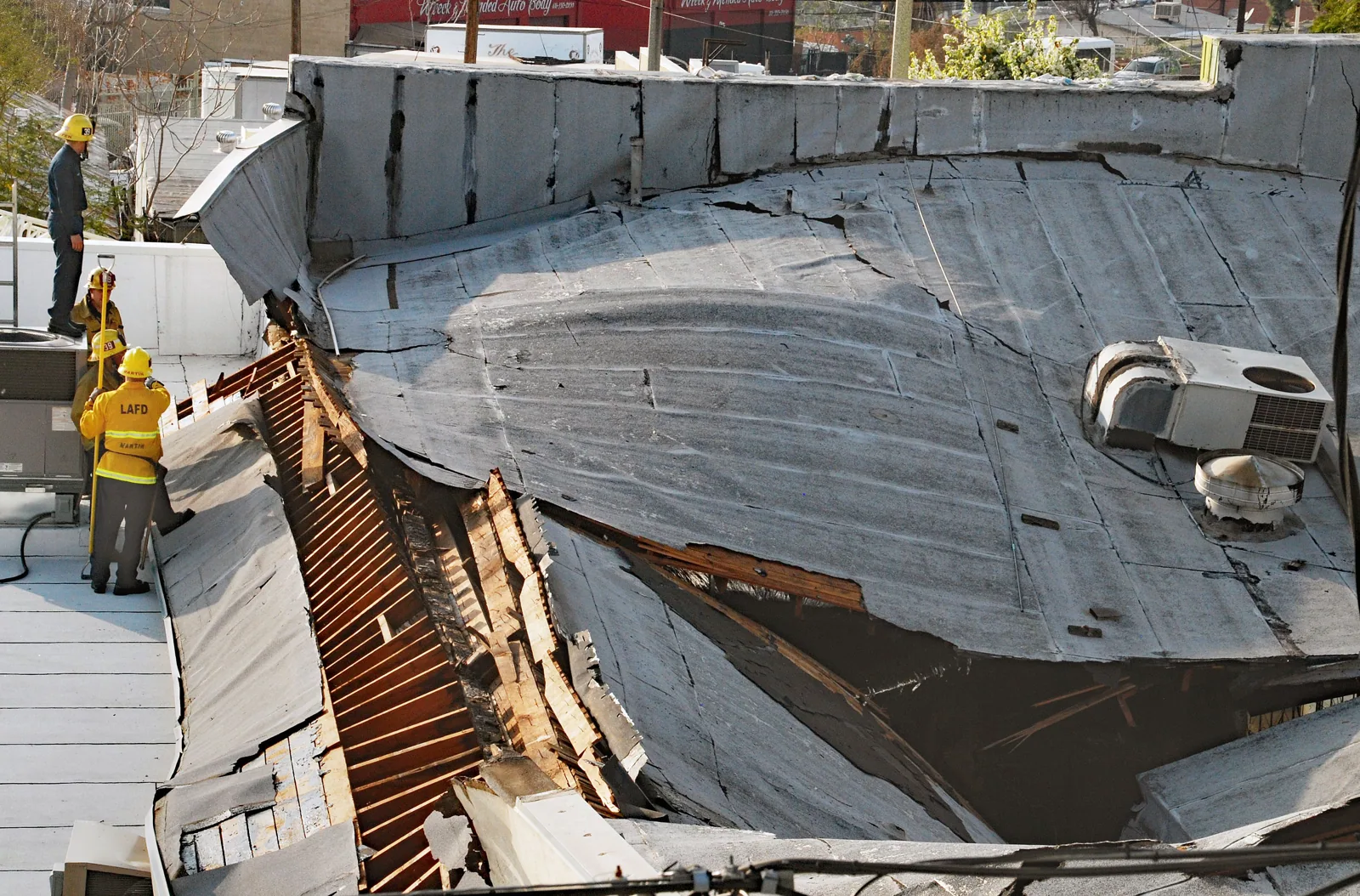
After a storm, a roof may show a loose edge, displaced flashing, puncture or water entry in a different section. In Grand Prairie, TX, we begin by checking the affected roof area and whether water is still entering the building. We protect exposed openings, record visible conditions, and trace the water path before defining a permanent repair. Spring is the regional peak for severe weather in the Dallas-Fort Worth area, but that pattern does not tell us what happened to one property. The Great Southwest Industrial District and the I-30 business corridor contain different building uses and access constraints; the roof itself determines the repair sequence.
First observation: make the building safe
Active water entry gets a rapid response, especially where it reaches inventory, electrical areas, finished ceilings or occupied space. Our crews answer around the clock, including weekends and holidays. We identify the affected interior area, isolate unsafe conditions with the building contact, and protect the opening when conditions allow. Temporary measures are documented as temporary; they do not replace a close inspection once wind or rain has passed.
On an operating distribution building in the Great Southwest Industrial District, water near loading or stored product can require coordination before roof access begins. A commercial property along I-30 may have tenants, customer traffic or equipment service routes to keep open. We confirm the access point and work zone, then inspect the exterior roof condition. When immediate protection is in place, a commercial emergency response can move into a measured repair plan instead of a broad, untested patch.
Field record: separate observation from cause
We photograph the roof section, the suspected entry point and nearby details before changing them. Notes identify seams, edge metal, penetrations, drains and any prior repair that may affect the diagnosis. A dent or surface mark is not automatically a leak path. We compare each visible condition with the interior report and inspect the transition that could carry water into the assembly. If debris or standing water prevents a fair evaluation, the limitation is recorded and the area is revisited.
That distinction helps when an owner needs a clear file for an insurer or property record. We provide inspection findings and repair documentation, but the carrier determines coverage under the policy. The report states what was observed, what testing was performed, and what repair is recommended. It does not infer a storm's effect from a regional weather report. For a fuller evidence set, photos and condition notes can be coordinated with roof claim documentation after the property contact confirms the claim process.
Roof section: test the details that carry water
Wind can disturb edge metal, terminations and flashing, while hail can leave marks that require closer inspection to determine whether a membrane was breached. We look for lifted corners, open laps, displaced coping, torn flashing, punctures and damaged curb transitions. A water test or other targeted method may help where safe and appropriate. If a roof section has mechanical equipment or fragile skylights, the inspection route is planned to avoid creating new damage.
Severe-weather exposure is a reason to inspect, not a diagnosis. Large hail and damaging winds occur somewhere in the Metroplex nearly every year, while any given location may not experience each hazard. We tie the recommendation to the property's evidence. A wind-related edge condition may need work described in wind damage repair; a confirmed puncture may follow a different repair boundary than hail-related membrane damage. Both require a compatible material and a recorded closeout check.
Repair boundary: match work to the affected assembly
A permanent repair should reach sound material and restore the roof detail that failed. We remove loose or damaged components only as needed, check the substrate, and use materials compatible with the existing assembly. At an edge, the repair may involve securement and termination rather than a surface bead. At a seam or penetration, preparation and reinforcement depend on the membrane and detail. If moisture extends beyond the visible opening, we explain the added investigation before expanding the work.
Some storms reveal pre-existing wear beside fresh damage. We separate those observations in the scope so the owner can evaluate immediate restoration and other roof needs without blending them together. If a large area is affected, options may include repair, recover or replacement, based on the assembly and moisture findings. A roof inspection can establish the broader condition, and a targeted repair scope can address a contained defect. The written boundary identifies what is included, what remains, and what requires approval before work proceeds.
Work sequence: restore service and record the result
Storm repair can involve several roof zones, interior protection and occupied operations. We coordinate deliveries, lift areas, escort requirements and access to equipment before opening the assembly. Work is sequenced so temporary protection remains in place until the permanent detail is ready. If weather changes, the crew secures the active work area and records what remains incomplete. The building contact receives an update on access, water protection and the next inspection point.
At closeout, we photograph the repair and nearby transitions, note the material and roof section, and identify any condition that should be monitored. A follow-up can confirm drainage and adjacent details after the next suitable weather period. For a property in Grand Prairie, share the building location, affected interior area, current leak status, known roof system and access window. We can inspect the reported section, document what the roof shows, and explain whether the next step is temporary protection, a localized repair, or a broader assessment.
Commercial Roofing Questions
What information helps start a storm roof inspection?
The building address, affected interior area, time water was observed, current leak status, and roof access contact help us plan the first visit. Photos from inside can help locate a roof section, but they do not establish the exterior cause. We confirm safe access and then inspect the roof details connected to the report. On an operating property in the Great Southwest Industrial District or along I-30, include any loading or tenant restrictions that affect staging.
Does a regional hail report prove that our roof was damaged?
No, the roof condition has to be documented at the property. Regional storm information can help explain why an inspection is timely, but it cannot establish impact or a covered loss on a particular building. We photograph visible conditions and test the suspect detail where appropriate. Any claim decision remains with the insurer under the policy terms.
Can a temporary covering stay in place until the claim is reviewed?
Temporary protection can reduce further exposure when it is safe to install, but its limits and inspection date should be recorded. We explain whether it is protecting an opening, limiting water entry, or awaiting permanent material. The roof still needs a permanent repair scope based on the assembly and observed damage. If conditions change, the owner should report new water entry and arrange another review.
How do you distinguish storm damage from older roof wear?
We compare the reported area with nearby seams, edges, flashings and earlier repairs, then document what is visible and what testing supports. A fresh opening beside aged material may require a scope that separates both conditions. We do not assign a date or cause from appearance alone. The report describes the evidence and the work needed to restore the affected section.
What does the repair closeout include?
Closeout records the roof section, completed repair, material used, photographs and any remaining observation. We check the repaired transition and nearby drainage path where access allows. If another detail needs investigation, it is listed separately rather than treated as part of completed work. The owner receives a record that can support future maintenance and any policy documentation being assembled.
Document the storm-affected roof area
Share the building location, affected interior area, active leak status, known roof assembly, and available access window. We will inspect the roof, protect an active opening where conditions permit, and document a repair boundary for the next decision.
Call 555-555-5555 or request a roof assessment.