
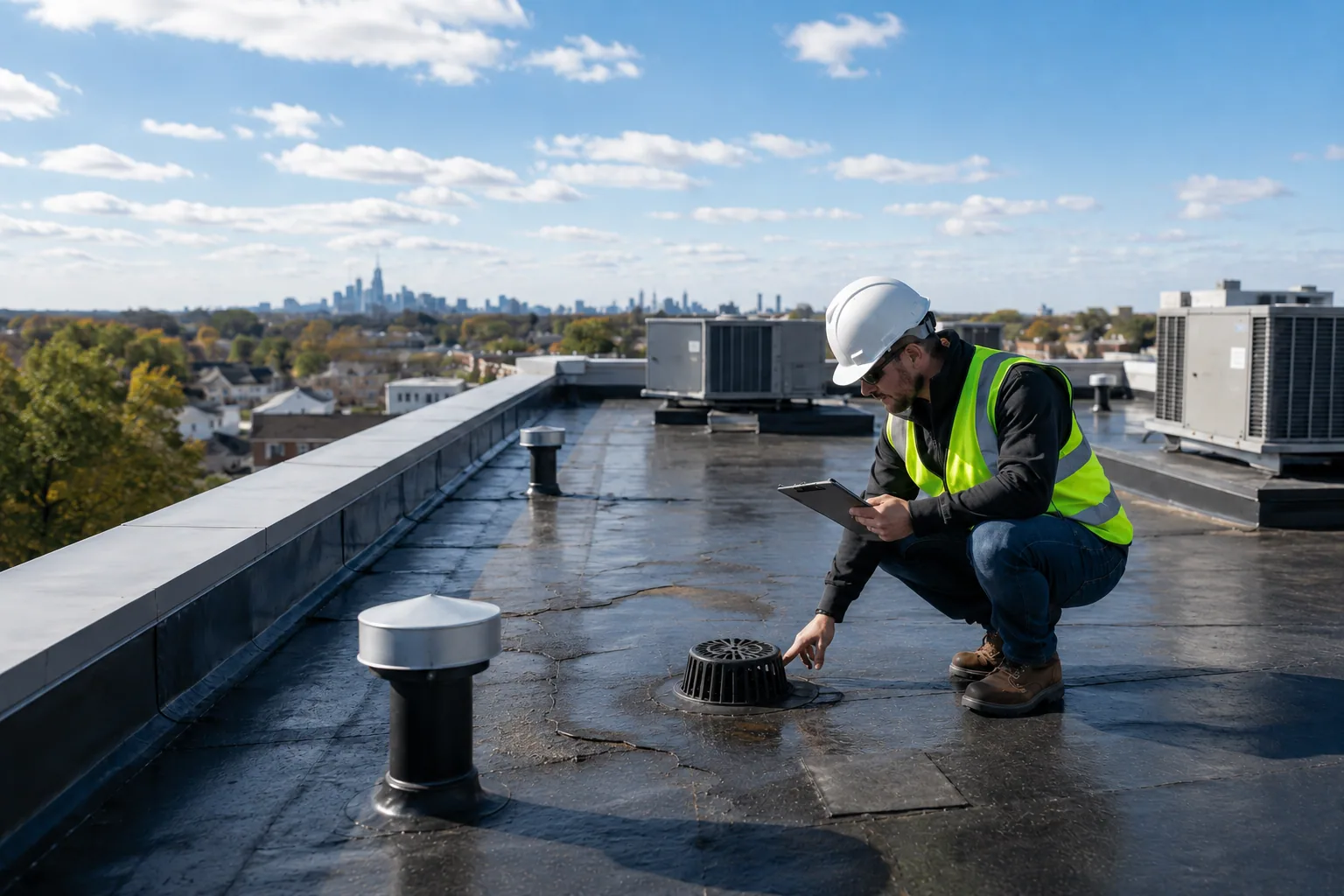
A useful roof record starts with a known section, not a spreadsheet full of assumptions. In Grand Prairie, we identify each assembly, connect photographs to roof zones, and keep access or loading constraints with the condition history. That gives a property manager a practical record for service calls, capital planning, and future review.
First observation:
We begin with the property list, roof plans, prior scopes, and the person who can release access. Each building gets an identifier that matches the owner’s records, followed by roof areas, system type, approximate installation or repair history when documented, and open questions. A condition report can provide the first dated snapshot, while an inspection establishes what was visible and reachable.
Grand Prairie has a substantial warehouse and distribution presence in the Great Southwest Industrial District. That context makes it useful to record dock sides, equipment clusters, and access restrictions, but it does not tell us the condition of a particular roof. We attach those operating notes to the correct building record and leave unconfirmed material or age fields blank rather than filling them by guesswork.
Keep each assembly distinct:
A record should identify membrane or panel, attachment, insulation, deck where known, drainage route, edge details, and notable penetrations. A roof with several additions may contain more than one system, even when the areas appear continuous from grade. We separate sections when their materials, elevations, drainage, warranties, or repair histories differ. That prevents an old note for one zone from being carried into another during a later repair.
For Grand Prairie properties near I-20, I-30, or the Central Business District, location labels can help crews find an area, but the internal roof map needs a stable zone name too. Use a roof plan or annotated image with north orientation and clear boundaries. When a detail is hidden by equipment or cannot be reached safely, mark it as unobserved and set a specific follow-up action instead of recording a conclusion.
Review the map after additions, equipment projects, or drainage changes. A new curb, roof opening, or tie-in can alter the boundary and the maintenance route. The record should note who supplied the plan, when the field team checked it, and which areas still need confirmation. That small revision history helps a later estimator distinguish an original drawing from the roof that is now in service.
History that helps the next decision:
A service record should connect the reported symptom, inspected area, field finding, approved work, materials used, and remaining item. A dated photograph is stronger when it identifies the elevation, drain, curb, or seam shown. We also record whether the repair changed a detail, altered a drainage path, or left adjacent work outside the authorized scope. This structure makes a later maintenance visit more useful than a stack of disconnected invoices.
Summer heat is a scheduling and handling consideration in the DFW area. July and August normals approach 96°F, with an average of 20.2 days a year reaching at least 100°F. In the record, weather can explain a field limitation or temporary work window when documented; it should not be used to infer membrane failure. Keep observations tied to the roof section and date, then distinguish them from owner-supplied history.
The condition field should use plain terms that another manager can apply: open, displaced, split, obstructed, patched, wet, or not visible. Add a short reason for each label and do not turn it into a warranty judgment. If a sensor, moisture scan, or test cut was used, record the method and limits. That helps the next moisture review compare like areas and avoid treating separate measurements as one continuous finding.
Tie roof data to operations:
A roof asset list can include the person who approves access, the hatch or lift procedure, active tenant restrictions, equipment shutdown coordination, and the location of staging. Grand Prairie’s distribution and industrial uses make loading activity a real sequencing factor. A note about truck circulation can prevent a material drop from blocking a working route, while an office or retail building may need a different access window and occupant notice.
When multiple buildings share a parcel, do not let one access note stand for all. Link each roof section to the correct contact, equipment area, and operating hours. If work is phased, record the release boundary and temporary tie-in at the end of each shift. A multi-site program can standardize these fields while keeping each property’s repair history independent. For a group with deferred work, connect the record to a capital plan that shows the next decision and its timing driver.
Separate property contact, roof access approval, safety coordination, and after-hours release. They may be different people. Store the phone or dispatch method only in the owner-controlled record, and include the time the instructions were confirmed. When a building changes manager, review the contact list before an emergency. A response plan works better when the person authorizing entry and the person receiving closeout are identified in advance.
Closeout and next review:
A usable record ends with a clear owner, not an unassigned recommendation. Mark whether the next step is repair, testing, design input, maintenance, or observation; include the open question and what evidence would answer it. Keep warranty documents, approved submittals, closeout photographs, and maintenance instructions with the related assembly. A warranty review can reconcile those records with the work completed.
Send the roof plan, building identifiers, available invoices, known system information, and the contact who can authorize access. We can inspect an area in Grand Prairie and set up a documented baseline. If the property sits near the Great Southwest Industrial District, include dock and staging limits so the field sequence fits the operation. The result is a record the next manager can use to compare conditions and make a bounded scope decision.
For a roof with a coating or overlay, note the installed system, preparation, repaired details, and any warranty or maintenance instruction delivered at closeout. Those facts help future staff distinguish the original roof from later work. When an asset record shows repeated patches in the same zone, schedule a focused assessment rather than simply adding another invoice to the file. The record should prompt a decision, not replace one.
Commercial Roofing Questions
What belongs in the first roof asset record?
Start with the building identifier, roof-zone map, known system, available repair history, access contact, and visible condition. We mark unknown items as open rather than guessing at installation dates or hidden materials. A dated inspection then establishes a baseline for the areas we could reach.
How do you keep notes from different roof sections separate?
The zone map sets the boundary. We label each section by its system, drainage, elevation, and relevant transition, then connect photos and work orders to that label. When an addition has a different assembly or warranty, its record stays distinct even if it adjoins the older roof.
Can a roof asset list show repair priority?
Yes, when the priority is tied to observed condition, active water, safety, access, and the consequence of waiting. We identify what needs immediate protection, what can be scheduled, and what still needs testing. The record supports a decision; it does not turn unknown conditions into a score.
What should be shared before the inspection?
Send the roof plan, known system information, recent scopes, leak locations, and access instructions. Grand Prairie distribution properties may also need a dock or loading-route note so inspection and material staging avoid active operations. We confirm the available window before setting the field sequence.
Set the next roof decision
Share the roof plan, affected areas, known system, recent work, and the contact who can authorize access. We will document the condition and identify the next scope decision.
Call 555-555-5555 or request a roof assessment.