
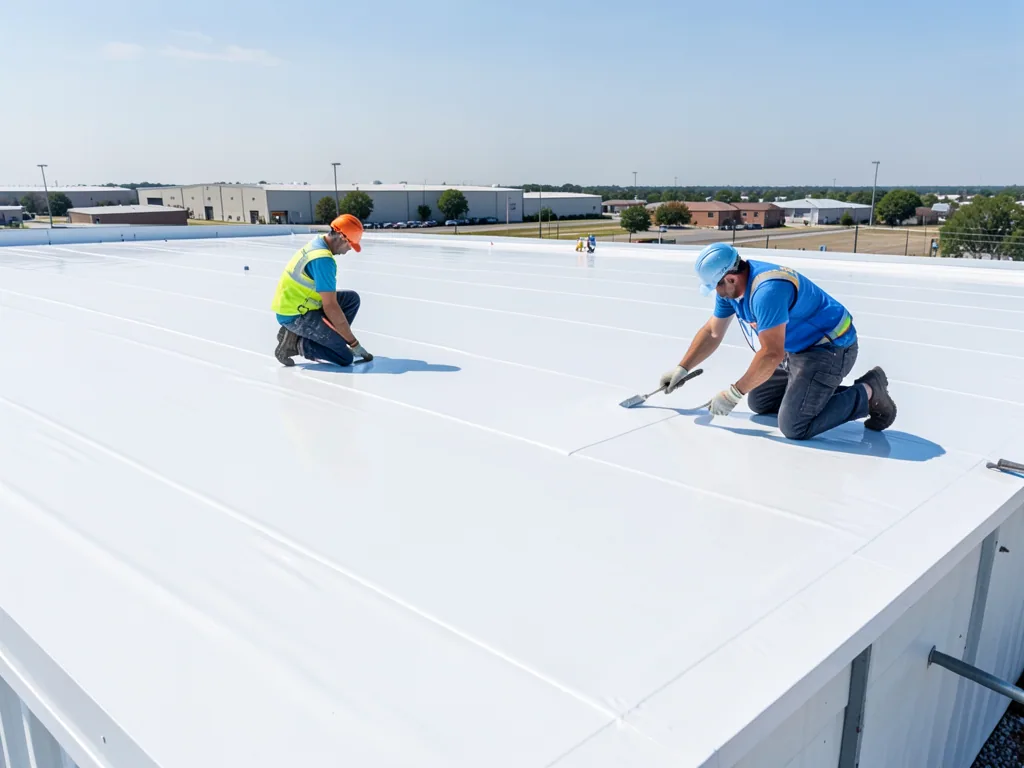
A coating decision starts with the roof beneath it. In Grand Prairie, TX, we first inspect the membrane, seams, drains and penetrations to determine whether the existing assembly is dry and sound enough to restore. A coating can protect a compatible surface, but it cannot correct wet insulation, loose seams or failed transitions by itself. We map the roof section, test suspect areas, and identify repairs that must happen before application. The Great Southwest Industrial District and the I-20 Corridor serve different building uses, so access, equipment and work phasing are confirmed at the property rather than assumed from its location.
Existing assembly: establish what can remain
Before selecting a coating, we identify the roof system and its current condition. The review checks for trapped moisture, open laps, brittle areas, corrosion, failed flashing, soft insulation and repairs that no longer bond. Where surface conditions are uncertain, we use test cuts or other suitable moisture evaluation to see whether the assembly is dry. A wet or unstable substrate needs a different scope than a sound membrane with isolated defects. We explain the boundary between preparation and replacement instead of applying material over an unresolved condition.
That distinction matters on both industrial and commercial properties. Coating access comes from the property itself: Grand Prairie has a distribution district at Great Southwest and a separate retail and corporate corridor along I-20. Roofs in either area may carry units, curbs and service routes that affect coating access. Their actual assemblies still have to be inspected. A written roof condition inspection can document the substrate and identify repairs before a coating scope is considered.
Adhesion check: match the coating to the surface
Compatibility is established by the actual materials and surface preparation, not by appearance alone. We clean a representative area, apply a test patch when appropriate, and confirm that the proposed system bonds as intended. Contaminants, chalking, aged repairs or an incompatible primer can interfere with adhesion. The test area also helps define surface preparation and the amount of detail work required before the field application. If a system needs a primer or reinforcement, those steps belong in the scope and schedule.
Silicone and acrylic coatings have different strengths and application limits. Silicone can suit certain roofs where standing water is a concern, while acrylic systems require drainage and dry application conditions suited to the product. We select by substrate, existing drainage, exposure and project specifications. The silicone coating system or acrylic roof coating is considered only after the base roof passes inspection. A test area that does not bond is a stop signal, not a reason to increase thickness.
Preparation sequence: repair before application
Coating work follows a sequence: remove dirt and loose material, prepare the surface, repair seams and penetrations, allow those repairs to cure, then apply the specified coats at the required coverage. Drains and scuppers remain clear so the coating does not obstruct the water path. At curbs and equipment supports, reinforcement must extend onto stable material. We mark terminations and transitions separately because a broad field application cannot substitute for a correctly detailed edge.
Where the roof has recurring ponding, we evaluate the drainage route before pricing restoration. A cricket, drain or scupper may need correction, and a persistent low area can change the repair boundary. The scope can include drainage detail repairs before any coating is applied. If the membrane or insulation has widespread deterioration, we compare restoration with a roof recover or replacement. The decision is documented by section so the owner can see which areas qualify and which do not.
Application window: protect the work sequence
Grand Prairie experiences long, hot summers. Regional DFW climate normals put average July and August highs in the mid-nineties, with some days reaching at least 100 degrees. Those conditions can affect worker pacing, material storage, surface temperature and the usable application window. We plan the sequence around the coating manufacturer's temperature and moisture limits, then verify roof conditions before each phase. Heat context helps with planning, but the roof surface and product requirements govern the day's decision.
Spring storms are another scheduling consideration across the Metroplex. A forecast may require a smaller open work area, extra protection at transitions, or a pause before a coat can cure. We coordinate that sequence with loading, rooftop service access and occupants. At an I-20 corporate property, office access can differ from a distribution building in the Great Southwest Industrial District. The work plan states which roof zones are available, how materials reach them, and how the crew will protect exposed areas if weather changes.
Closeout record: verify each restored section
Completion should be checked against the scope, not a final walk from the hatch. We review field coverage, repaired seams, penetrations, edge transitions and drain openings. The closeout record identifies the sections treated, products and preparation steps completed, and areas excluded because they failed the restoration criteria. Photographs show the finished details and any remaining maintenance item. This record gives the owner a clear baseline for future inspections without implying that coating eliminates normal roof care.
If a leak remains active during planning, we can respond at any hour, including weekends and holidays, to protect the building and trace the entry point. Coating is not used as a shortcut around an unresolved leak. We isolate the water path, complete the necessary repair, then determine whether the surrounding roof can qualify for restoration. Share the roof area, leak status, known assembly and access window. We will document the inspection and explain the next decision, whether that is repair, coating, recovery or replacement.
Commercial Roofing Questions
How can I tell whether our existing roof is a coating candidate?
A dry, stable assembly is the starting condition. We inspect seams, transitions, penetrations, insulation and prior repairs, then test suspect areas for moisture or adhesion concerns. A roof with widespread wet insulation or loose membrane does not become sound because a coating covers it. The report separates areas that can remain from those needing repair or replacement, so the project does not rely on a surface-only judgment.
Will a coating fix recurring leaks near drains or curbs?
The drain or curb detail has to be repaired before the field coating can be relied on there. We trace the water path, check the transition and determine whether the substrate is dry. If the outlet or roof slope is contributing, that condition is addressed in the scope. For a Great Southwest Industrial District warehouse or an I-20 commercial property, active equipment and loading access also affect when the repair area can be isolated.
What changes the amount of preparation needed?
Surface condition, prior repairs, cleaning needs, reinforcement at penetrations, and moisture findings all affect preparation. A compatible test patch may reveal whether added primer is needed. We also account for drains, edges, curbs, rooftop units and the number of roof zones that can be kept dry during the work. The proposal states which repairs precede application and which conditions would require a revised decision.
Can coating work proceed during a Grand Prairie summer?
The product's temperature limits and the measured roof conditions set the application window. Hot weather can change material handling and worker pace, so we stage manageable areas and check surface conditions before coating. A forecast for rain or a roof that remains damp can move the sequence. We schedule access with the building contact and protect the prepared surface until application can proceed within system requirements.
What should the closeout file include?
The closeout file should identify roof sections, preparation, repairs, coating application, tested details and any excluded area. Photographs can show drains, curbs, penetrations and edges after work. We also note weather or access limits that changed the sequence and list the conditions to revisit during maintenance. That record supports the next roof decision without promising that a restored surface will never need repair.
Check whether the roof can be restored
Send the roof area, active leak status, known assembly, and preferred access window. We will inspect the surface and details, test uncertain conditions, and document whether coating, repair, recovery, or replacement fits the roof.
Call 555-555-5555 or request a roof assessment.