
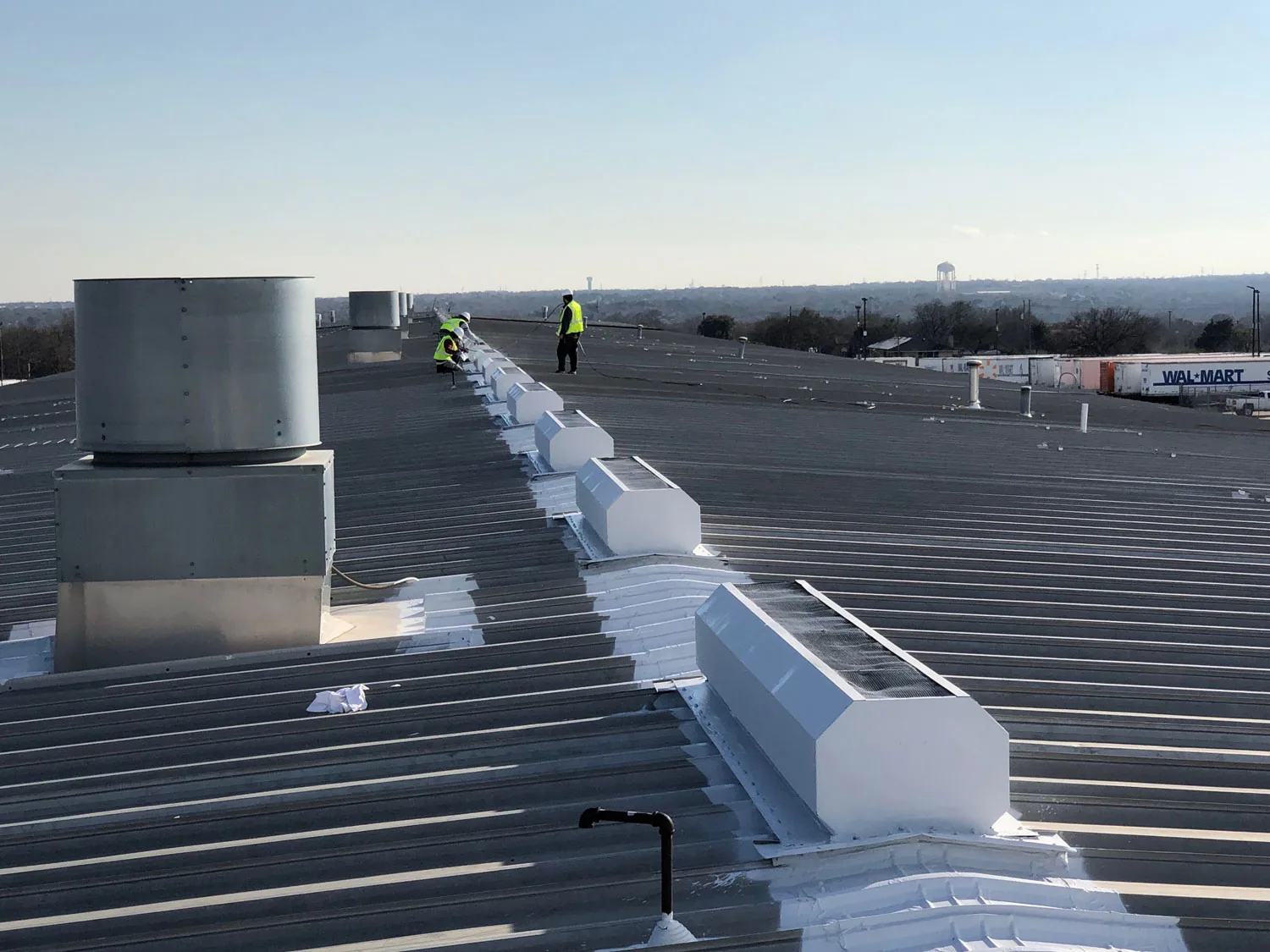
Chalking or a thin acrylic coating does not answer whether the roof beneath it is ready for another layer. In Grand Prairie, TX, we check adhesion, substrate condition, slope and water path before planning surface work. Acrylic coatings need a suitable surface and drainage plan, especially where water collects or details have opened. The City identifies the I-20 Corridor as a developing retail and corporate location; properties in the Great Southwest Industrial District carry different access demands. We confirm the building's actual use and roof section before choosing a coating sequence.
Film check: test the existing layer
We inspect for chalking, peeling, blisters, cracks, bare spots and patches that do not bond to the surrounding surface. A test area shows how the selected coating adheres after preparation. We also check the roof membrane or cap sheet under the coating, because a new film cannot stabilize a loose layer or close an active transition. Each test location is recorded with the condition observed and the next step it supports.
Records can identify the existing coating type, but field review confirms whether it remains bonded. We look for contamination, moisture, surface damage and changes in material around repairs. If the substrate is not ready, the scope separates removal or repair from coating application. A restoration assessment can define that preparation, while an inspection can document broader conditions across the roof section.
Drainage review: check where water remains
Acrylic systems require attention to slope and drainage. We map low areas, inspect drains and scuppers, and note whether water remains after the roof should have drained. We also check whether coating has bridged a crack or formed a ridge that redirects water toward a curb. A drainage concern is addressed as its own part of the scope rather than hidden under another surface layer.
Before coating work, confirm that drainage is ready for the area's wetter spring and fall periods and that the substrate is dry. That regional pattern supports checking outlets and roof details after rain, but it does not show that a particular building has taken on water. At a site on I-20, access to the drain route may be affected by tenant activity or equipment service. We coordinate the work window and record whether each outlet was reachable. If necessary, drain and scupper repairs can be scheduled with the coating preparation.
Detail repairs: close transitions before the field
Edges, curbs, pipes and penetrations need a sound tie-in before the roof field receives a new coating. We inspect flashing, terminations and previous sealant repairs, then determine whether reinforcement or membrane work is required. A new layer should not cover an open seam or unstable curb corner. We define each detail repair and check that it connects with the field surface and drains away from the opening.
DFW July and August average highs are about 96 degrees, with an annual average of roughly twenty days at 100 or above. We use that regional climate context to plan material storage and access, while actual roof conditions and product limits guide application. On a distribution property in the Great Southwest Industrial District, dock scheduling and rooftop service routes can affect staging. An edge-metal review can address the perimeter, and curb and equipment details can be completed before the field coating proceeds.
System fit: compare acrylic with other options
Coating suitability depends on the existing roof, drainage and the maintenance objective. Acrylic and silicone products do not behave identically in wet conditions, so a test and the roof profile guide the selection. If the substrate is wet, insulation is damaged or the membrane has repeated failures, another coating pass may not be the best next step. We compare local repair, restoration, recovery and replacement against what the inspection confirms.
The City’s commercial-building permit information lists the 2021 International Building Code family and the 2023 electrical code for non-residential construction. The governing requirements and permit scope should be checked for the specific project. We identify any design or submittal question before a crew begins. A silicone coating suits roofs with different drainage conditions, and an SPF system treats foam and coating as connected layers. A recovery evaluation can compare those choices with added assembly work.
Sequencing affects how long the roof remains accessible to other trades. We set the repair boundary, stage materials and protect completed sections before moving the application crew. When rooftop units need service, that access is coordinated before the coating window so a trade does not cross the fresh surface. We also identify the forecast and surface conditions that would pause work, then document the open edge at the end of each shift. This keeps the next start point clear and ties daily progress to the approved scope.
Closeout record: track the test and application
The closeout shows preparation, repairs, coated sections and photos of representative edges and penetrations. We record the coating system selected, test locations and any areas left outside the work. If the building team later needs to access a curb or run conduit, the record helps protect the repaired surface and set the right follow-up. An access limit remains visible so the next visit can target it directly.
A follow-up inspection returns to the same low areas, drains and repaired details. Spring and fall rainfall patterns make those checks useful for observing drainage changes, not for attributing a leak to a season. The Central Business District is a distinct area of the city, where tenant and access coordination may differ from industrial operations. A maintenance visit can keep findings by roof section, and a photo condition record can support future work decisions.
For properties with several roof sections, we separate each test and completed area in the record. The building team can then compare observations over time without assuming the coating was applied everywhere. Photos include a location reference and a brief note about the detail checked. The same section labels carry into future maintenance records.
Commercial Roofing Questions
How can you tell if an acrylic coating is ready for another layer?
We inspect the substrate and test adhesion after the planned preparation. Loose coating, wet areas or failed transitions need repair before a new film is applied. The scope names the test locations and whether any material must be removed.
Can acrylic coating be used where water ponds?
Drainage and the selected product's requirements have to be reviewed first. We map low areas, confirm outlets and check the existing roof before choosing a coating. If standing water is a recurring condition, the proposal identifies the drainage work or alternate system for comparison.
What does coating preparation include around rooftop units?
Rooftop unit access is coordinated before cleaning or coating begins. We inspect curb flashing and nearby roof surfaces, then define routes that keep service work off fresh material. The work plan lists curb repairs separately from the field application and records each tie-in.
How do Grand Prairie weather conditions affect acrylic application?
The crew checks roof temperature, moisture and the application window against the product requirements. Regional heat and wet-season patterns help with scheduling, while actual conditions decide whether work can proceed. We keep the roof section protected if an application window changes.
When should a property compare coating with replacement?
Repeated leaks, wet insulation, widespread delamination or an unstable membrane can make coating an incomplete repair. We test the affected area, inspect adjacent details and compare the confirmed scope with recovery or replacement. Each option shows preparation, transitions and access needs.
Test the roof before planning a new coating
Send the roof section, coating history, leak status and access window. We will inspect adhesion, drainage and details, then document whether surface repair, recoating or a broader system scope fits.
Call 555-555-5555 or request a roof assessment.