
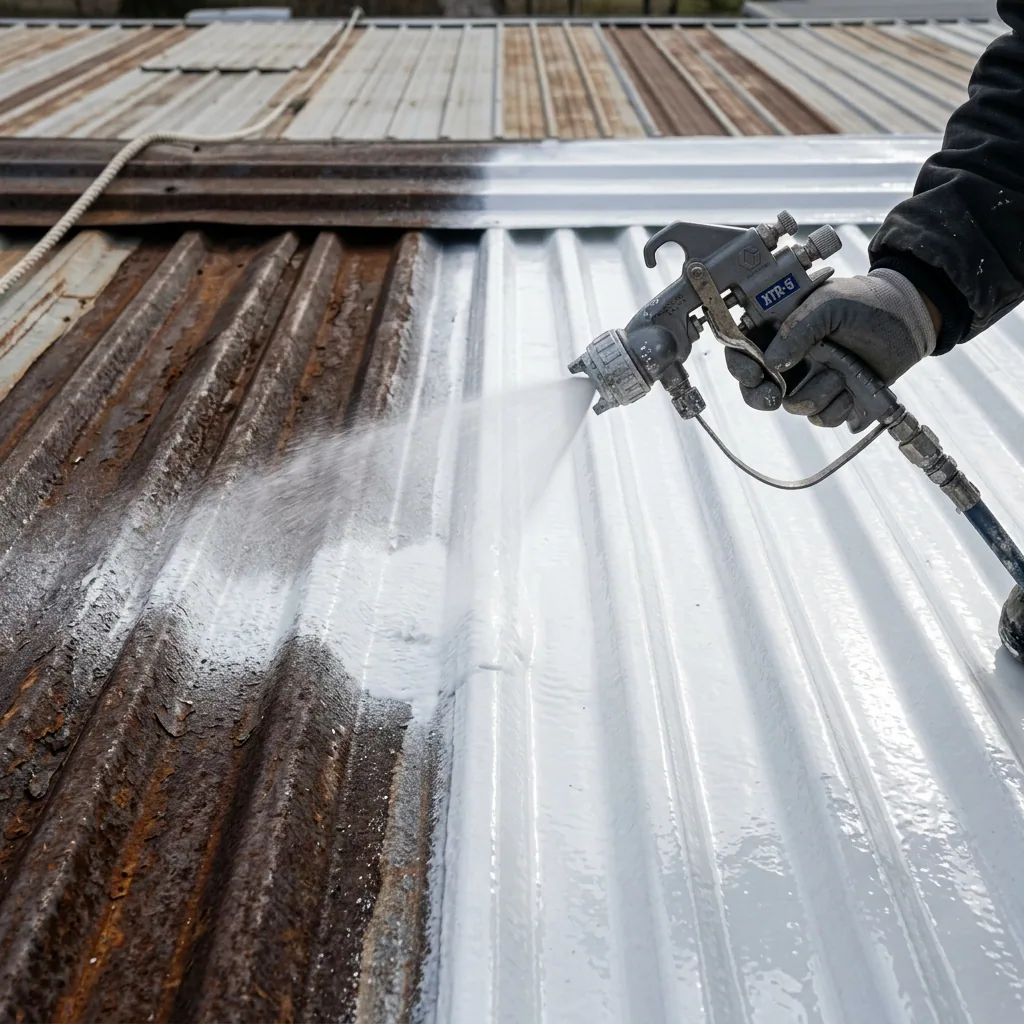
A worn coating over spray foam can expose more than a surface that needs another pass. In Grand Prairie, TX, we first check the protective layer, foam condition, drainage and transitions at the affected roof section. SPF is formed on the roof and protected by a coating, so a repair has to restore both the foam profile and its weather surface. The Great Southwest Industrial District includes warehouse and manufacturing uses, while I-30 connects a different mix of business properties. Access and equipment routes shape the work window; testing sets the boundary.
Surface check: measure coating wear and foam condition
We look for coating erosion, cracks, blisters, punctures, open seams and areas where foam has been exposed. A darkened spot may need cleaning or a closer test, not an automatic replacement. We check whether the foam is firm and dry, whether its surface remains bonded, and whether the coating protects the profile around drains and curbs. A test area helps determine what preparation and repair material are compatible.
SPF can fill a roof profile and provide a continuous surface, but coating condition controls its exposure to weather. We map the repair area, note the coating type when known and review prior recoat records. Where coating is thin or separated, we inspect the foam below before covering it. A roof inspection can document the section and determine whether a small opening is needed to assess moisture or adhesion before a repair proposal is finalized.
Water path: trace foam, drains and curb details
A leak may begin at a curb, pipe boot, parapet or drain, then move along the foam profile. We compare the reported interior area with roof-side conditions and trace where water could bypass the coating. We inspect corners and terminations because a smooth field surface cannot correct an open flashing edge. If foam is wet or soft, the repair may require removal back to sound material before new foam and coating are applied.
At equipment curbs, we check whether the foam build-up directs water toward an outlet and whether service work has damaged the coating. The repair plan identifies the removed area, foam replacement, surface preparation and coating tie-in. We avoid covering an unresolved wet area with a topcoat. Curb and support details can be included where equipment penetrations interrupt the roof plane, and drain work can address an outlet that affects the same water path.
Coating choice: check compatibility before recoating
A recoat is a maintenance step only when the existing surface and foam can support it. We check adhesion, surface cleanliness, repairs and drainage before choosing a coating system. Silicone and acrylic products have different behavior in standing water and weather exposure, so the roof's slope and outlet conditions matter. We describe preparation, reinforcement and any wet foam removal as separate parts of the scope instead of treating coating as a single finish coat.
DFW summer heat makes an access and application window important. July and August average highs are about 96 degrees, with around twenty days in a typical year reaching 100. That regional pattern informs staging and material handling, but the coating instructions and actual roof conditions govern the application. A silicone system has its own compatibility and drainage needs, and acrylic coating has its own surface and weather limits. We do not select either from color or an old label alone.
Repair sequence: remove failed material and rebuild the profile
When the foam is damaged, we remove loose coating and unsound foam to a stable edge. The replacement foam is shaped to restore the drainage profile before the protective coating is applied. We reinforce transitions at curbs, drains and terminations where the selected system calls for it. Each step is checked before the next layer closes the work, keeping a wet or detached condition from being hidden beneath a new surface.
Work is divided into manageable roof sections so an active area can be protected while the crew moves. Properties in the Great Southwest Industrial District may need lift placement and dock coordination, while a business along I-30 may have tenant access constraints. We confirm access, equipment restrictions and the area to remain available before setting the sequence. If testing finds moisture in multiple roof sections, a broader restoration plan can compare localized work with a full recoat or replacement instead of extending isolated patches.
Depth and slope should be recorded before the crew builds back a damaged area. A shallow repair that leaves a low pocket can hold water against a coating edge. We compare the surrounding foam profile and outlet path, then shape the replacement so the transition sheds toward drainage. If the existing system has several coating layers, we review adhesion and surface preparation at a test area. This lets the owner see whether the proposal restores one section or addresses a broader coating condition.
Closeout record: map the repaired foam
Photos show where coating was removed, how foam was rebuilt and where the new surface ties into existing material. The closeout record notes the roof section, preparation, product system and any area that remained inaccessible or untested. A maintenance visit can use that map to check coating wear, drains and equipment curbs without reopening questions about what was done.
Spring and fall are DFW's typically wetter transition seasons. That regional pattern makes drainage and post-rain checks useful, but it does not show that a particular SPF roof has leaked. We document observed ponding, coating splits and outlet condition at the property. A maintenance program can follow the same inspection route, and a photo report can keep findings organized by roof section.
Where a recoat is planned, we identify the surface preparation and repair locations before application. The record names any curb or drain detail that received reinforcement and notes the conditions of the adjacent field. If access to a section was blocked by equipment, that limit remains visible in the closeout instead of being treated as an inspected area. The next access visit can then target it directly.
Commercial Roofing Questions
How do you decide whether SPF needs a recoat or foam replacement?
We test the coating and inspect the foam beneath it. Sound foam with a prepared, compatible surface may support a recoat; wet, soft or detached foam needs removal and rebuilding. The written scope identifies the test area and each repair layer.
Can a new coating fix a spray foam roof leak at a curb?
A coating alone will not close an open curb transition. We inspect flashing, foam profile and the water path, then repair the detail before coating the surrounding field. The closeout record shows where the tie-in was completed.
Why does the roof slope matter for an SPF coating?
Drainage affects how water reaches outlets and how long it remains on the surface. We map low areas, drains and the foam profile before selecting a coating system. Any drainage correction is listed separately from surface restoration.
How does Grand Prairie heat affect SPF work timing?
Heat can change crew access, material handling and the workable application window. We check the roof conditions and follow the coating system instructions on the work day. The schedule is coordinated with building operations and the area being repaired.
What should the closeout include after foam repair?
The record should show the removed area, replacement foam, surface preparation, coating layers and finished transitions. We include photographs and note conditions that were not tested. That gives the next maintenance visit a defined route across the roof section.
Check the foam and its protective coating
Share the roof section, active leak status, coating history and access window. We will test the surface and foam, trace the water path, and document a repair or recoat scope.
Call 555-555-5555 or request a roof assessment.