
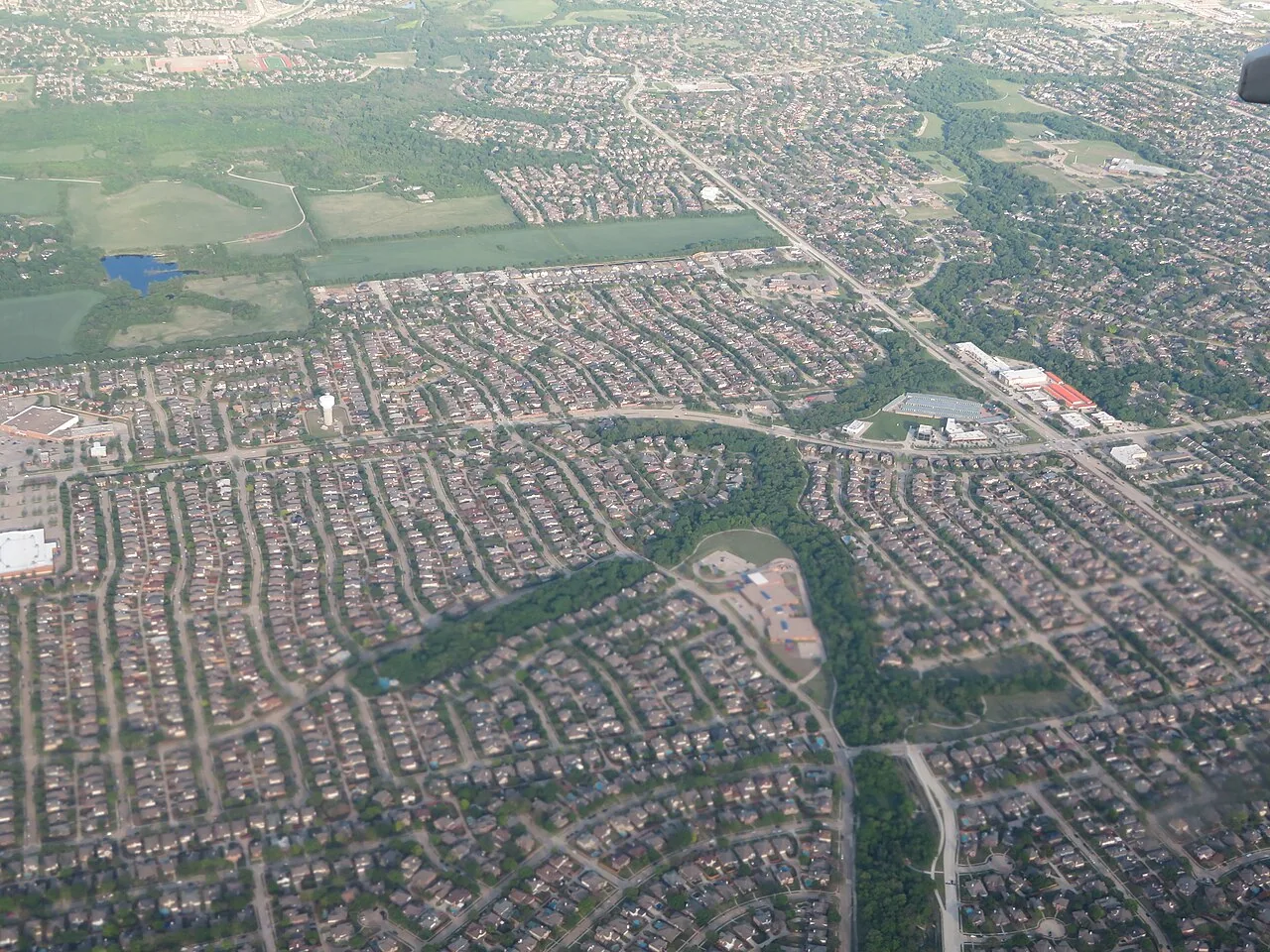
Standing water tells a roofer more than almost any other sign, and on a commercial roof in Red Oak that is where we begin. From Grand Prairie, Red Oak is about eighteen miles to the southeast in a straight line. Red Oak recorded roughly $171 million in retail sales and about $46 million in transportation and warehousing receipts in 2022, so retail and light logistics roofs both belong in the conversation, and we check each for how it sheds water.
We trace where water goes after it lands, measure where it stays, and decide whether the cure is a drain, a slope correction, a flashing repair, or a new membrane. Each answer comes with a written boundary for the work.
First check: follow the water from the ridge to the outlet
On a flat or low-slope roof, water should leave within a day of rain. We look for dirt rings, algae, and stained membrane that mark where it lingers. Then we trace the route from high points toward drains, noting obstacles such as curbs, pipes, and cross-bracing that block the way.
Debris is often the first cause. Leaves, gravel, and wind-blown trash collect at strainers and scupper openings. We clear what we find and photograph the condition before and after, so the owner sees how much was blocking flow. A drain that fills with debris every season is a candidate for a larger strainer or a guard, and we say so in the notes.
If water still stands after clearing, we measure depth and area. Those numbers feed the next decision.
A simple test helps on a dry day. We pour a measured amount of water near a drain and time how long it takes to clear. A slow drain with a clean strainer points to a restricted pipe, and a drain that clears quickly while water still stands elsewhere points to the slope of the roof, not the outlet.
Roof assembly: what standing water does to layers
Water is heavy, and ponds add load that a roof deck may not have been planned for. An inch of water over a large area weighs a lot, and a deck that has already deflected will collect more water in the dip, which deepens the dip. We note any visible sag and check the underside of the deck where it is reachable.
Water also ages the membrane. Seams under constant water absorb moisture and soften, and dirt trapped in the pond promotes growth that attacks the surface. In a heat wave, a warm pond can speed membrane aging further. Where the surface has been wet for years, we test for softness, delamination, and insulation moisture before proposing any repair.
Penetrations inside a pond are another weak point. A pipe boot or curb flashing that stays submerged for days gets far more demanding service than the same detail on a dry roof. We inspect those details first, because they fail first and they leak into the space below.
Outlets: drains, scuppers, and overflow
A roof needs enough outlets of the right size, at the right height, and with a backup. Interior drains collect water from the field and pass it through piping. Scuppers pass it through parapet walls. Overflow scuppers sit slightly higher and provide relief if the primary outlet clogs.
We check drains and scuppers for position, cleanliness, flashing, and condition of the sump. A scupper set above the roof surface leaves a permanent pond. A drain with a cracked clamping ring leaks into the building. Correcting these details often costs less than replacing the membrane the water has been wearing out.
Gutters and downspouts get the same inspection, including the joints, the fasteners, and the splash blocks, with attention to edge metal and gutter attachment and the point where water finally leaves the building.
Wet seasons and hot summers: the two stresses on drainage
Spring and fall carry the heaviest rainfall in the Metroplex, and spring also brings its severe thunderstorms. A roof that drains slowly in March is under stress by May. We time drainage work for late winter and late summer so it is in place before those months, and we use the same visit to look at flashing and seams while the roof is dry.
Summer adds a different stress. Midsummer highs average near 96 degrees by the regional normals, and a flooded roof surface under that sun softens and swells. The combined cycle of wet, hot, and dry again is hard on seams. For that reason, ponding is rarely a cosmetic problem, and we treat it as a cause to correct, not an item to monitor forever.
Repair sequence: drain, slope, seam, then membrane
The repair order moves from cause to symptom. First we restore drainage by clearing, repairing, or adding outlets. Next we correct low spots with tapered insulation or a localized build-up where the deck allows. Then we repair seams and flashing that have been damaged by water. Last, we decide whether the membrane itself can remain.
If the membrane has been immersed for long periods, ponding water repair may call for replacing the affected sections and the wet insulation beneath them. The cost drivers are the area involved, insulation thickness, the number of drains to be added, and the access for equipment. Piping routes matter too: a new interior drain needs a path to the existing line, and a new scupper needs a wall that can take the opening.
Closeout record: drainage that can be rechecked
After the work, we photograph each outlet and the surrounding surface, record the measurements, and note the date. We also leave a short sketch of the drainage routes, with arrows showing the direction of flow and marks where debris tends to collect, so whoever cleans the roof next knows where to look first. A second visit after the next heavy rain confirms that water leaves as intended. If it does not, the record shows what changed and where to look.
Owners with properties in Glenn Heights or Midlothian can keep each roof's drainage record in the same form and add it to a shared maintenance plan.
Commercial Roofing Questions
How long is too long for water to stand on a flat roof?
Water that remains more than a day or two after rain points to a drainage problem or a low spot. Brief puddles are common, but repeat ponding in the same place marks a condition worth correcting before the membrane wears through.
Is adding a drain always the fix for ponding?
No. A drain helps only if the deck can be sloped to it. Sometimes tapered insulation moves water toward an existing outlet, and sometimes the better answer is an overflow scupper. We pick by where the water sits and what the structure allows.
Could the roof structure be carrying extra weight from ponds?
Yes, and that is why we check for sag. If we see deflection, we recommend a structural review before adding new layers. Repairs that restore drainage reduce the load, and the engineer's findings guide the final scope.
Why do leaks appear only after long rains?
Prolonged rain raises water levels around drains and flashing, and a detail that sheds ordinary rain can fail once water stands against it. The location of the stain often points to the low area that held water the longest.
Can a coating fix a roof that ponds?
Some coatings tolerate ponding better than others, but none cures a drainage defect. We correct the drainage first and then consider whether a coating suits the surface, so the finish is not asked to handle what the structure should.
Describe where water stands
Tell us the roof area, where ponds form and how long they stay, any leaks inside, and the hours when crews can get on. We will measure the low spots, test the outlets, and write up the options.
Call 555-555-5555 or request a roof assessment.