
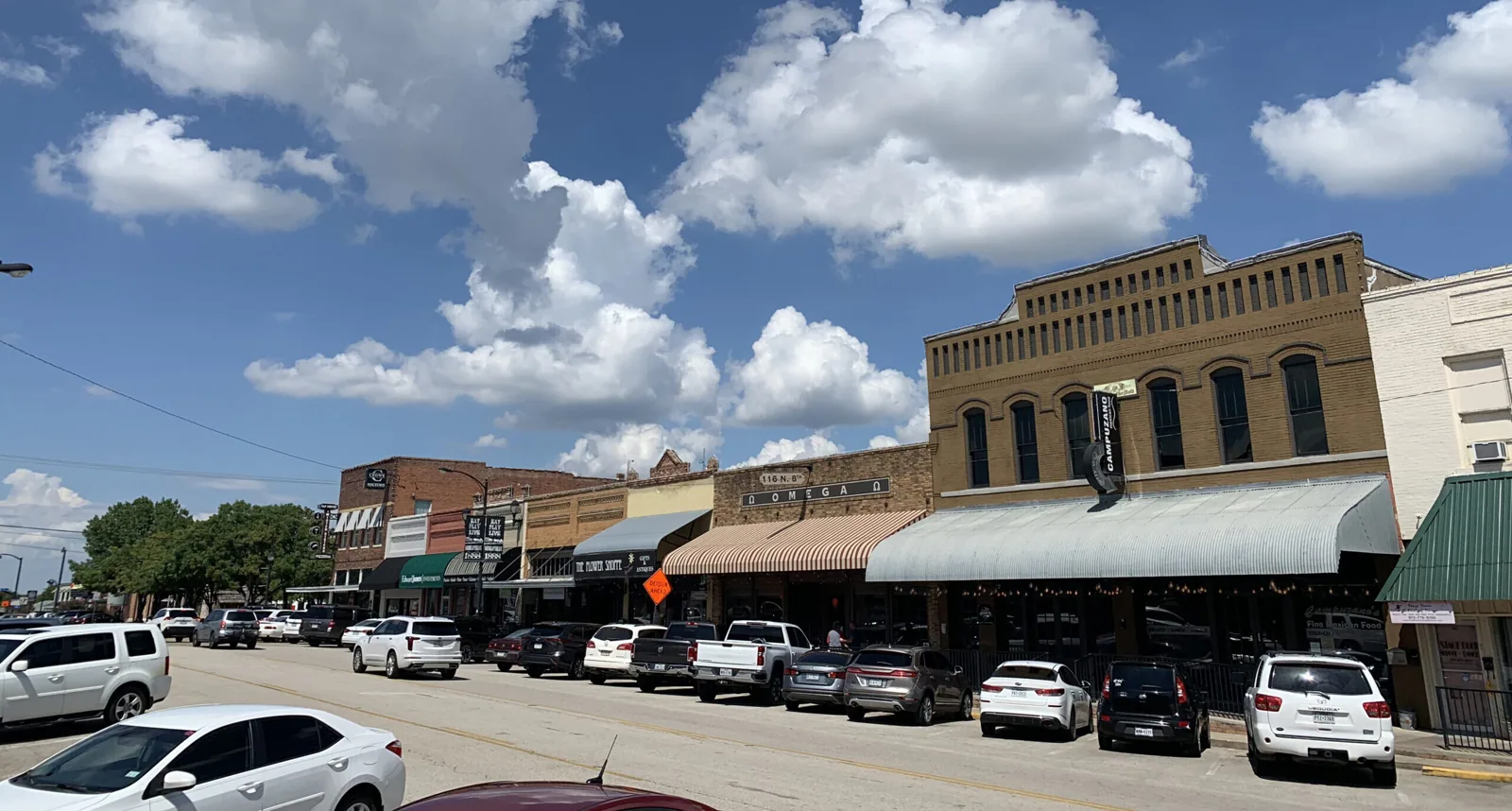
Insulation is the layer most owners never see, and in Midlothian it is often where a roof decision is really made. The drive from Grand Prairie runs south, and Midlothian ends up about fifteen miles away on a straight-line measure. Its 2022 retail sales reached roughly $542 million and its transportation and warehousing receipts about $141 million. Retail and logistics roofs alike can hide one problem: a membrane can look acceptable while the insulation below it is wet or crushed.
We start with the surface and work downward. A probe, a moisture reading, and a small cut sample tell us whether a repair will bond, whether the roof can take a recover, or whether the assembly has to come off.
First check: what the surface says about the layers below
Soft spots underfoot, blisters, and ridges along fastener lines all point to something below the membrane. We walk the roof slowly, press on suspect areas, and note where footsteps flex or rebound. A dull thud under a tap often means wet material.
Surface cracks and open seams get photographed with a scale for reference. Heat discoloration, dirt lines, and algae streaks show where water lingers. None of these findings alone proves failure, but together they decide where to sample and where to scan, so the testing is aimed and not scattered.
The walk ends with a sketch that marks each finding. The sketch becomes the working document for every later decision.
For commercial owners who also hold property along the I-20 corridor, the same sketch format lets two roofs be compared on one page, which makes it simple to rank which gets attention first.
Roof assembly: insulation, cover board, and substrate
Rigid insulation boards sit on the deck and carry the membrane, either adhered or mechanically fastened. Foam panels can absorb water through open seams, and fiber-based boards lose strength when wet. A thin cover board between insulation and membrane protects against foot traffic, hail, and fastener pressure, and its absence is a common reason older roofs bruise.
When we find wet insulation, we measure how much and where. If moisture is confined to a few boards near a flashing, replacing those boards and the membrane above them can bring the roof back. If the pattern spreads, the plan moves to a larger removal. The difference in cost is mostly labor, disposal, and deck repair, and we show each as a separate line.
Fasteners and adhesives come into it too. Insulation boards attached with too few fasteners can shift under wind load, and boards adhered over a dusty surface can lift. We check the pattern and the pull resistance of a few fasteners on every walk, because the layer that cannot be seen must still be held down.
The substrate also matters: a clean, dry, sound deck is the foundation for any new system.
Heat cycling: how summers age the assembly
DFW climate normals show July and August afternoons averaging in the mid-90s, with about twenty days a year reaching 100 degrees. A dark roof surface climbs well above the air temperature, and the membrane, insulation, and fasteners all expand and contract with it. Over years, that cycle breaks down seams and loosens flashing.
Reflective surfaces reduce the swing. A cool roof system uses a white or light membrane or coating to shed solar heat, which lowers the temperature that the insulation and deck see. Whether it makes sense depends on the existing assembly, the building's use, and the budget, and we outline those trade-offs without promising a specific energy result.
Heat also changes the work itself. Adhesives flash off quickly on a hot deck, and a membrane laid in the afternoon sun can stretch and relax once it cools. We start early, keep rolls shaded until they are placed, and check seam welds and adhesive bonds again after the surface cools.
Water and drainage path: why wet seasons expose weak details
Spring and fall bring the most rain in this region, and a roof with soft insulation and low spots will hold water longer. We check slopes, drain positions, and the condition of sumps. Where water stands in a bowl around a drain, the surface wears quickly and insulation below is likely to be wet.
Tapered insulation can correct slope during a replacement, directing water to drains it never reached. For an existing roof, adding or relocating a drain may be more practical. Either way, we explain the choice with measurements: depth of ponding, distance to the nearest outlet, and the length of time water remains after rain. The same pattern turns up as ponding water damage on buildings of every size, and the cure is nearly always about drainage before it is about membrane.
Repair sequence: patch, recover, or tear off
A patch fits a bounded defect on dry insulation. A recover places a new membrane over an existing roof when the old layers are dry and sound. Tear-off removes everything to the deck and allows a fresh assembly, with insulation and cover board designed together.
We lay out the options with what each touches, what each costs in time and disruption, and what each leaves in place. The sequence for any option runs the same way: prepare, repair or install, test, document. Permit and engineering requirements come from the city; Grand Prairie's commercial permit guidance, for instance, calls for engineer seals on larger buildings, and we confirm the local requirements before scheduling.
Access is the last variable. Material for a full tear-off, from insulation bundles to dumpsters, needs a staging area and a route that does not block customer or truck circulation. We plan lift placement, set quiet hours for occupied suites, and keep the open roof area small enough to dry in the same day.
Closeout record: layers documented for good
On completion the owner receives photographs of each layer as it was installed, product data, and a record of any deck repairs. That detail is difficult to rebuild later, and it helps the next owner, lender, or insurer understand what sits beneath the surface.
If a building in Red Oak or another nearby city shares a similar roof, the same method and record can be applied across both, supporting a coordinated maintenance plan.
Commercial Roofing Questions
How do you find wet insulation without removing the roof?
Infrared imaging and moisture meters show temperature and conductivity differences that suggest trapped water. We confirm with small core samples at the suspected boundaries, patching each sample hole the same day with a compatible material. Together the methods map the wet area closely enough to price a section repair.
What does a cover board add to a roof?
It adds a hard, stable layer between insulation and membrane. That layer resists impact, spreads load from foot traffic, and reduces fastener telegraphing. For roofs that see hail or heavy rooftop access, it is often worth the added line item.
Can a roof be recovered if the insulation is partly wet?
Only if the wet areas are removed first. A new membrane over saturated material traps moisture and shortens the life of the new system. We cut out and replace the wet sections before the recover begins.
Why is slope important on a flat roof?
Low spots hold water, which ages seams, adds weight, and encourages growth on the surface. Tapered insulation or added drains guide water off the roof and reduce the time it spends on the membrane.
How do we compare a coating with replacement?
A coating suits a dry, sound membrane that needs a renewed surface. Replacement suits a roof with wet insulation or widespread failure. We compare cost, remaining life, and downtime for both so the choice follows the readings.
Send the roof details and any moisture history
Share the roof area, whether any leak is active, what you know about the layers, and when crews can reach the roof. We will probe and scan the suspect sections and put the findings into a written scope.
Call 555-555-5555 or request a roof assessment.