
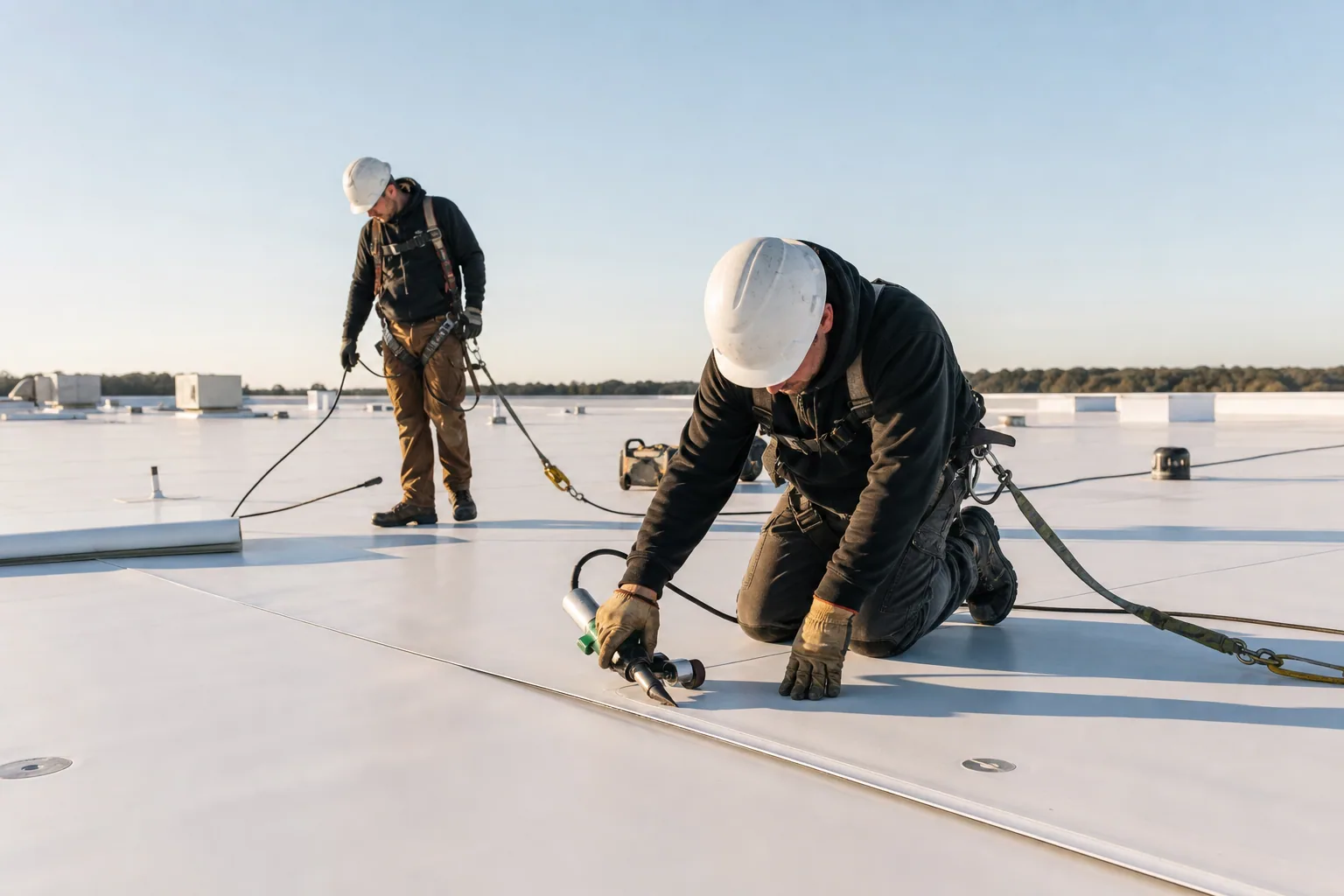
A reflective roof finish can reduce solar absorption at the surface, but the coating or membrane must fit the assembly below it. We begin with the existing system, drainage, insulation, and repair history, then confirm whether a cool-roof product is appropriate. Grand Prairie’s hot summers make surface exposure a practical concern for warehouses in the Great Southwest Industrial District and commercial buildings near I-20. Those locations do not predict a specific building’s energy result. We inspect the roof, review the project requirements, and document the preparation and system needed for the installation.
Check the roof before choosing a finish
A reflective surface cannot correct wet insulation, open seams, unstable substrate, or standing water. We inspect the membrane, flashings, drains, penetrations, and perimeter before recommending a new finish. The roof must be repaired and prepared to the selected product requirements. If moisture is suspected, direct testing can determine whether the area should be removed or dried before installation. We record the defect boundary and identify work that is separate from the cool-roof scope.
Great Southwest's distribution and manufacturing properties create one roof context in Grand Prairie; a cool-roof design still depends on the existing assembly and load. Equipment, loading schedules, and access can shape how an installation is staged there. Grand Prairie also identifies I-20 as a developing retail and corporate location, where occupied entrances may affect daily work limits. These are planning conditions, not proof that a building has a particular roof or cooling load. A hands-on inspection establishes the roof condition before a product is selected.
Confirm the system underneath
Cool-roof work can use a reflective membrane, a coating over a suitable roof, or another specified assembly. Each option needs a compatible substrate and correct preparation. We verify the existing membrane, adhesion condition, drainage, penetrations, and manufacturer instructions before applying a new surface. A coating system may require repairs and priming first; a membrane replacement can involve removal, insulation, cover board, attachment, and edge work. We explain what stays and what is replaced in the proposed scope.
Insulation and air movement also affect building performance. A reflective finish is only one part of the roof assembly, and it does not establish a particular utility reduction. We can identify the system characteristics and project criteria that matter without claiming an unmeasured savings result. A reflective TPO option may fit some projects, while coating restoration may fit others after adhesion and moisture checks. The selection follows the roof’s condition and design documents.
Keep drainage and transitions intact
Surface reflectivity does not change where water should flow. We check slope, drain bowls, scuppers, overflow points, and low areas before installation. A coating can bridge a small surface irregularity while leaving a drainage problem underneath, so the proposed scope must address ponding conditions where they affect performance. At walls, curbs, and perimeter edges, new material must tie into existing details without blocking outlets or raising water against a termination.
DFW average highs in July and August approach 96 degrees, and the area records many days at or above 100. Those conditions inform material staging and application windows. Surface temperature and product limitations still need to be checked at the property. Drainage corrections can be coordinated with the installation so water moves through the designed route. At a roof near the Great Southwest Industrial District, a clear drain path may also matter for equipment and dock-side sections that receive frequent service traffic.
Compare restoration with replacement
A cool-roof proposal should state whether it includes cleaning, repairs, primer, coating, membrane work, insulation, or removal. These steps are not interchangeable. We identify areas that fail adhesion checks, contain moisture, or need flashing rebuilt before a reflective finish is applied. If the existing assembly is not suitable, a replacement scope may provide a more reliable starting point. If the roof remains dry and stable, restoration may extend serviceability after the proper preparation.
Cost depends on roof area, repairs, surface preparation, access, system thickness, substrate, and the number of details. Timing also depends on cure or weld conditions, forecast, and how much roof can be completed safely each shift. We separate included work from alternates so the owner can compare options with the same assumptions. A recover review or replacement analysis may be appropriate when the existing layers or attachment condition change the decision. We keep the finish choice connected to the roof findings.
Sequence work around occupied space
Installation can affect air intakes, rooftop equipment, deliveries, and entrances below. We identify staging, ventilation protections, restricted roof paths, and work hours with the facility contact before mobilizing. A warehouse may need its dock lanes clear while materials arrive. Retail or office operations may require a work zone that avoids customer or tenant access. If a mechanical unit needs shutdown, that task is coordinated with the facility team and the mechanical contractor.
Heat can shorten or shift application windows, so the crew stages materials for the sequence and follows product requirements. If rain or wind interrupts the work, exposed sections and completed edges are protected before the shift ends. An update identifies the roof area completed, the area secured, and what remains for the next access window. This makes the schedule usable for the general contractor and keeps the interior operation informed without promising that weather can be controlled.
Document the installed surface
The closeout identifies the product system, preparation, repairs, and roof sections completed. Photos show key transitions, drains, and areas where existing material remained. We record any maintenance or inspection steps supplied with the product documents and list locations outside the scope. That record lets the owner compare later observations with the installed condition and see whether a follow-up repair belongs to the cool-roof project or another roof issue.
A reflective installation is best evaluated against the actual design objective and building operation. The owner can track interior conditions, maintenance findings, and available energy data over time without treating a surface change as proof of savings. Condition reporting can provide a baseline for that review. For commercial buildings throughout Grand Prairie, the recommendation stays tied to the roof, project criteria, and service access. Share the known assembly, leak history, and operating window to begin the assessment.
Commercial Roofing Questions
Will a reflective roof reduce our energy bill by a set amount?
A surface finish alone cannot establish a savings figure. The result depends on the building, insulation, HVAC operation, weather, and other conditions. We describe the proposed system and can help identify what building data would support later comparison.
Can a cool-roof coating go over any existing membrane?
The substrate and adhesion condition must support the selected product. We inspect seams, repairs, moisture, and surface preparation requirements first. If the existing material is incompatible or unstable, the scope may need repair or removal before coating.
Should drainage be corrected before a reflective finish is applied?
Yes, where an outlet or low area affects roof performance. We inspect drains, scuppers, and slope, then include the needed correction in the scope so the new surface does not conceal a drainage defect.
What can interrupt the installation schedule?
Surface moisture, heat limits, wind, rain, access, and cure or weld conditions can affect the daily work area. We identify the exposed section, secure it, and update the next sequence when conditions change.
What should the closeout record include?
It should name the installed system, preparation, repairs, completed sections, transition photos, and maintenance information supplied with the product. The owner can use that record to plan later inspections and compare future conditions.
Review the roof assembly first
Share the roof area, known membrane, leak history, and access window. We can inspect the substrate and drainage, then explain whether a reflective membrane, coating, or replacement fits the roof.
Call 555-555-5555 or request a roof assessment.