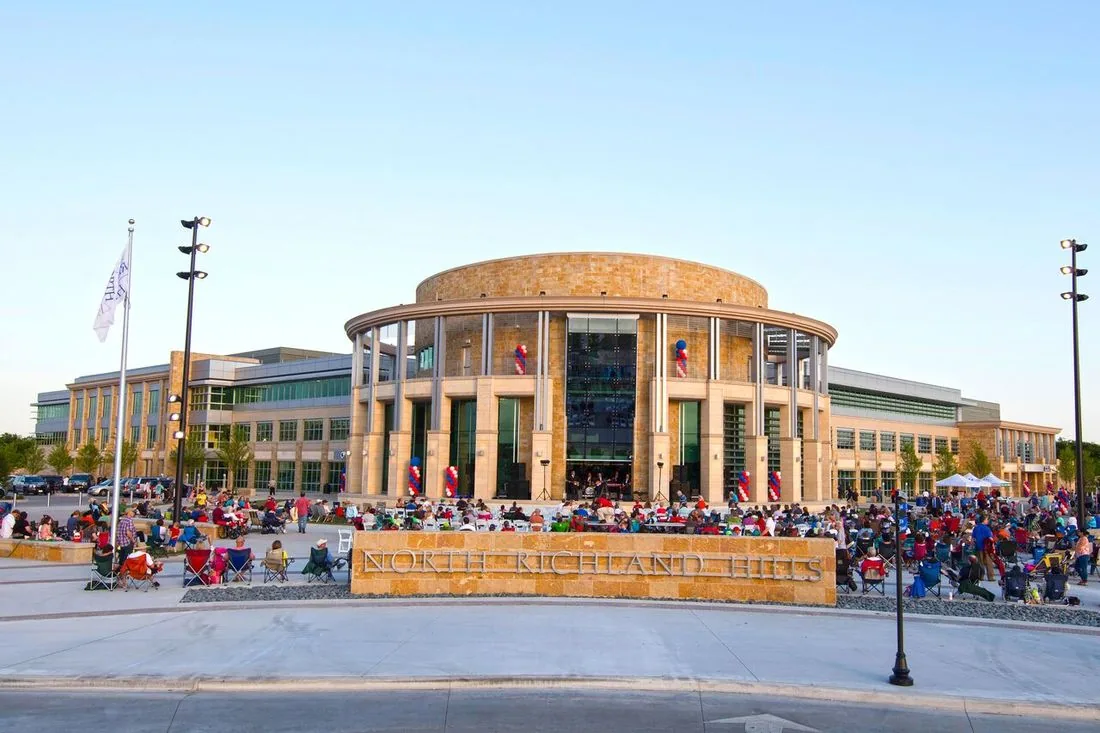
Grease and heat leave a mark on a restaurant roof that no weather report predicts. Near a kitchen exhaust fan, a membrane can soften, stain and split in a pattern that has nothing to do with hail or age. North Richland Hills lies about 17 straight-line miles northwest of Grand Prairie. In 2022 North Richland Hills recorded retail sales of more than two billion dollars for a city of roughly 71,000 residents, with a small transportation and warehousing total. That mix points toward stores and shopping centers, which are often low-slope buildings with many tenants and many penetrations, and any restaurant among them adds exhaust equipment. We start at the equipment and the drains, because those details cause most of the leaks and most of the disputes between tenants and owners.
Exhaust and grease: protecting the membrane near kitchen fans
Kitchen exhaust fans throw grease onto the roof, and grease attacks many membranes. It softens some single-ply sheets, swells seams and collects dirt that holds moisture. We check the area around each fan for staining, soft spots, blistering and a slick film.
A grease containment pan under the fan discharge catches most of the problem if it is emptied on schedule. Where the membrane is already damaged, we repair the area with a compatible patch and add a pan or a protective pad. For a restaurant roof, that small detail can extend the life of the surrounding membrane considerably. We also check the fan curb, because grease-soaked sealant often fails first.
Owners who lease to restaurants should know that the exhaust service contract affects the roof, since the person emptying the pans decides how much grease reaches the membrane.
Fan curbs deserve their own look. A curb with a cracked cap or a gap at the base allows water to run into the duct chase, where it may drip onto cooking equipment or ceiling tile. We reseal the cap, rebuild the base flashing if needed and confirm the fan is secured to the curb.
Strip centers: shared drains and tenant lines
A strip center roof is often one continuous membrane over several tenant spaces. A leak in one bay can travel along the deck and show up in the next. That makes it hard for a tenant to know whether the problem is theirs or a neighbor's, and it makes the owner's records important.
On a shopping center roof, we map the tenant lines onto the roof plan so each leak report can be matched to a roof area. Shared drain lines get a flow test, since one blocked pipe can flood several bays. The result is a repair list that is tied to the building's real layout, not a guess at where one lease ends and the next begins.
Roof access for service technicians is another shared concern. When several trades walk the same route, the membrane wears in a path. Adding walk pads along that path protects the sheet and gives the owner a visible record of where traffic is expected to go.
Parapets and scuppers: where retail roofs take on water
Many retail roofs end in parapet walls with scuppers or interior drains. The wall base is a weak point: counterflashing can pull away, coping joints can open, and masonry can crack above the flashing. We check the height of the base flashing, the condition of the termination bar and the sealant at each joint.
Scuppers need a clear opening and a sound liner. If debris blocks them, water backs up against the wall flashing and finds its way in. A ponding water repair often starts with a scupper that has been set too high or is partly blocked. Put outlet checks ahead of the area's spring and fall rainfall periods; after a roof report, record whether water is draining at the observed rate.
We also look at the roof edge where the parapet meets a roof-mounted unit, since water running down the wall can collect there. A small saddle or cricket sends it around the unit toward a drain, which is a more reliable cure than another bead of sealant.
Coatings: restoring a sound but tired surface
When a roof is dry underneath and the membrane is still well bonded, a liquid coating can restore the surface at a lower cost than replacement. A silicone coating resists ponding water, while an acrylic coating suits slopes that drain well and offers a bright reflective surface.
The coating is only as good as the preparation. We clean the roof, repair seams and flashings, test adhesion and read moisture before specifying any product. If the roof fails those tests, we say so and offer repair or replacement. A restoration coating is a good choice only when the substrate supports it.
Cost drivers for a coating include roof area, the number of repairs needed before application, the thickness specified and the season. Because the work is liquid applied, weather and surface temperature set the days on which spraying or rolling is possible.
Business hours: scheduling around customers
Store and restaurant roofs need careful scheduling. Restaurants have lunch and dinner peaks. Retail has weekends and holidays. A grocery store or pharmacy cannot close. We ask each tenant about the quiet windows and plan the noisiest work for those times.
For leaks that cannot wait, our emergency roof repair response is available at any hour, including holidays. We secure the opening first, then return for the permanent fix when the schedule allows. The tenants get a clear message about what was done and what comes next.
A signed list of tenants and their contacts speeds each visit. When a crew arrives with the right names and phone numbers, access to a stockroom or ceiling space takes minutes instead of an afternoon.
Handover record: what the property owner keeps
The final record lists the roof sections, repairs made, products used and photographs. For owners with properties in North Richland Hills, Hurst and Fort Worth, the same layout lets a manager compare them side by side and rank them for the next budget cycle.
Photographs of fan curbs, parapet bases and drains are included for each visit, so the next walk can confirm whether a repair is still holding.
Commercial Roofing Questions
Why does the membrane near a kitchen fan fail before the rest of the roof?
Grease from the exhaust coats the surface, softens some materials and holds dirt and moisture against the seams. The damage is chemical and local, so it follows the fan, not the weather. Pans, pads and compatible patches slow it down.
How can a landlord tell which tenant's space a leak belongs to?
Water often travels along the deck or insulation before it appears, so the stain is not a reliable guide. We map tenant lines onto the roof plan, trace the leak to its entry point and report the roof area involved. That gives the landlord a factual basis. Where two bays share a leak, the report says so and avoids assigning blame to a single tenant.
Is a coating right for a roof with standing water?
Silicone tolerates ponding better than most coatings, but a roof that holds water for long periods still needs drainage correction. We assess slope, drains and insulation moisture before choosing any coating. Sometimes the cure is a new drain, not a new surface.
What can be done about a leak during a restaurant's busy hours?
We contain the interior with sheeting and buckets, then secure the roof opening with a temporary patch. Permanent work waits for a quieter window agreed with the manager. The goal is to stop the water and avoid disrupting service.
How often should scupper and drain clearing happen on a retail roof?
At least twice a year, before the spring storms and again in early fall, with an extra visit after any storm that drops debris on the roof. Properties near trees or loose gravel may need more frequent checks.
Describe the building and its tenants
Share the leak locations, the tenant mix, roof material if known and the hours when work is possible. We will walk the roof, match it to the tenant lines and document the next scope decision.
Call 555-555-5555 or request a roof assessment.