
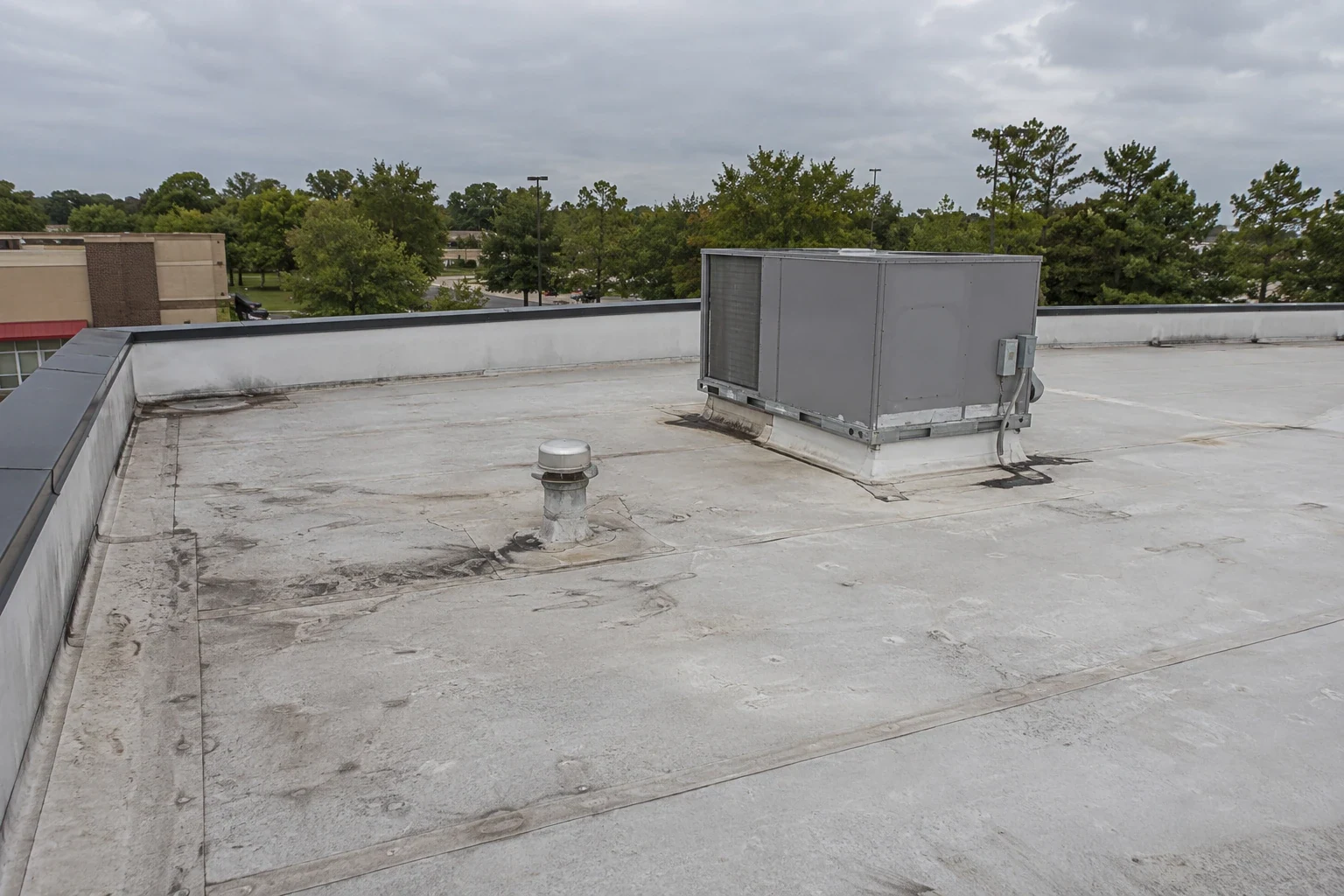
A kitchen exhaust curb can concentrate grease, heat, vibration, and service traffic at one roof transition. We begin at the affected section, check the flashing and nearby seams, and map the drainage route before defining repair scope. The owner or general contractor identifies dining hours, delivery access, and when kitchen equipment can be serviced. A restaurant on I-30 operates within a broader business corridor, but the building's own access and kitchen exhaust guide the roof scope, not the address.
First check: locate exhaust and reported water
The manager identifies the kitchen, dining, delivery, and rooftop service constraints. We record the roof section, curb condition, membrane seams, nearby drains, previous patches, and any interior area where water was reported. Grease deposits or heat exposure around an exhaust curb may call for detail review, but the flashing and adjacent assembly still determine the repair. We photograph the curb with surrounding field and distinguish visible wear from a confirmed opening.
The city calls I-30 a strong business and entertainment corridor, and food service is a real part of the local economy. Neither establishes a particular operator or roof. We confirm the property and schedule directly. A commercial roof inspection can document the curb, seam, drain, and access conditions before equipment work or reroof planning.
Assembly review: coordinate exhaust service
We inspect the curb flashing, supports, membrane attachment, deck evidence, and any heat- or service-related wear. A kitchen contractor may need to isolate or remove equipment before roofing can complete the tie-in. The owner identifies who controls that work. Plans and repair records help, but prior patches or a changed exhaust can create different layers around one penetration. Any exploratory opening is approved, located, and closed with the specified compatible detail.
A confirmed flashing split may support commercial roof repair. If multiple sections have repeated failures, the owner can compare a recover evaluation and replacement. TPO and EPDM require suitable curb detailing, preparation, and attachment. The project specification and actual assembly determine compatibility, not the restaurant use alone.
Water path: separate drains from flashing
We check slope, drains, scuppers, sumps, overflows, and the membrane transition at each outlet. A blocked drain can leave water near a curb; a damaged flashing may need a detail repair instead. The report labels the roof section and names the correction, allowing an owner to distinguish cleaning from repair or engineered slope work. If water is reported above the dining room, the manager controls interim interior response while the crew investigates the roof-side path.
Schedule a restaurant roof's outlet review around the area's wetter spring and fall periods, before a blockage disrupts a busy service day. It does not show that a restaurant roof flooded. Drain and scupper work can be priced separately from exhaust flashing and field membrane work. After correction, the closeout record identifies the outlet and curb locations for maintenance staff.
Work sequence: use the service window
The restaurant and roofing teams select a work window that respects deliveries, food-service hours, exhaust cleaning, and the equipment contractor’s schedule. The general contractor sets lift access, material route, and any parking or loading restrictions. We plan each roof opening to fit inspection, installation, and dry-in within that shift. If the curb or deck condition requires additional scope, work stops at the agreed point until the owner gives written direction. The plan also sets daily cleanup and closeout responsibilities.
Restaurant roof work can be timed for cooler hours: the regional average high is 95.6°F in July and 95.8°F in August. The regional normals inform crew scheduling and material storage; the daily forecast controls exposed work. We protect materials and plan dry-in before opening the membrane. A grocery store or a hotel shares occupied-site constraints, while restaurant exhaust and service windows need their own sequence.
Options: repair one detail or change the assembly
A localized curb repair can address an observed failure while leaving sound roof zones in service. A recover needs acceptable moisture and attachment, room for the added height, suitable details around exhaust equipment, and approval under project criteria. Replacement exposes the deck and provides broad correction but may require equipment removal, interior protection, and more scheduling. We compare alternatives by section and include drainage, curbs, insulation, perimeter metal, permits, and allowances so the owner can separate roofing work from kitchen-equipment work.
Grand Prairie commercial permitting identifies code families and plan requirements to confirm for each project. The design team and city determine applicability and structural requirements. We flag any review that may affect the scope. The city calls I-20 a developing retail and corporate area and I-30 a business corridor; local location does not determine the restaurant roof assembly.
Closeout: return the curb map to operations
The closeout record labels the repaired exhaust curb, nearby seams, drains, and any excluded roof sections. Photos show the finished tie-in; notes list material, work date, weather limits, equipment coordination, and open questions. The restaurant manager can use the map when an exhaust contractor next services or replaces equipment. If the roofer could not inspect below a curb or in another area, that boundary remains explicit and the recommended next check is listed.
I-20, I-30, and the other commercial areas of Grand Prairie differ. A restaurant’s actual service schedule and roof record control access. Share the operating window, equipment contractor contact, roof plan, and leak location when arranging work. We can identify whether the next action is drain maintenance, detail repair, further testing, or a larger capital scope.
The Great Southwest Industrial District and I-30 corridor are distinct areas, and neither establishes an individual restaurant’s equipment or roof layers. At the property, the kitchen operator and general contractor confirm the exhaust shutdown window, cleaning schedule, and route for lifts and debris. Those details can affect labor sequencing and whether the crew can finish the curb tie-in in one visit. We state what is included for temporary protection, flashing, drainage, and equipment coordination before work begins.
The equipment contractor and roofer should agree on who removes a fan, who protects the opening, and who restores the curb flashing. We list those responsibilities before the work date so neither trade assumes the other owns a temporary condition. If a kitchen has separate exhausts, each curb receives its own location and completion note. The owner can compare mobilization, equipment service, roof labor, and any drain correction as separate timing drivers, then confirm a service window that leaves the building weather-tight at close.
When active water needs temporary attention, the restaurant team controls the interior response while the roofer protects and documents the affected roof area. The permanent scope should state what is completed and what needs a return visit, so an urgent measure does not get mistaken for a finished curb repair.
Commercial Roofing Questions
Can kitchen exhaust stay running during roof work?
Equipment operation stays under the restaurant and mechanical teams. The roofing sequence sets the curb access, isolation period, and dry-in limit with their approval.
Is grease a roof-system problem?
We record deposits at the curb and compare them with membrane, flashing, drainage, and equipment service history before setting scope.
Can the dining room remain open?
The owner sets interior access and customer controls. We coordinate roof zones, noise windows, and cleanup around the approved operating plan.
When does a curb need replacement?
The inspection checks flashing condition, attachment, curb height, and nearby membrane. If the equipment or curb changes, mechanical and roofing scopes should be coordinated.
How are urgent leaks handled?
Emergency protection can be arranged around the clock. We document the affected zone and return for a permanent repair when conditions allow.
Schedule a restaurant roof review
Share kitchen service windows, exhaust equipment information, roof access, and reported water areas. We can document the curb and define a practical repair boundary.
Call 555-555-5555 or request a roof assessment.