
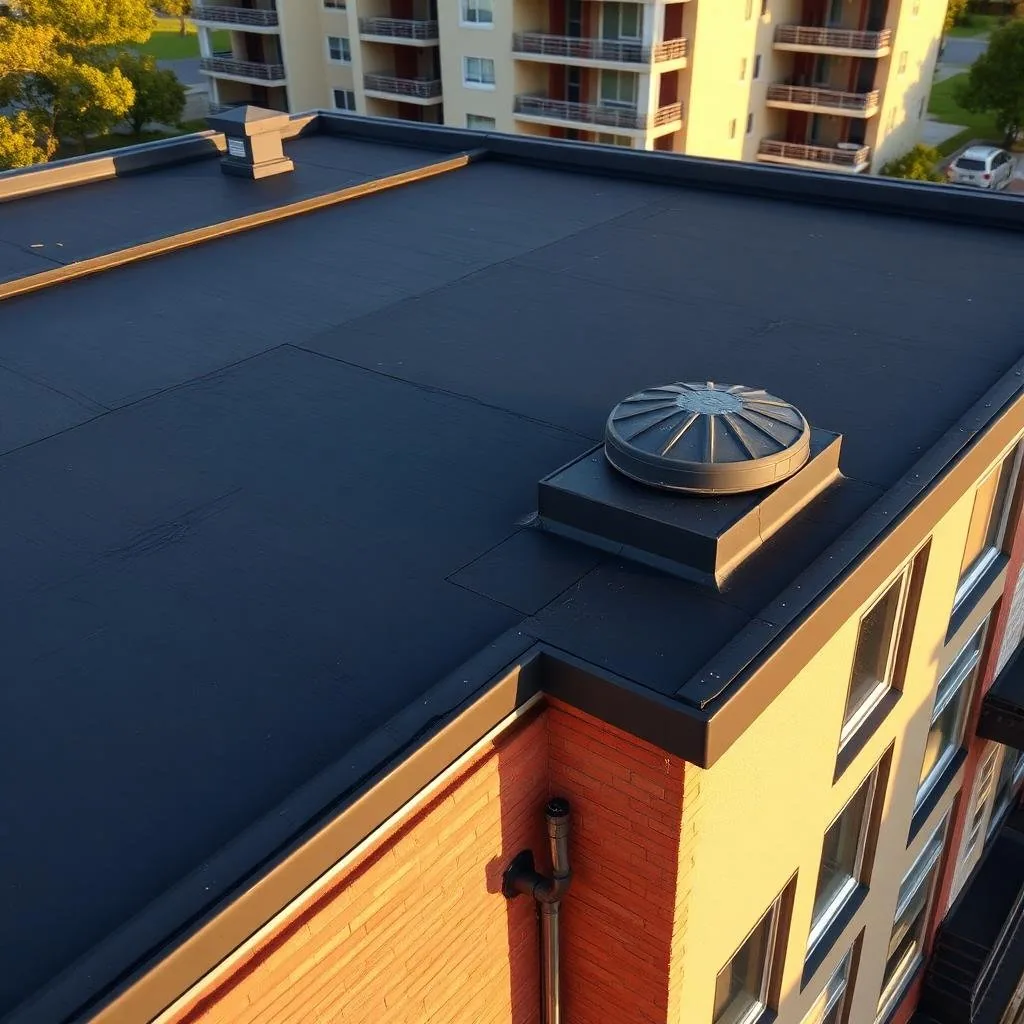
Standing water after a rain tells us where to start on a Versico roof. Versico makes single-ply membranes, including TPO and EPDM lines, and the sheet itself seldom fails before the water path does. We look first at the low spots, the drain lines and the seams that sit in them, because ponding speeds up wear on every thermoplastic and rubber membrane. In Grand Prairie, TX, spring and fall are the wettest stretches of the DFW year, which makes those weeks the best time to watch how a roof sheds water. We map where it stays, test the seams around it and write down whether the fix is drainage, detail repair or membrane replacement.
First observation: where the water stays
Ponding is water that remains on the roof well after the rain has stopped. Some of it comes from a drain set above the low point, some from deck deflection, and some from insulation that has compressed under equipment or foot traffic. We mark each wet area and measure depth with a straightedge, then look for staining that shows how long it has stayed.
The ponding water repair that follows depends on the cause. A clogged drain needs cleaning. A drain bowl that sits proud of the deck may need to be reset. A sagging area may call for tapered insulation that restores slope. Seams that run through standing water are inspected closely, since sustained moisture and dirt can affect bond and speed surface aging.
We also look at what sits in the wet zone. Equipment platforms, pipe supports and conduit runs can dam water or hold it against a seam. Moving a support, adding a saddle or re-routing a condensate line is sometimes a smaller fix than any membrane work, so we list those items on the scope separately.
Drainage route: bowls, scuppers, and overflows
Drainage on a commercial roof works as a route, not a single point. Water travels across the field to a drain or scuppers, then through a leader or out through the wall. A break anywhere in that route sends water back onto the roof or into the wall cavity.
We inspect each roof drain and scupper for debris, damaged strainers and gaps between the bowl and the membrane. Overflow scuppers need to sit at the right height so they relieve water without letting it climb too high on the parapet flashing. Where the building has interior drains, we ask the facility manager when the lines were last cleared, because a backed-up line looks like a roof leak from the inside.
Membrane and seams: matching the repair to the sheet
Versico offers heat-welded thermoplastic sheets and rubber sheets with taped or glued seams, so the repair method follows the product. VersiWeld TPO is welded, while EPDM seams are bonded. We confirm which is on the roof by thickness, color and seam appearance, then prepare the area by cleaning and priming where the product calls for it.
A Carlisle SynTec membrane can look similar from the ground, so identification matters before a patch material is chosen. Compatible products bond. Incompatible ones peel in the first heat cycle. We test a small patch and check it the next visit when the situation allows, and we note the product and place in the roof record.
Fastener-secured sheets get a pull check on a sampling of plates, and adhered sheets get a tap test for hollow spots. Those results tell us whether the sheet is staying put in the wind or working loose, and they guide whether a localized repair is enough or the attachment has to be reworked across the section.
Retail settings: parapets, units, and shared walls
Retail sales are substantial in Grand Prairie and in nearby Arlington, about six miles west by straight-line distance, so retail properties are a real part of the local roof mix. A retail roof with long parapets and several rooftop units puts a lot of its weather exposure on the wall flashings.
On a shopping center roof, we walk the parapet line, check counterflashing, look at scupper outlets and inspect each unit curb. Tenant leases can complicate access, so we coordinate with the property manager on which suites are below the work and what hours are available. Protecting storefront entrances and loading doors is part of the plan, and so is a note to each tenant about the day's work area.
Sequence: dry-in, repair, and close
The work order stays simple. We confirm the leak location, set temporary protection if water is active, clear the repair area, prepare the surface, make the repair and test it. For a replacement section, tear-off, deck repair, insulation, membrane and flashing follow in that order, and each opened area is closed before the crew leaves.
Along the SH-161 corridor, where the City's plan identifies warehouse-distribution centers among other uses, the access plan turns on dock schedules and rooftop equipment. In the Great Southwest Industrial District, the same questions apply. We review the loading plan with the property manager and the general contractor, then match the work zone to it.
Options: tapered insulation, recover, or replace
If ponding is the main problem and the membrane is sound, adding tapered insulation over a dry assembly can move water to the drains. If the membrane is cracked, shrunken or wet beneath, replacement of that section is cleaner. Cost follows tear-off depth, insulation thickness, number of drains and penetrations, and crane access.
A related comparison is the Sika Sarnafil PVC line, which suits roofs with grease exposure, so we compare scope, exposure and detail count before any price is final.
Whichever path fits, the closeout record shows the starting condition, the work performed and the measured improvement. A follow-up walk after the next heavy rain confirms that the water now leaves the roof where it was designed.
Commercial Roofing Questions
How long is too long for water to stay on a single-ply roof?
Water that remains well after the rain has ended, particularly beyond a day, points to a drainage or deck problem. We measure depth and note stains that show how often the area ponds. A few small puddles at a low spot may be tolerable, while deep, repeated ponding calls for correction.
Will tapered insulation fix ponding without replacing the membrane?
It can, when the existing roof is dry and sound. New tapered board is added with a new membrane above it, so the work is closer to a recover than a patch. We confirm insulation moisture first, since wet board would trap water under the new layer.
What causes a leak at a parapet wall on a TPO roof?
Common causes are a loose counterflashing, a cracked corner or sealant that has pulled from the wall. Water enters behind the flashing and travels down. We trace from the interior stain to the wall line, test the termination and repair the specific detail.
Can seams be repaired when the roof is still wet?
A weld or splice needs a dry, clean surface, so wet seams get temporary protection first. We dry the area, then complete the repair on the same day if conditions allow. If rain returns, we cover the open work and finish at the next dry window.
How do I know which of my roof sections are the Versico sections?
Labels, invoices and the roof plan help, but the sheet itself is the best evidence. We sample thickness and seams on each section, mark the roof sketch and record what we found. Sections added in different years often differ.
Send the Versico roof section for a first check
Share the roof area, active leak status, where water stands after rain, and the access window. We will inspect drains, seams and flashings and give you a written scope for repair or replacement.
Call 555-555-5555 or request a roof assessment.