
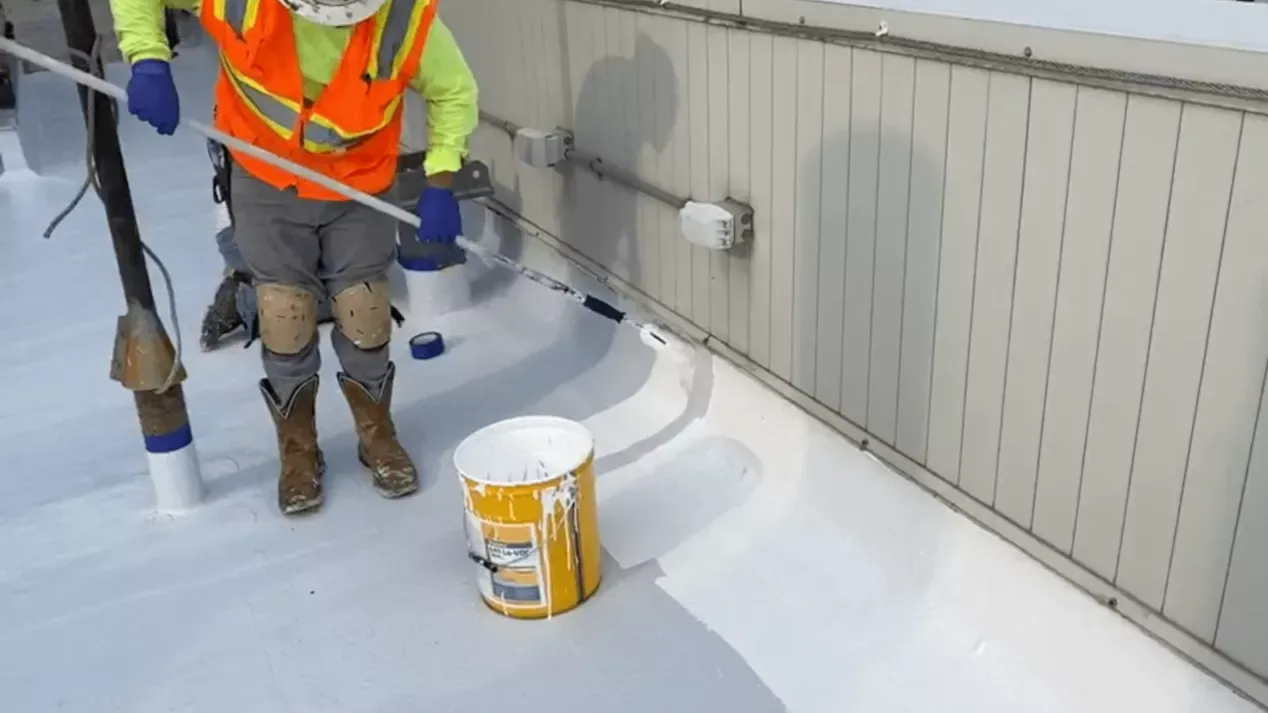
A hot-air weld that looks continuous can still be hiding a void a few inches in. Sika Sarnafil is best known for PVC roofing membranes, and its seams are formed by melting the sheets together, which makes the weld the detail we test first on every inspection. Some of its membranes are reinforced and some are backed with felt or fleece, so we also confirm which version sits on the building. Grand Prairie, TX summers average near 96°F in July and August, with about twenty 100°F days, so thermoplastic details keep moving. We walk the roof section, probe the welds, trace the water path and mark a repair boundary before recommending anything larger.
First check: the weld and what it shows
On a PVC membrane, a sound weld shows a clean, even bead along the lap edge. We run a probe along that line looking for gaps, skipped sections and edges that lift under light pressure. Weld problems usually start where two seams cross, at corners and around penetrations, because those spots are hard to weld cleanly in the field.
We also look at the sheet itself. Surface cracking, discoloration at the lap and soft spots near equipment suggest chemical or mechanical wear. A PVC roof that has stayed clean and flat usually shows its trouble at details, not in the field. When we find a bad seam, a leak repair starts from the full weld length, so we mark the full length rather than the single spot we noticed, because a weld problem rarely stops at one point.
Exposure: grease, exhaust, and the rooftop environment
PVC suits roofs that see oils, fats and exhaust, which is why kitchen exhaust discharge and food-service buildings are a regular reason to look at it. Hotels and restaurants are a meaningful part of the Grand Prairie roof mix, so restaurant roofs and hotel kitchens belong in this conversation.
Exposure still needs checking. Grease that pools near an exhaust fan can soften or discolor a membrane over time if it is not cleaned, and repeated foot traffic around a unit wears the surface. We inspect curb bases, fan skirts and nearby seams, then recommend walk pads or a cleaning interval based on what we see. Where plasticizer migration or incompatible sealants are suspected, we test a patch before committing to a larger repair.
Industrial buildings add their own exposure. A manufacturing or distribution building in the Great Southwest Industrial District may have process exhaust, forklift-fume vents or heavy rooftop equipment, and each of those changes how we choose walk pads and where we inspect for wear.
Attachment and substrate: what holds the sheet
Sarnafil membranes can be mechanically attached, fully adhered or ballasted, and each method leaves different clues. On fastened systems, we look for back-out and flutter along the seam line. On adhered systems, we look for loose spots that sound hollow when pressed. On ballasted roofs, we check where stone has migrated and exposed the sheet.
Substrate condition matters as much as the membrane. Wet insulation or a damaged cover board will let fasteners work free and make any patch short-lived. A moisture scan before repair shows whether the water path ends at the membrane or continues into the assembly. If it continues, we mark the wet boundary and plan the cut-out around the wet area, not around the leak stain.
Setting: downtown access and mixed-use roofs
The City's downtown planning identifies several character areas and a merchandising strategy, which points to a mix of commercial buildings with different access conditions. In the Central Business District, a roof may share walls with neighbors, sit over active shops or offices, and offer limited staging. Those constraints change the work plan.
We decide where materials can be hoisted, where tear-off debris can drop and how pedestrians stay clear. A thermoplastic repair usually needs less open flame than hot asphalt, which can simplify fire-watch arrangements near occupied space. We still agree on safe hours, protect entrances and photograph the condition of adjoining roofs before work begins, so everyone shares the same starting record.
Retail and office roofs along the I-20 corridor, which the City describes as a developing retail and corporate location, bring a different set of questions. Customers and employees use the entrances all day, so we pick shorter work windows, protect walkways and check that new roof drains do not discharge across a parking lane. Rooftop units on those buildings usually get their own curb inspection before any membrane work begins.
Options: patch, restore, or replace
A welded patch fits isolated seam or flashing failures on a dry assembly. Re-welding a section works when a single run of lap has opened. Replacement fits widespread cracking, shrinkage or saturated insulation. In each case, the findings from the weld probe, the moisture scan and the substrate check drive the choice.
Price follows the same factors as any re-roof: tear-off depth, insulation, penetrations, crane access and the hours available. We price sections separately so an owner can phase the work. Pricing the same roof section with a Versico single-ply line or a prefabricated PVC system from Duro-Last shows what each approach costs.
Timing matters on a PVC roof because the sheet must be clean and dry at the weld. We watch the forecast, avoid starting a long run of seams ahead of a spring storm, and keep temporary protection ready for every open edge. That discipline keeps a repair from being undone by the first heavy rain.
Closeout: weld locations and repair notes
The final record lists every weld repaired, every flashing replaced and the products used, with photographs and a roof sketch. That level of detail helps the next inspector see which seams have already been addressed. If the building holds a manufacturer warranty, the file also supports whatever documentation that manufacturer requests. Healthcare and clinical buildings in Grand Prairie may also need infection-control or noise coordination, and the record notes the arrangements made.
Commercial Roofing Questions
How do you test PVC welds on an aging roof?
A probe along the lap edge shows whether the bond holds. We mark open or soft sections, clean the area and re-weld with a hot-air tool. Each repair gets a photo and a location on the roof sketch so the next walk can check it again.
Why is PVC often chosen for a restaurant roof?
Grease and exhaust discharge can degrade some membranes, and PVC resists that exposure better than many alternatives. The roof still needs clean fan areas and walk pads. We inspect those zones during every visit and recommend adjustments when we see wear.
Can a Sika Sarnafil roof be recovered rather than torn off?
Recover is possible when the insulation tests dry and the deck can carry another layer. Compatibility between the old and new membranes also matters. We test with moisture readings and sample cuts first, then show the results before the owner commits.
What does a failed flashing look like on a thermoplastic roof?
Look for a cracked corner, a lifted termination bar or sealant that has pulled from the wall. Water follows the gap into the assembly. We trace the path, replace the flashing with a welded piece where possible and seal the termination.
How quickly can you stop an active leak?
Emergency response runs all day and night. We find the entry point, make a temporary seal and photograph it. Lasting repair waits for a dry surface, and both stages go into the record.
Send the Sarnafil roof section for review
Share the roof area, active leak status, membrane type if known, and the access window. We will probe the welds, check the flashings and return a written scope that separates repair from broader replacement.
Call 555-555-5555 or request a roof assessment.