
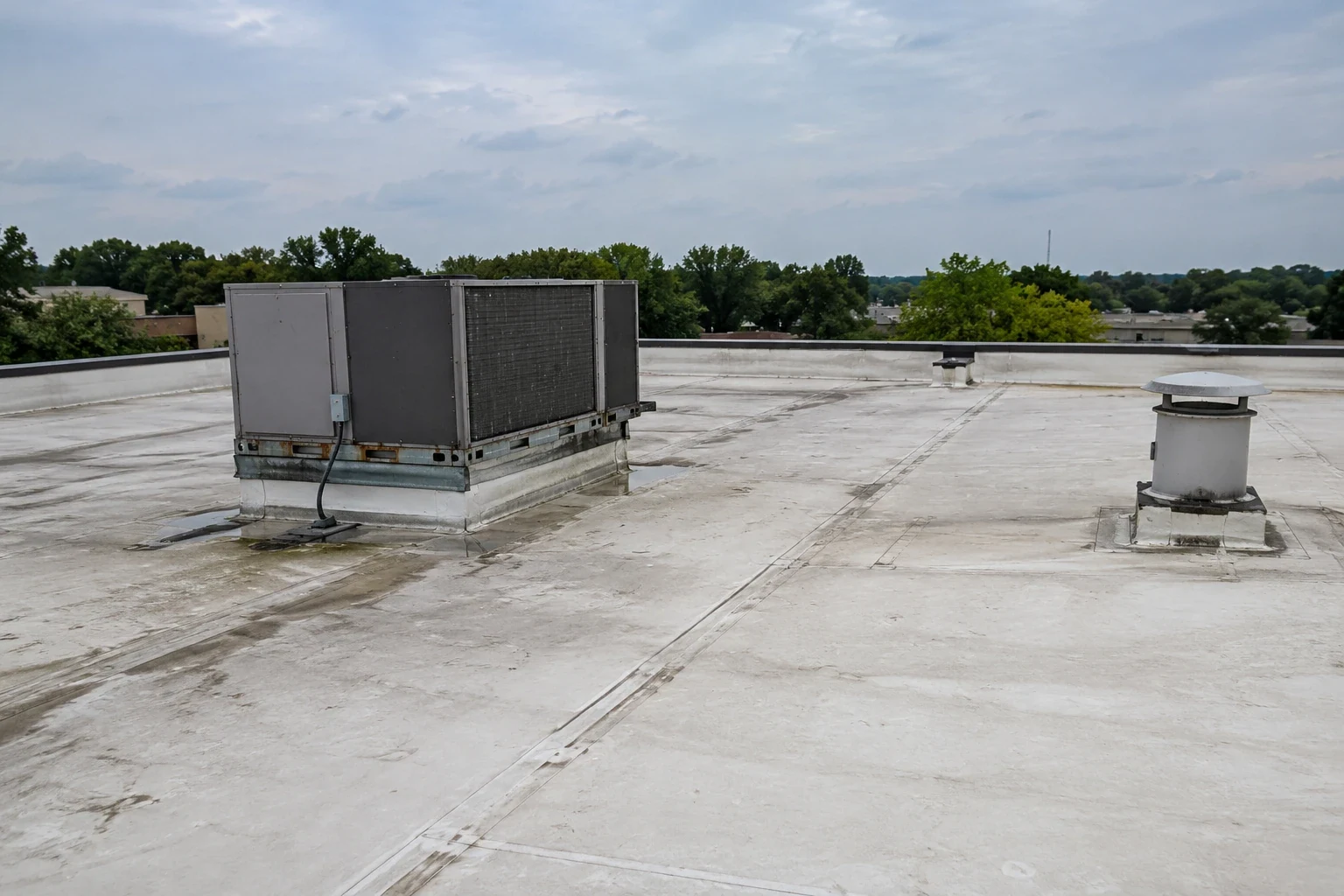
Wet insulation is often the real story on a Johns Manville roof, and the membrane on top may only be the messenger. Johns Manville supplies single-ply membranes, modified bitumen and built-up components, and polyisocyanurate insulation, so one assembly can include several of its products working together. We begin with the surface condition, then read the layers below it. In Grand Prairie, TX, repeated heat cycling from the long DFW summer and the spring and fall rain seasons both test the same details, which is why the first check covers seams, drains and edges together. The written record shows the water's path, the wet and dry zones and the safest place for a repair boundary.
First check: membrane and insulation as one assembly
A roof that leaks in July and stays quiet in October usually points to a seam or flashing that opens with heat. A roof that leaks after every rain, regardless of temperature, usually points to a drain, a lap or a pocket of saturated insulation. We use those patterns to decide where to probe first.
Polyiso board is rigid and efficient when it is dry. It loses value when water enters, and it can delaminate at its facers or crush under foot traffic. Our infrared moisture survey picks out cooler, wetter zones at dusk, and a handful of core samples confirms them. The map that results shows how much of the roof can stay and how much has to come out before the new membrane goes down.
Drainage gets checked in the same visit. A drain bowl set high, a sump that has settled or a scupper clogged with debris can hold water long enough to stress laps and age the surface. We note where water stands twenty-four hours after a rain, because that pattern tells us whether the slope, the drain or the membrane is the actual problem.
Membrane type: the repair follows the sheet
Johns Manville single-ply roofs use heat-welded or adhered membranes, and the repair follows the sheet. A thermoplastic sheet is welded at the patch, while an EPDM sheet is bonded with tape or adhesive. Modified bitumen is lapped and heated or cold-applied, and built-up roofing relies on its alternating plies and surfacing.
For built-up roofs we look at ridging, blisters, bare felts and the condition of the gravel or cap sheet. For modified bitumen we check lap seams, granule wear and the flashing base. We compare what the surface shows with what a probe finds beneath it, because a smooth surface can hide wet felts.
That comparison keeps us from patching a roof that is already wet underneath, which would trap moisture and shorten the repair's life.
Cover board and recover: when the old roof can stay
A recover keeps the existing roof in place and adds a new membrane over a cover board. It only works when the old insulation tests dry, the deck is sound and the added weight is acceptable. A cover board spreads the load, protects the insulation from foot traffic and gives the new membrane a stable face for adhesive or fasteners.
We review the insulation and cover board choices against the building's use. A warehouse with heavy mechanical traffic needs a harder board than a quiet office roof. Roof drains, scuppers and curbs also need to be raised or extended so the new surface does not trap water around them. If any of those details cannot be reworked, tear-off of that section becomes the cleaner path.
Fastener pattern matters too. A cover board attached through the old membrane needs fasteners that reach the deck without hitting a purlin edge or a conduit. We locate hazards from below when the building allows, and we mark no-penetration zones over sensitive spaces before a single plate goes.
Access and operations: staging on a working site
The City describes the SH-161 study area as holding industrial land uses and warehouse-distribution centers alongside other uses and vacant land, so we confirm the building type before assuming a roof plan. Along the SH-161 corridor, a distribution building may share its roof with large rooftop units, while a nearby smaller commercial building may have a very different layout.
On an occupied property we separate the work zone from tenants and loading areas. Material lifts, tear-off debris and the dry-in route are laid out before the first section opens. Downtown Grand Prairie buildings, which the city's master plan treats as a different commercial setting, may need work after hours and shorter material staging.
Options: repair, recover, or replace by section
Findings sort the roof into three groups. Sections with isolated defects and dry insulation get repairs. Sections with sound, dry insulation and a stable deck are candidates for a recover. Sections with saturated insulation, widespread membrane failure or deck deterioration need tear-off and replacement.
Cost depends on tear-off depth, insulation thickness, number of penetrations, crane access and the schedule the building can tolerate. Where an assembly combines membrane, insulation and cover board, we price each layer so the owner can see where the money goes. A second price built on Holcim Elevate or Sika Sarnafil materials is easy to run for the same roof section.
Closeout: a roof map the next manager can use
We close each job with photos, moisture readings, material labels and a map of every repair. The roof-framing and engineer-seal requirements the city lists for larger buildings apply to new construction and some structural work, so we confirm with the building department whether a re-roof scope needs permit review. The final record gives a facility manager a clear reference for the next walk, and it shows an insurer or manufacturer what the roof looked like before work began.
Where an owner manages several buildings, the same record format lets one person compare roofs side by side and sequence the budget. A roof that tests dry and sound this year may still go on a watch list, with a date and a short note on what to check at the next walk.
Commercial Roofing Questions
How can you tell if the insulation under a Johns Manville roof is wet?
Infrared scanning at dusk shows warm and cool patterns, and a moisture meter confirms them on the surface. Core cuts verify the worst zones. We mark the wet boundary on the roof and photograph the cores so the owner sees what we saw.
Is polyiso insulation worth saving during a re-roof?
Dry, intact board can stay if its facers are sound and it still holds fasteners. Board that crushes or shows water staining gets replaced. We test in several places before recommending either path, since insulation condition often varies across one roof.
Why do some leaks appear only in summer on a single-ply roof?
Heat expands membrane and flashing, and a weak seam or boot can pull open during the hottest part of the day. Water then enters when the next storm arrives. We inspect during warm hours when we can, because open seams are easier to find then.
What happens to a built-up roof when the gravel is thin?
Thin gravel exposes the top bitumen to sun, and the asphalt ages faster where it is bare. We look for cracking, alligatoring and blisters in those areas. Recoating or adding a cap sheet may be possible if the plies below are dry.
Can I mix Johns Manville components with another brand's flashing?
A flashing has to bond to the existing field membrane, so compatibility is tested before use. Some resins and tapes work across brands and others fail. We test a small area, record the product and place, and note it for the next repair.
Send the Johns Manville roof section for review
Share the roof area, active leak status, known assembly, and the access window. We will inspect the membrane and insulation condition and return a written scope that separates repair, recover and replacement.
Call 555-555-5555 or request a roof assessment.