
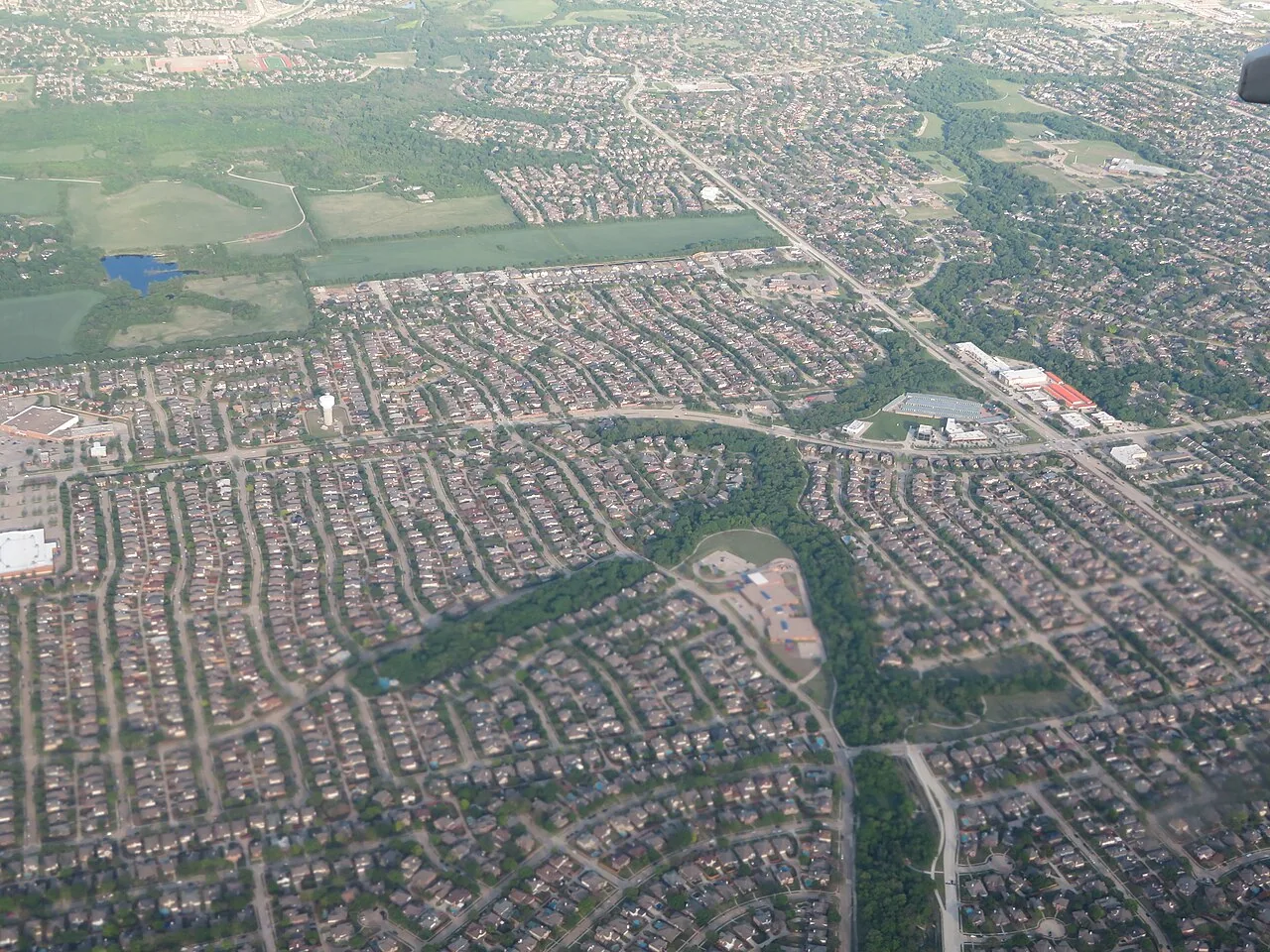
After a storm, the useful question is what the roof itself shows, and in Colleyville we answer it by walking each section and recording what is physically there. Straight-line distance from Grand Prairie to Colleyville is about sixteen miles to the northwest. In 2022 Colleyville recorded about $417 million in retail sales and about $109 million in transportation and warehousing receipts, so commercial buildings of several kinds sit under the same sky as the rest of the Metroplex.
Regional weather is a reason to look, not proof of damage. Our inspection separates storm evidence from ordinary wear, builds a record the owner can use however they choose, and defines a repair boundary before any claim or purchase decision is made.
First observation: the evidence on the roof
Storm damage leaves specific marks. On a membrane, we look for punctures, bruises, torn seams, and displaced ballast. On metal, we look for dents, loosened panels, and bent edge trim. On equipment, we look for dents in housings and bent louvers, which sometimes show impact when the roof surface looks quiet.
Each mark gets a photograph with a scale and a location on the roof sketch, and the sketch carries a grid so a second visit can return to the same square. We also record what we do not find, because a clear section is as useful to an adjuster or a lender as a damaged one. Without that balance, a report reads like advocacy, and a record that reads like advocacy convinces no one.
Where age or foot traffic caused a mark, we say so. Sorting marks by cause keeps the useful findings credible.
Roof assembly: what impact does below the surface
Hail and wind can harm a roof without leaving an obvious hole. Impact can bruise insulation, crack a membrane's reinforcement, or loosen fasteners that hold the sheet down. Water may not enter for months, and the first sign is often a stain on a ceiling after an unrelated rain.
For that reason we pair a visual walk with moisture checks where the findings justify them. Infrared scanning can reveal water taken into insulation near impact points, and core samples confirm it. The combined record tells the owner whether a spot repair is enough or whether a larger part of the roof needs attention.
Weather record: what the regional data supports
Spring is the peak of severe weather across the region, and large hail, damaging winds, flooding, and tornadoes occur somewhere in the Metroplex nearly every year. A given location is unlikely to see every hazard annually. We use that as context for scheduling an inspection, never as a substitute for evidence on this roof. The practical effect is timing: a walk in late spring and another in fall give two dated snapshots of the same roof, and any change between them points to the season in which it happened.
Heat belongs in the same record. Summer highs near 96 degrees age membranes and sealants in ways that look different from storm damage: uniform crazing, hardened caulk, and shrunken seams. Telling the two apart prevents misattributing wear to a single event and avoids repairing the wrong thing. Long-term heat and UV damage is handled as a maintenance and restoration question, and storm damage as a repair and documentation question.
Seasonal timing helps the sorting. Spring storms and fall rains are the wettest and most active stretches, so a spring and fall walk each year catches both kinds of change while the evidence is fresh.
Documentation: records that help a claim
If the owner chooses to file, our report supports the process. It includes dated photographs of every verified item, a roof sketch with marked findings, a description of observed conditions, and a scope of repair or replacement with cost drivers. Claim documentation support does not decide coverage; it keeps the evidence clear and organized.
We also record temporary protection. A tarp placed after a storm, a sealed puncture, or a cleared drain shows that the owner acted to limit loss, and that history belongs in the file. When an adjuster visits, we can walk the roof with them and point to each documented item, which keeps the discussion tied to what is observable.
Lenders and buyers ask similar questions. A clean, dated record of the roof's condition after a weather season answers them faster than an email chain, and it shows the owner has been paying attention to the asset.
Repair sequence: protect, repair, then plan
The work moves in order. First we stop water at any open breach. Next we repair the verified defects with materials compatible with the existing roof, whether that means a membrane patch, hail damage repair, or panel replacement. Then we compare the remaining life of the roof with the cost of repeated repairs.
Edge metal and flashing deserve a second look after any wind event. A coping cap lifted by a few inches may seem harmless, yet it lets wind and water work under the membrane at the wall. Re-securing it early costs little, and leaving it costs a section of roof.
If the evidence shows widespread damage, replacement planning begins. Cost drivers include tear-off depth, insulation condition, deck repair, the number of penetrations, and the access needed for lifts and staging, and any city permit review that applies to the building. We write those out so the owner can compare options without guessing at hidden items. Deck condition is the usual unknown, and we state the unit price for replacing damaged decking so a change order, if one comes, is already priced against a known rate.
Access and closeout: tenants, hours, and the final file
Where office and retail tenants share parking and entrances, we choose lift, hoist, and dumpster positions that leave customer routes open. Work near sensitive suites moves to quieter hours, and every open section is dried in before the crew leaves each evening, with temporary edge seals checked against the forecast.
When the job closes, the owner receives photographs of repaired areas, the product data, and notes on watch items. The record travels with the property. Owners with buildings in Southlake or Grapevine can keep a matching file for each roof and a shared maintenance schedule.
Commercial Roofing Questions
How soon after a storm should the roof be inspected?
As soon as it can be walked safely. Early inspection finds fresh marks before weather and foot traffic blur them, and it lets temporary protection go on before more rain arrives. Delays make it harder to link damage to a particular event.
Can hail damage be hidden on a roof that looks fine?
Yes. Bruising of insulation and cracked reinforcement may not show at the surface. Moisture scans and samples at suspect points reveal what the surface hides, and the results go into the written report.
What if the findings show no storm damage?
The report says so, and lists the wear or defects found. That outcome is still useful: it clarifies where repair money should go, and it keeps an unfounded claim from complicating future coverage.
Who decides whether a claim is covered?
The insurer. We supply the evidence and scope, and the owner chooses whether to submit them. We do not argue coverage, but we can walk the roof with an adjuster and point out each documented condition.
How long does a typical storm repair take?
Temporary protection is usually same-day. Permanent repair waits for dry surfaces and material delivery, and larger replacements run in phases. We give a sequence with the proposal so tenants and managers can plan.
Send the roof details and the storm date
Share the roof area, any interior stains, the known roof type, and when crews can reach it. We will walk the roof, record what is there, and outline the repair and documentation steps.
Call 555-555-5555 or request a roof assessment.