
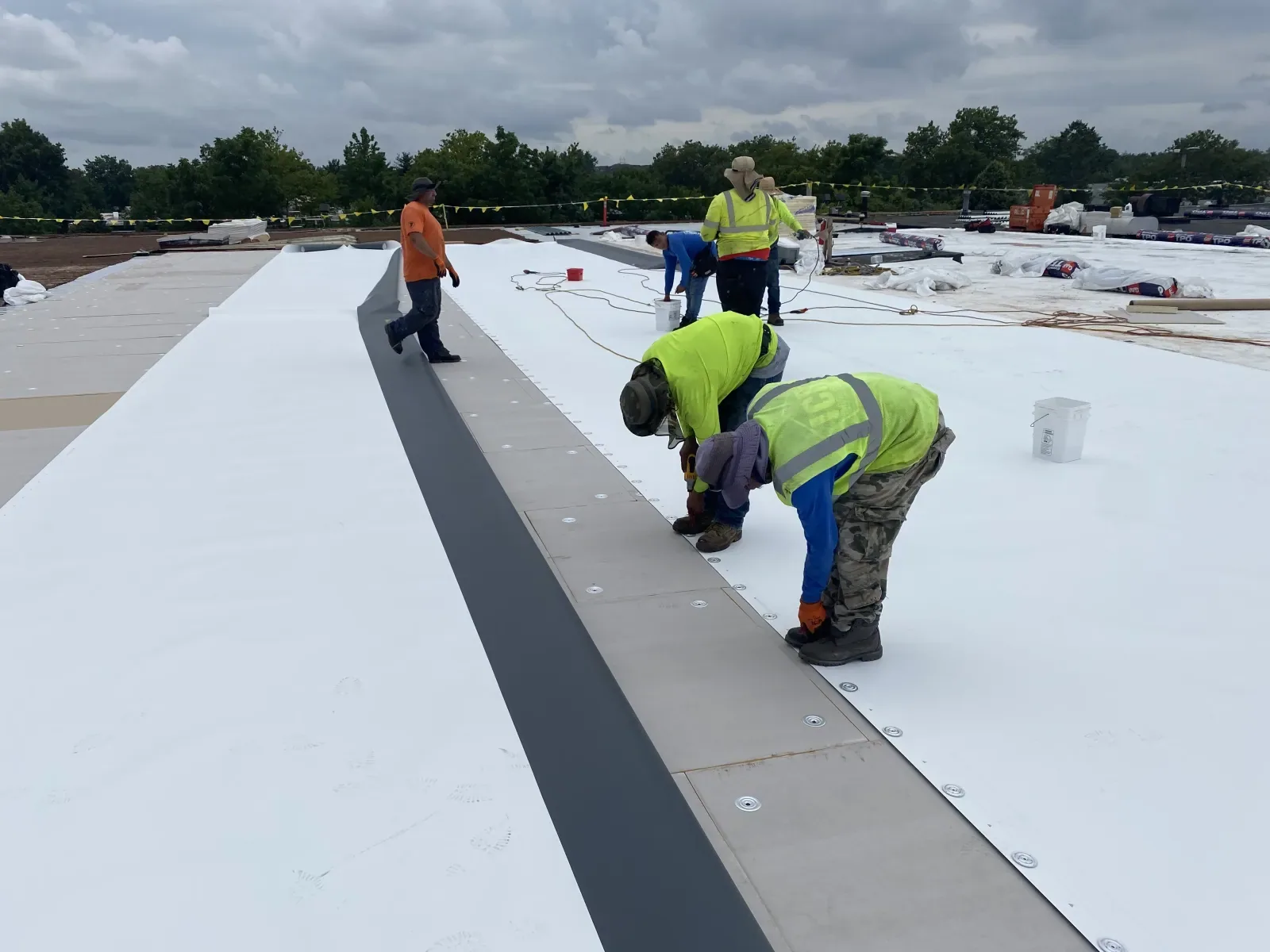
A GAF name on a specification describes a family of products, not the condition of the roof underneath. The first check is the roof section itself: which layers were installed, which have aged, and where water is moving. GAF makes commercial single-ply, modified bitumen, built-up and liquid-applied products, and one building can carry several of them after years of additions and patches. Summer afternoons in DFW average close to 96°F in July and August, and membranes, adhesives and flashings absorb that every day. We read the field, the seams, the edges and the penetrations before recommending a repair boundary. Then we write down what the roof shows, so the next decision rests on evidence instead of a brand label or a date in an old file.
First check: which GAF system is overhead
Start by identifying the system type, because each one fails in its own way. EverGuard TPO is a heat-welded single-ply membrane, so the first questions are seam condition, flashing terminations and whether the surface has chalked or crazed. A GAF modified bitumen or built-up roof is a layered asphalt assembly, so we look for blistering, ridging, granule loss and exposed felts at laps and flashings.
Core samples and moisture readings confirm what the surface hides. In the Great Southwest Industrial District, where the city describes warehouse, distribution and manufacturing uses, a building with a TPO roof may have several roof sections laid at different times. Each can carry its own membrane age and attachment, so we map them separately and never let the newest section speak for the oldest.
When labels, receipts or a prior condition report exist, we read them alongside the roof. When they do not, we identify the membrane by sampling and by the way the seams are formed.
Assembly: membrane, insulation, and attachment
A commercial roof is only as sound as the layers under the membrane. Polyiso insulation that has taken on water loses its thermal value and can soften the surface a membrane relies on. Cover board that has crushed at foot traffic lanes lets seams flex and open. Fasteners that have backed out lift the sheet in small tents that wear through at the high point.
We probe suspect areas, compare moisture readings with the leak history, and cut a small test opening only where the readings call for one. Those findings sort the roof into three groups: areas that need a contained repair, areas that can take a recover over sound insulation, and areas where wet material has to come out.
The record of that sort matters when a manufacturer reviews a claim, because it shows the condition we found before any work began.
Water path: seams, flashings, and drains
Water on a GAF roof usually travels further than the stain suggests. A single-ply roof can leak at a lifted seam, then run along the deck flute before it drips at a light fixture some distance away. A modified bitumen roof can open at a lap, a base flashing or a gutter transition and send water sideways under the felts.
We trace from the interior stain back toward the highest suspect detail, test seams with a probe, and check drain bowls, scuppers and sumps for debris or settled membrane. Spring and fall are the wettest stretches in DFW, so ponding near a drain after a long rain tells us something about the slope and the drain line rather than about the membrane brand.
Edge metal and coping get their own pass. Wind and heat cycling work on those joints constantly, and a loose edge is where a sound field membrane first starts to peel.
Work sequence: staging around the loading route
Logistics shape GAF work as much as chemistry does. A distribution building along the I-20 corridor may need truck routes kept clear during the day, so we stage materials on the roof side away from the docks. Seam welding, adhesive-set flashings and hot-applied asphalt each need different power, ventilation and fire-watch arrangements.
Texas summer heat also changes how we handle material. Rolled membrane left in direct sun softens and becomes difficult to position, and adhesives set faster on a hot deck. Heat-sensitive steps move to the cooler hours, and a dry-in plan is ready for every section before it opens.
On an occupied building, we agree on an access window with the property manager and the general contractor, then close each opened area before the day ends. Tenants below should see a controlled work zone, not an open roof.
Options: repair, recover, or replace the section
Once the findings are on paper, the options are usually clear. A contained repair fits a roof with isolated seam, flashing or puncture problems and dry insulation. A recover fits a roof whose insulation tests dry and whose structure can carry the added layer. Replacement fits a roof where moisture has spread through the assembly or the membrane has reached the end of its service.
Cost follows the scope: tear-off depth, insulation thickness, the number of penetrations, crane or hoist access, and how much of the work has to happen after hours. We price each roof section on its own findings so an owner can phase the work.
A second system is often worth pricing against the first for the same section, and the Carlisle SynTec and Johns Manville specifications are natural comparisons to review next to GAF.
Closeout: the record behind a warranty file
A manufacturer warranty is issued on the manufacturer's own terms, and those terms usually ask for a specific installation, inspection and documentation. We do not quote warranty terms. We keep the photos, the moisture readings, the product labels and the repair locations in one closeout record so the owner can submit them with whatever the manufacturer requires.
That record also feeds the next inspection. A roof that has a mapped repair history is easier to maintain, and a facility manager can see where past water entered and which details were corrected. Programs for warranty documentation follow the same logic.
Commercial Roofing Questions
How can I tell whether the roof on my building is a GAF system?
Look for labels on stored material, the original specification, or a past warranty file. Without those, we sample the membrane and inspect seam construction, then record what we find. Several systems look alike from the ground, so we confirm on the roof before comparing repair products.
Can a GAF roof be repaired with another manufacturer's materials?
A repair has to bond to the existing membrane, so compatibility is the test. Some patches and flashing resins work across brands, while others do not adhere or react with the old surface. We test small areas first and record which product went where, because that note helps the next person who opens the roof.
What does spring hail change about a GAF roof inspection?
Hail is a reason to look for bruising, fractured granules, punctures and displaced coping, not an assumption that damage occurred. Large hail and damaging wind arrive somewhere in the Metroplex nearly every year. We photograph confirmed impact marks and leave unaffected sections out of the claim.
Does a recover work on a GAF modified bitumen roof?
Sometimes. The existing felts must be dry, well adhered and free of large blisters, and the deck has to carry the added layer. We check with moisture readings and a few test cuts before recommending it. If moisture is widespread, the cleaner path is tear-off of that section.
How do you plan GAF work above an active dock?
Lay out the roof against the loading plan first. We keep material lifts away from truck lanes, set barriers where hoists run, and close each opened area before trucks return. The property manager gets the schedule in advance, and we adjust it if dock traffic shifts.
Send the GAF roof section for a first check
Share the roof area, active leak status, known system, and your access window. We will inspect the seams, flashings and drains, then give you a documented scope you can use for the next repair, recover or replacement decision.
Call 555-555-5555 or request a roof assessment.